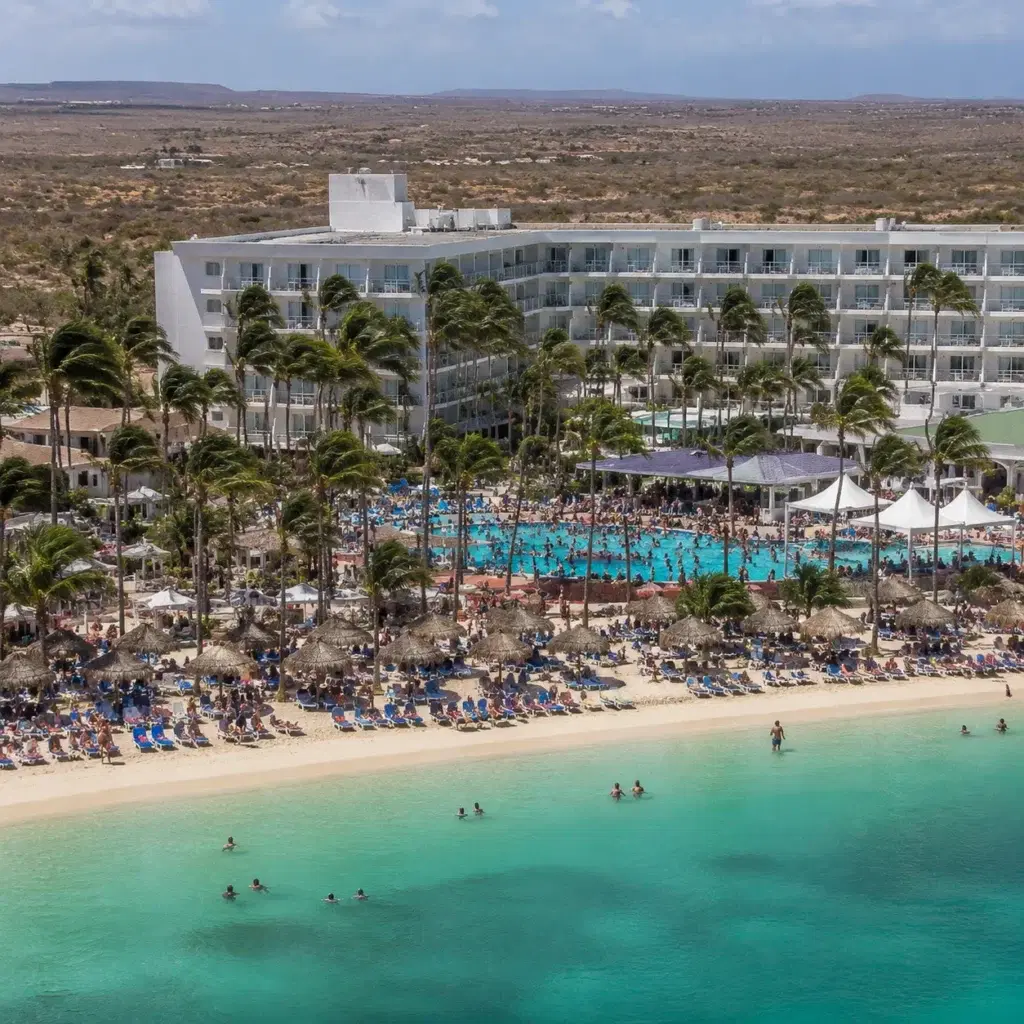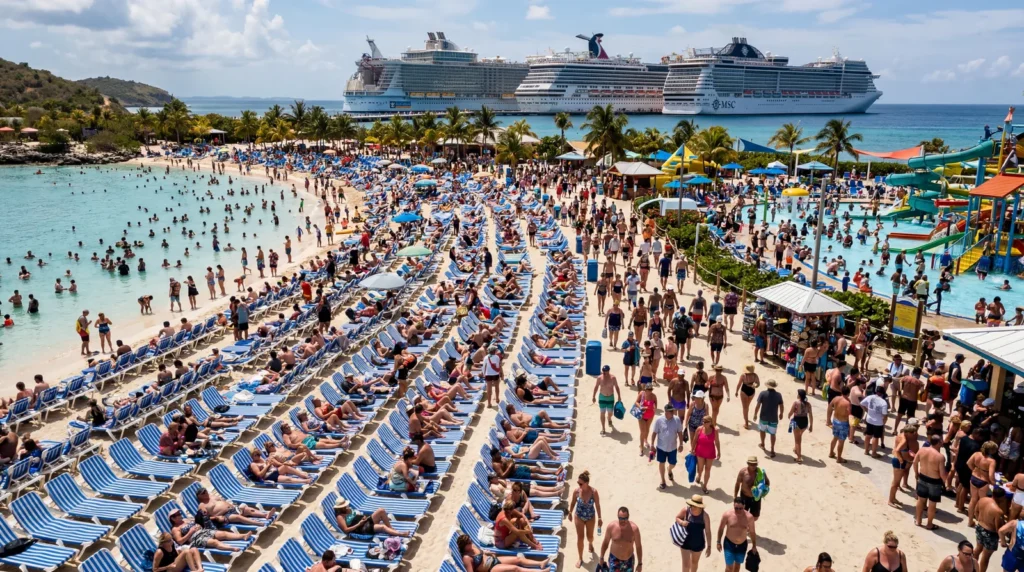


An American will get off a cruise with visions of the Caribbean in his head and find himself in a shopping corridor designed for someone with a sunburn and two hours to kill.
The port at #1 has been doing a number on an otherwise pricey vacation for years. The cruise lines put in there because it is good economics for them, not you. We put together what they don’t make a point of saying before you set sail.
15. Nassau, Bahamas
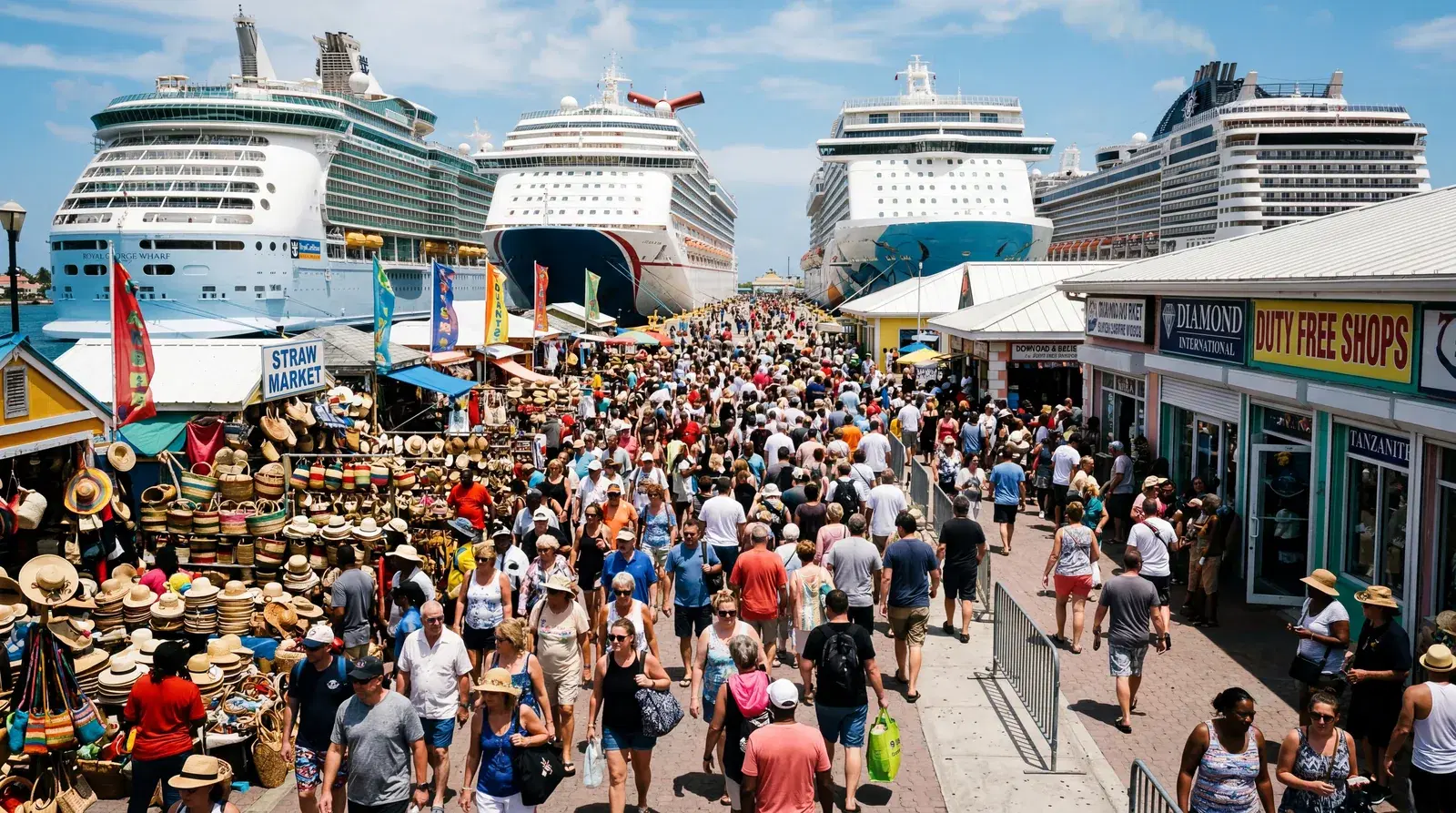
There is no more complained-about port in the world than Nassau, which is fitting since it is the most-docked one in the Caribbean. You leave the ship and are immediately in the thick of it: Straw Market hucksters, the usual chain restaurants and their $28 fish sandwiches from outlets that have little incentive to put in any extra effort.
The sand at Cable Beach is fine, but you will be looking at a $15 cab ride to get there; the ones by the terminal are swamped with 10am.
As one retired teacher from Pennsylvania put it: “We docked three times in Nassau on different cruises and each time we wished the ship had just kept going.” If you haven’t put in a full beach excursion, you’re just going to spend two hours in a duty-free mall in a sweat.
14. Cozumel, Mexico
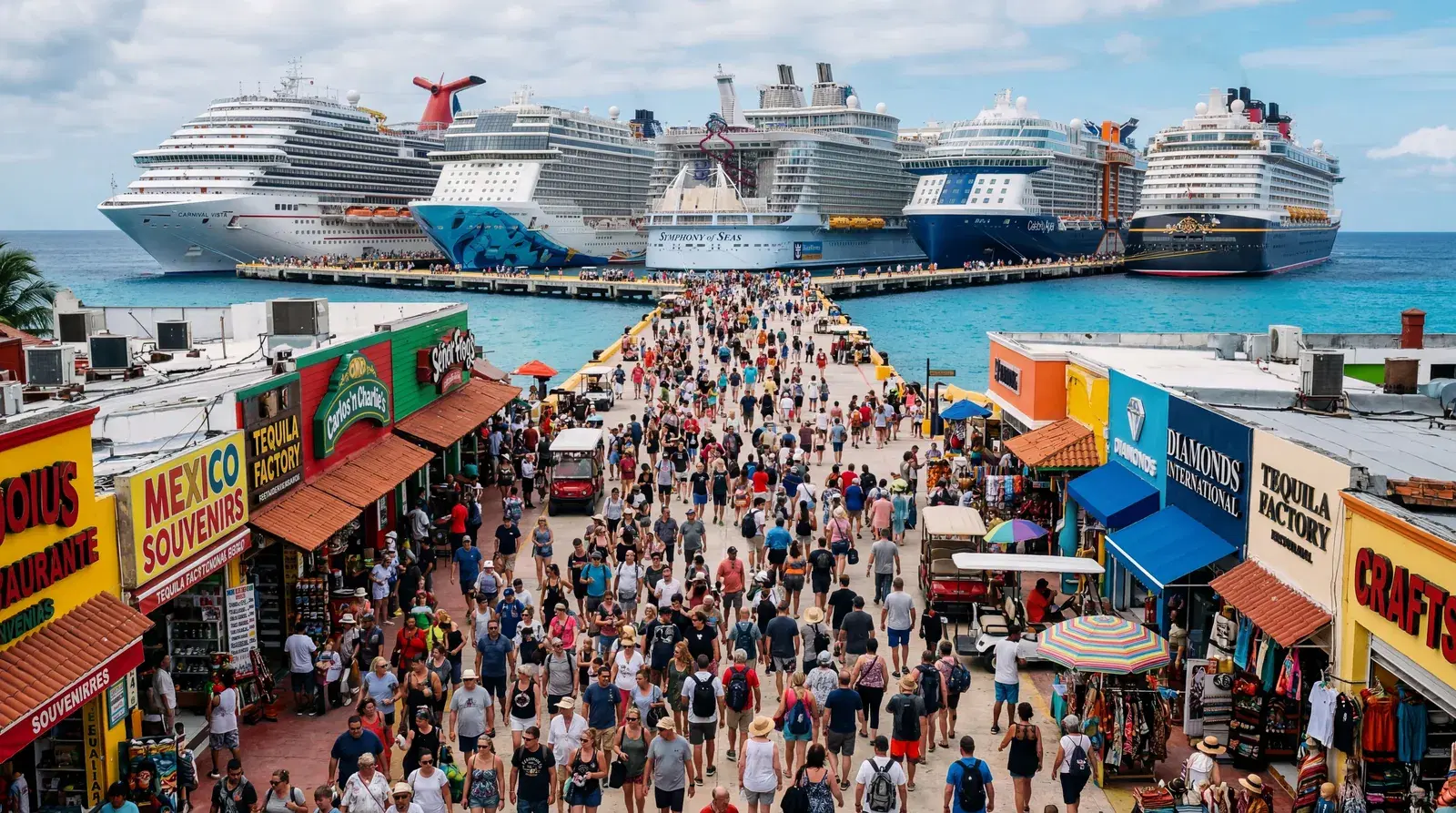
Cozumel is where you go for some first-rate diving. But with as many as eight ships in on the same day, the main street is less like a Mexican island and more like a pop-up version of Times Square.
Diver? Book ahead and make for the reef. Otherwise, the port is a succession of tequila shops with steep prices and vendors who don’t take no for an answer.
The beach clubs will tell you a day pass is $35 on their website and quote $80 when you are standing in front of them. The people are warm once you put some distance between yourself and the port strip, though most on the cruise never bother.
13. Falmouth, Jamaica
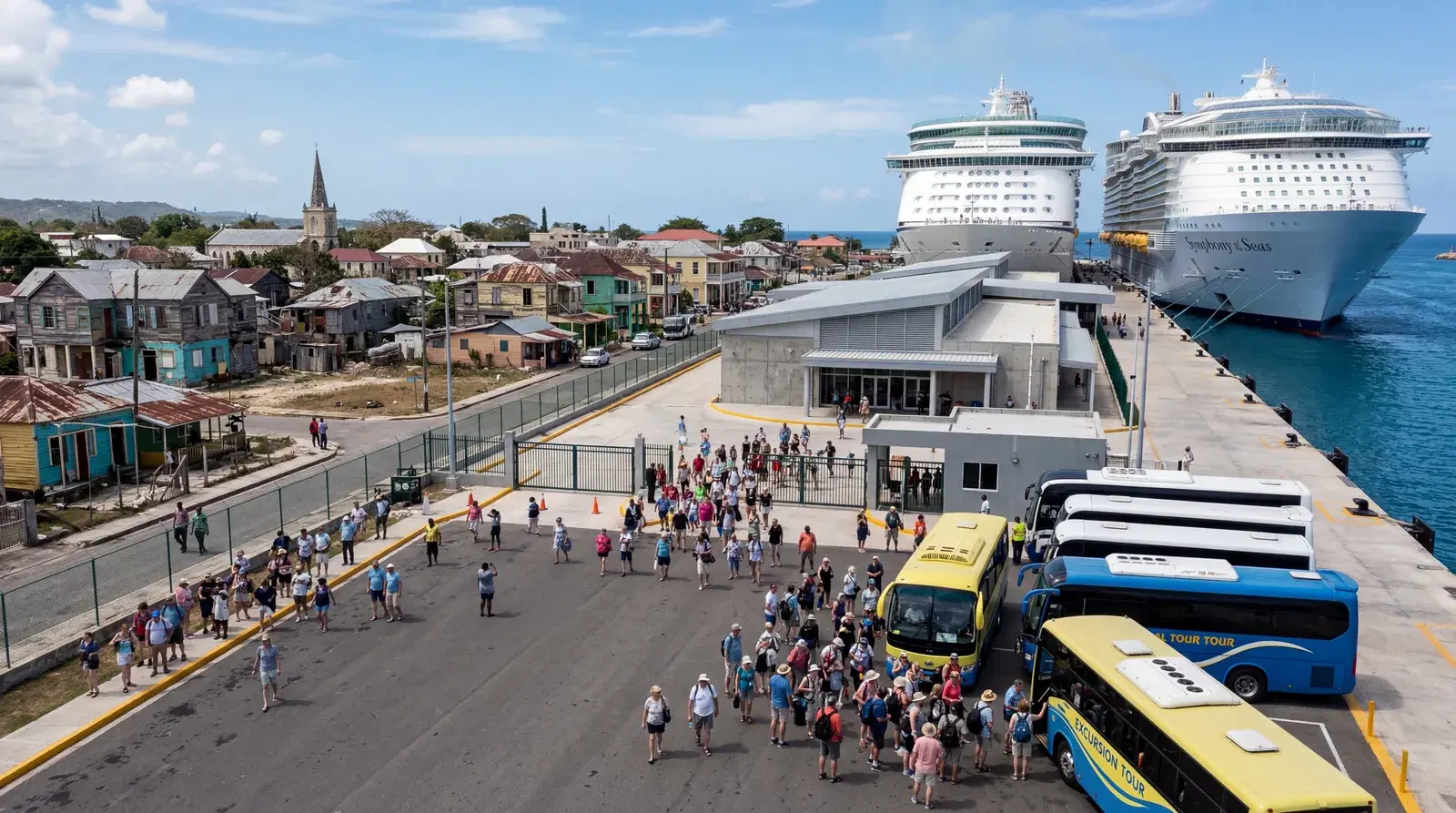
The pier at Falmouth was put in to handle the largest vessels in the world and you can see it in the most dreary way. The terminal is a sterile shopping complex.
Then there is the town of Falmouth, which is underinvested and rough; the walk between the two is hardly the casual stroll the lines would have you believe. Most will take the expensive bus to Dunns River Falls or Montego Bay.
For $80 to $120 a head you can buy your way to a waterfall that is clogged with 400 tourists at all times, and your shore day is done. It is a shame, really, because Jamaica’s interior is beautiful. Falmouth is not how you see it.
12. Roatan, Honduras
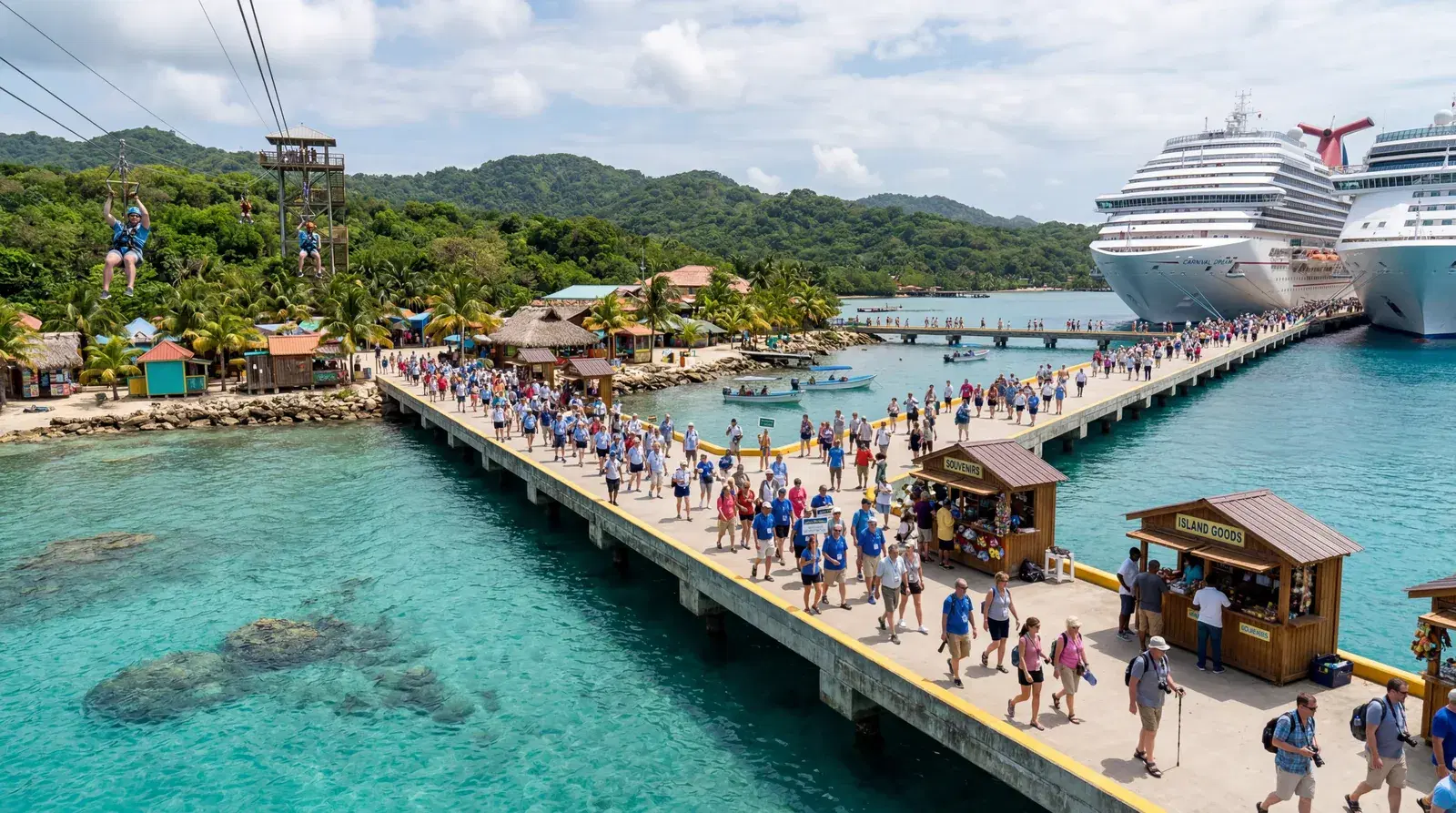
Roatan has its share of nice water and reef, but the port has been optimised to part passengers of their money in the four hours they are ashore. The whole pier is a commercial zone of zip-line operators and overpriced excursions.
A taxi driver will give you one price and another when he drops you off. To actually get to West Bay in a shared shuttle will set you back $20 to $30 each way.
The island is better if you stay the night and do things your own way. For the unprepared with a half-day to fill, Roatan is a $200 exercise in mild frustration. Then there is the next one, which tends to come as a shock.
11. Labadee, Haiti
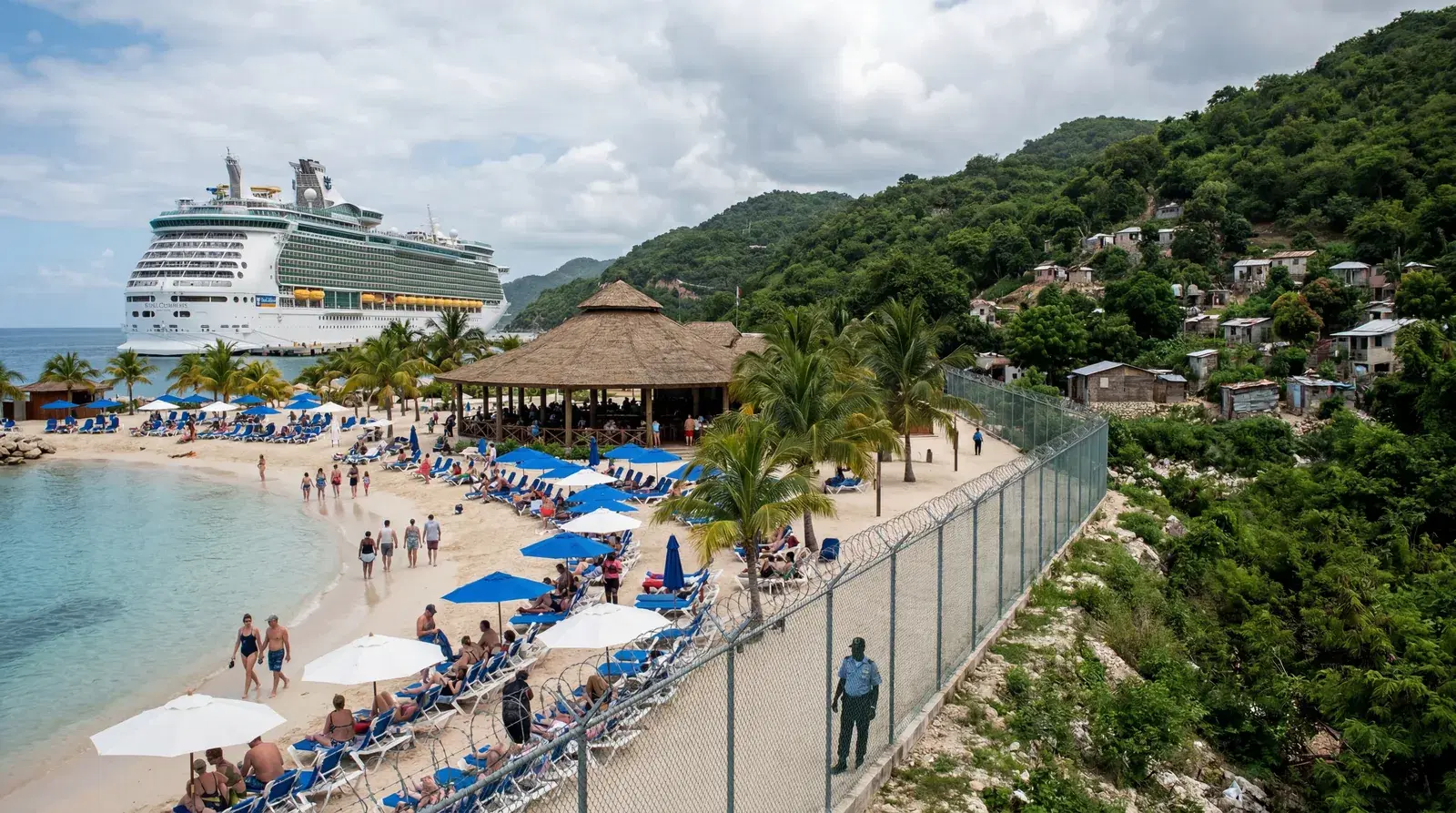
In any real sense Labadee is not a port. Royal Caribbean has a lease from the Haitian government for this private peninsula and has put a security fence around it. You are not in Haiti; you are in a theme park that happens to have Haiti on the other side of the fence.
The food is a resort buffet and the beach is adequate. You can have the same zip line and waterslide package as at every other “private island” destination.
What is hard to stomach is the optics of sitting on a well-kept lawn with a $14 burger and staring at the mountains of a country in economic distress. Once you register what you are seeing, it is quietly unsettling, as many have told us.
10. Costa Maya, Mexico
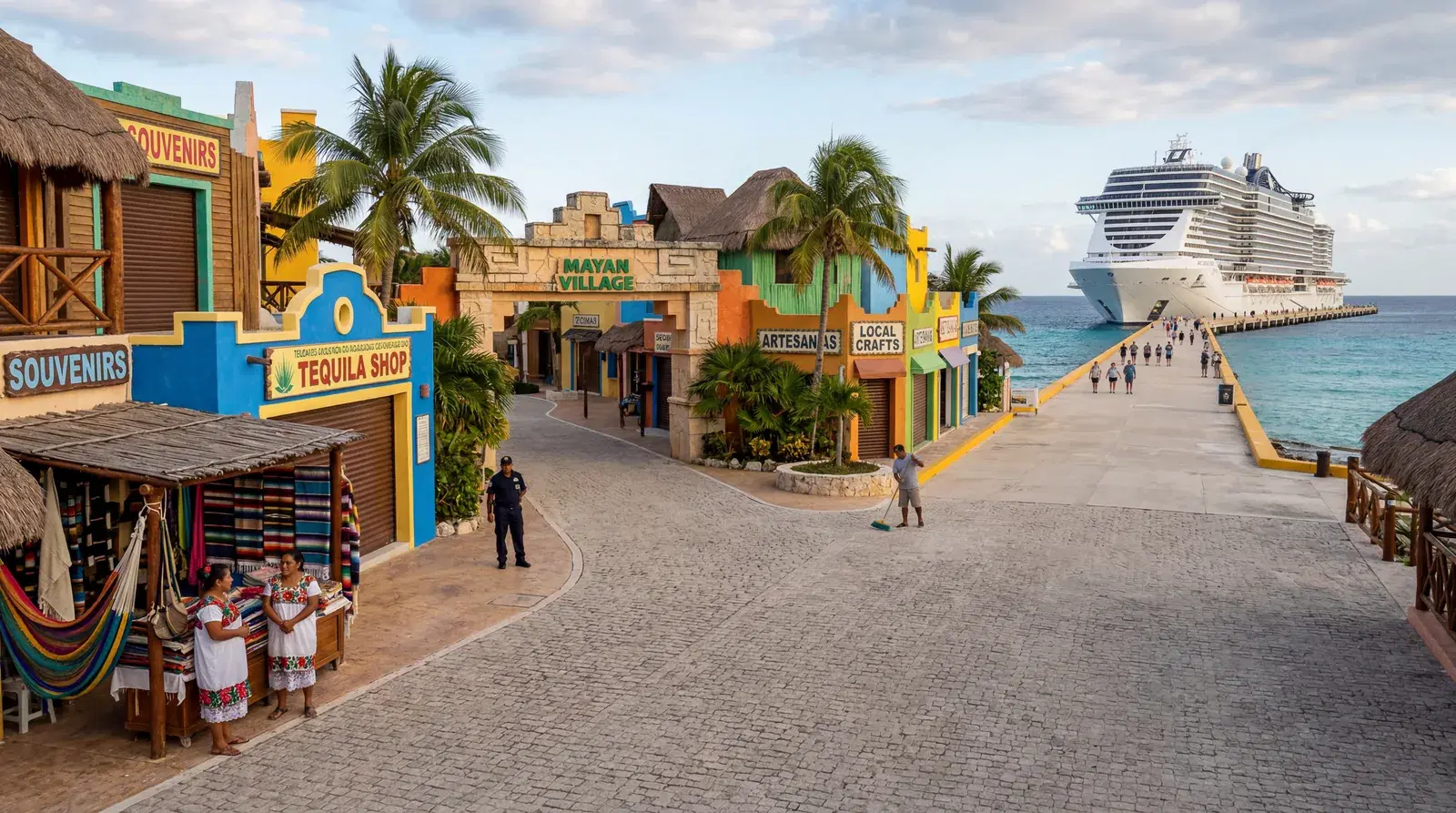
And then you have Costa Maya, a complex built from the ground up for the cruises. There was nothing there before the ships arrived. Mahahual is the town closest to the port, some 6 kilometres or so, and one should make the trip.
But the pier complex you find at the dock is little more than a contrived “Mayan village” affair with overbearing theming to put a spin on the wares you will see at any Mexican cruise port. In fact, there is not a thing of interest within walking distance of the dock but for the commercial pier.
To have an actual experience you will need a taxi to Mahahual; the drivers are well aware you are on a schedule. And if your itinerary has you in Costa Maya, do yourself a favour and book a snorkelling trip out to Xcalak or Banco Chinchorro. Leave the port complex behind, it is nothing but a bar and a movie set.
Read More: The World’s 12 Most Overrated Beach Destinations (by Repeat Travellers)
9. Grand Turk, Turks and Caicos
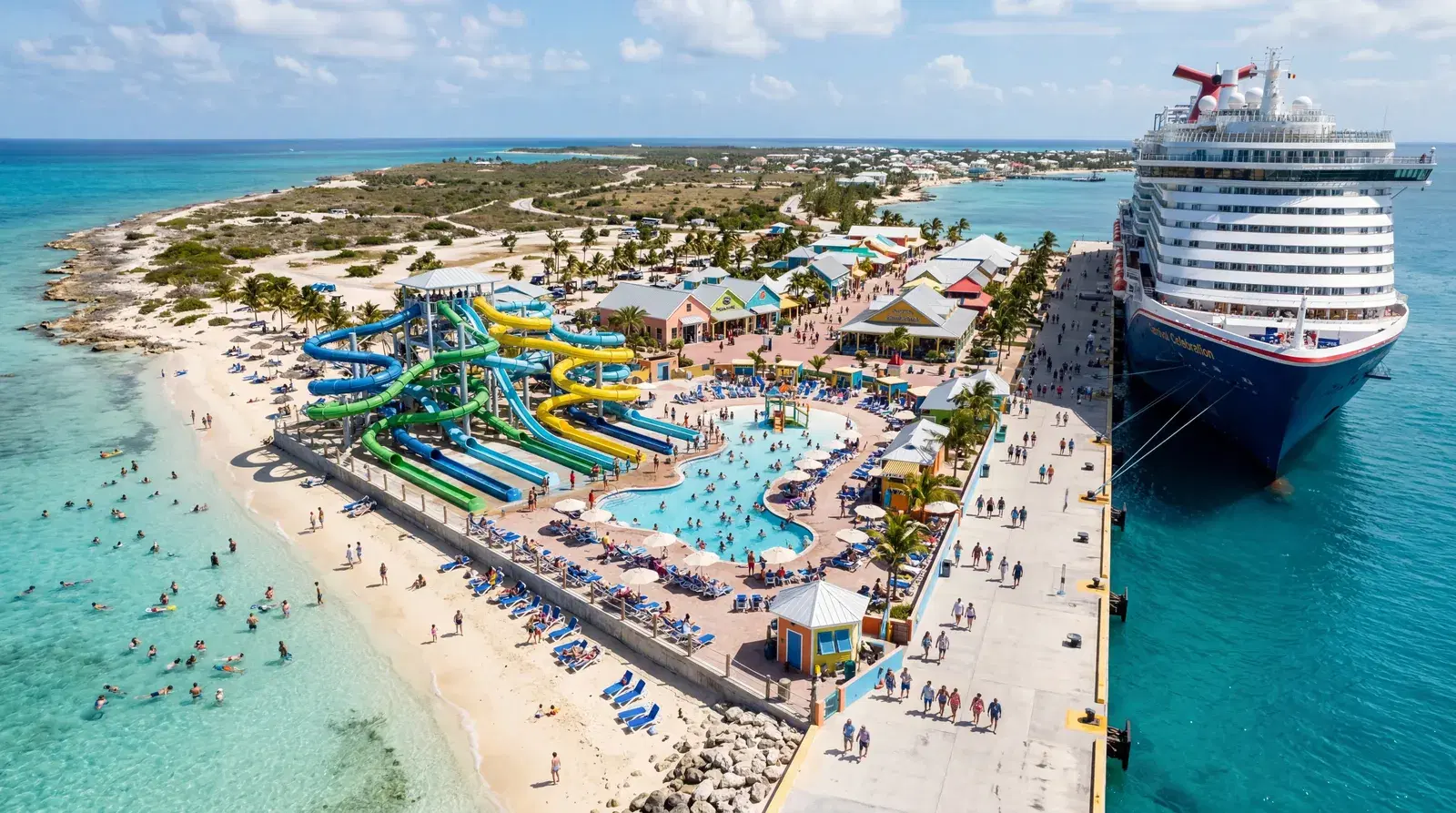
Carnival has put its own Cruise Center right at the Grand Turk dock, complete with a waterpark, shopping and a pool of giant proportions. The beach on the other side of the terminal is quite good. Yet the island is so small that there is hardly anything to be had once you leave the centre of things.
You can put in a short walk to the capital, Cockburn Town, for a bit of charm, but after that the island is done. I have heard from passengers who have gone off on their own only to be back on the ship in under 90 minutes as there is simply nowhere to go.
It is some irony to be in one of the priciest island chains on earth and still end up with a rather unremarkable day ashore. Grand Turk gives you what it says it will, which is not a great deal.
8. St. Maarten (Philipsburg, Dutch Side)
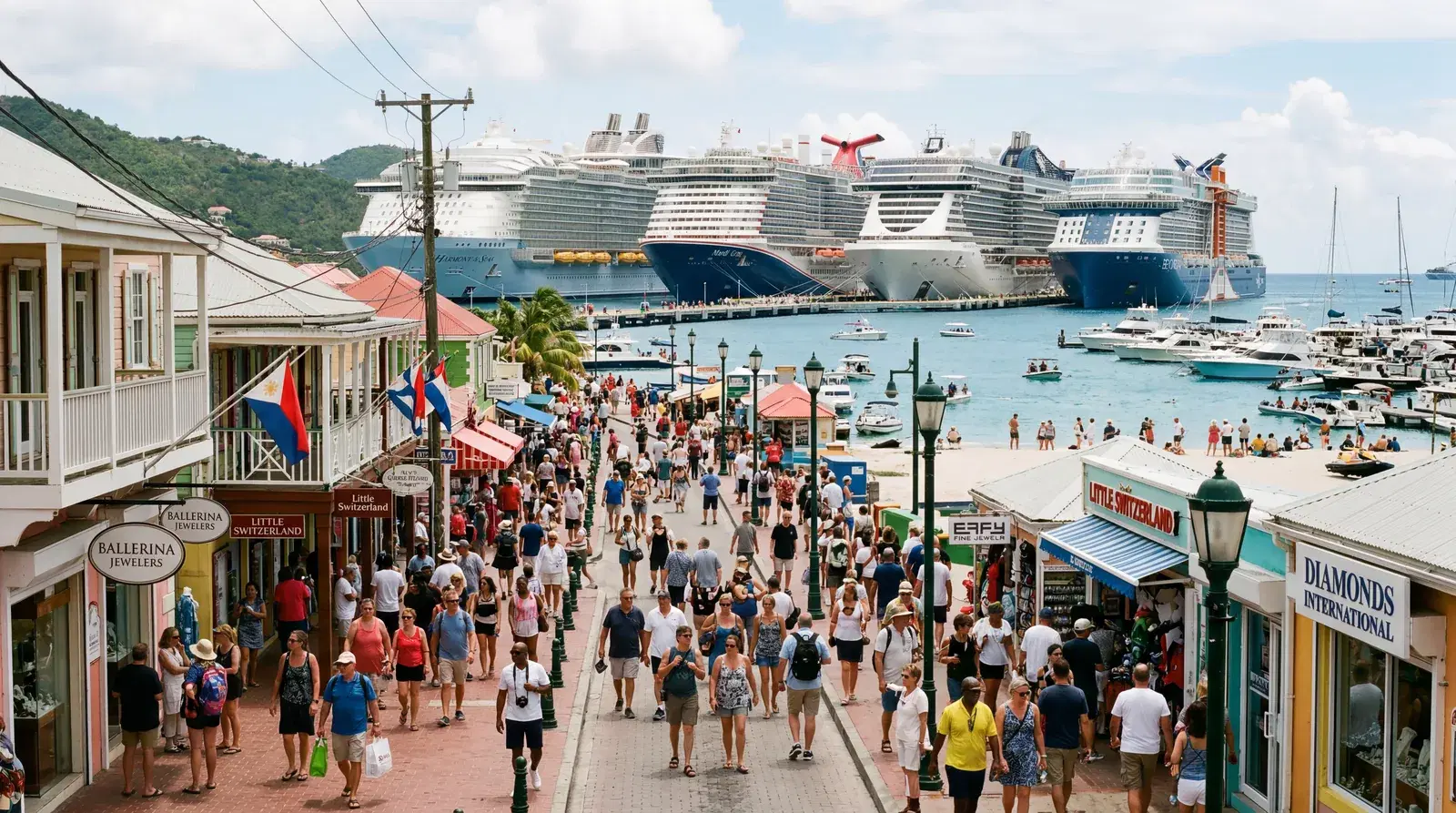
In a manner of speaking, the Dutch side of St. Maarten makes this list twice. The ships put in at Philipsburg, which is for all intents and purposes a duty-free shopping corridor catering to the cruise trade. The main thoroughfare is lined with the usual Caribbean restaurants, liquor and jewellery stores.
Great Bay is the name of the beach that runs by it; it works fine but doesn’t make much of an impression. Then there is Maho Beach where the planes come in over the sunbathers – a proper spectacle and worth the fare of a taxi.
Other than that, the whole affair comes down to whether you are in the market for a new watch. The French side is another story, but most cruises don’t allow the time to get there and return in comfort.
7. Ocho Rios, Jamaica
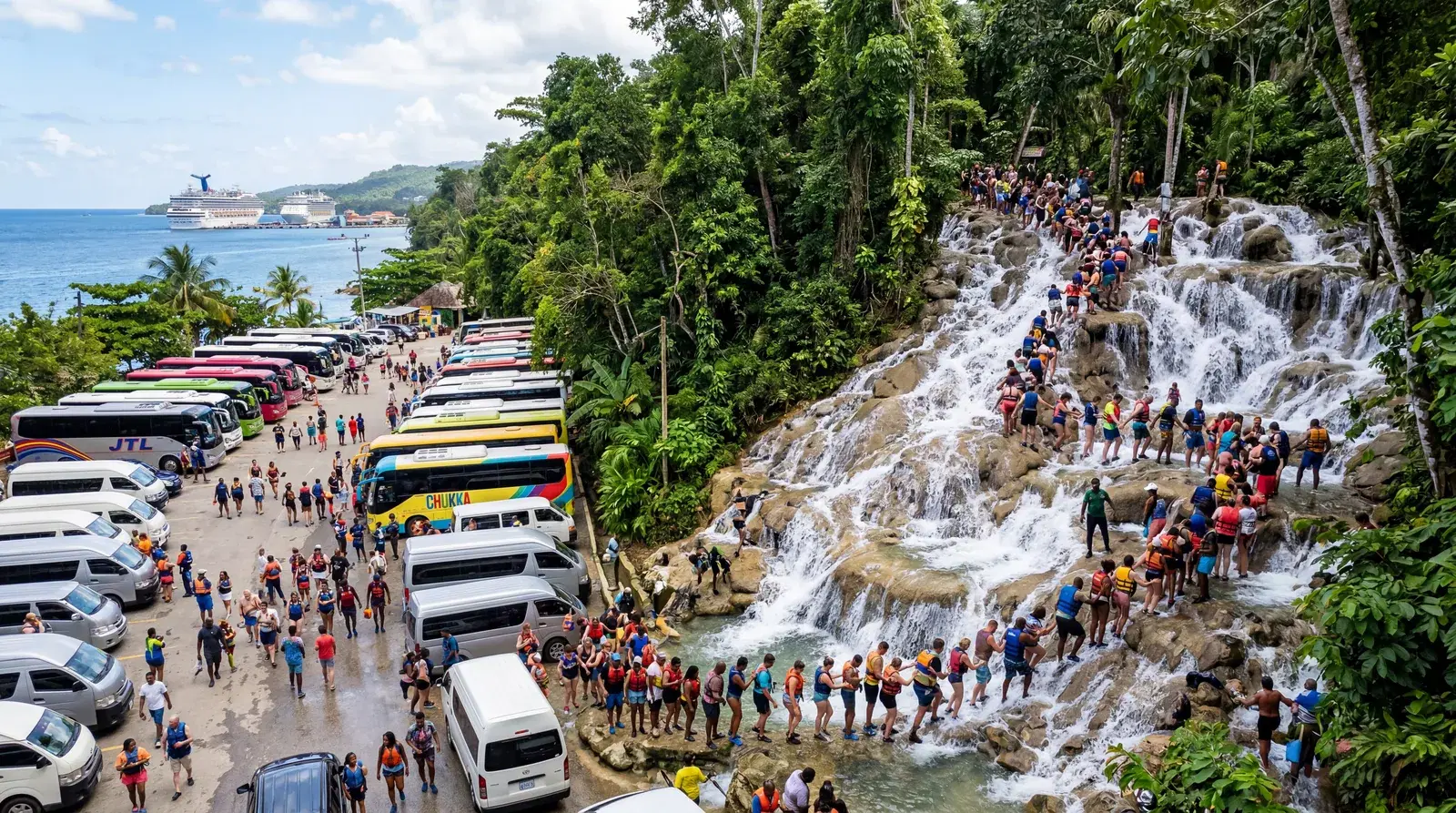
If you are in Ocho Rios, you will be sent to Dunns River Falls like every other vessel at the dock. Before long you are part of a human chain with 400 strangers making their way up the waterfall, while an official photographer stands by to peddle you the shot for $25 when you are done.
The falls are lovely enough. The company of a cruise crowd is not. As for the rest of Ocho Rios, it is hard to recommend.
You will find high unemployment and the kind of hustling in the streets near the port that leaves a tourist with no local ties and limited time with very little authenticity. Many a veteran of cruising will tell you it is the sort of day you are better off remaining on the ship.
Read More: Some Caribbean All-Inclusives That Are Worth Your Money (9 of Them)
6. Belize City, Belize
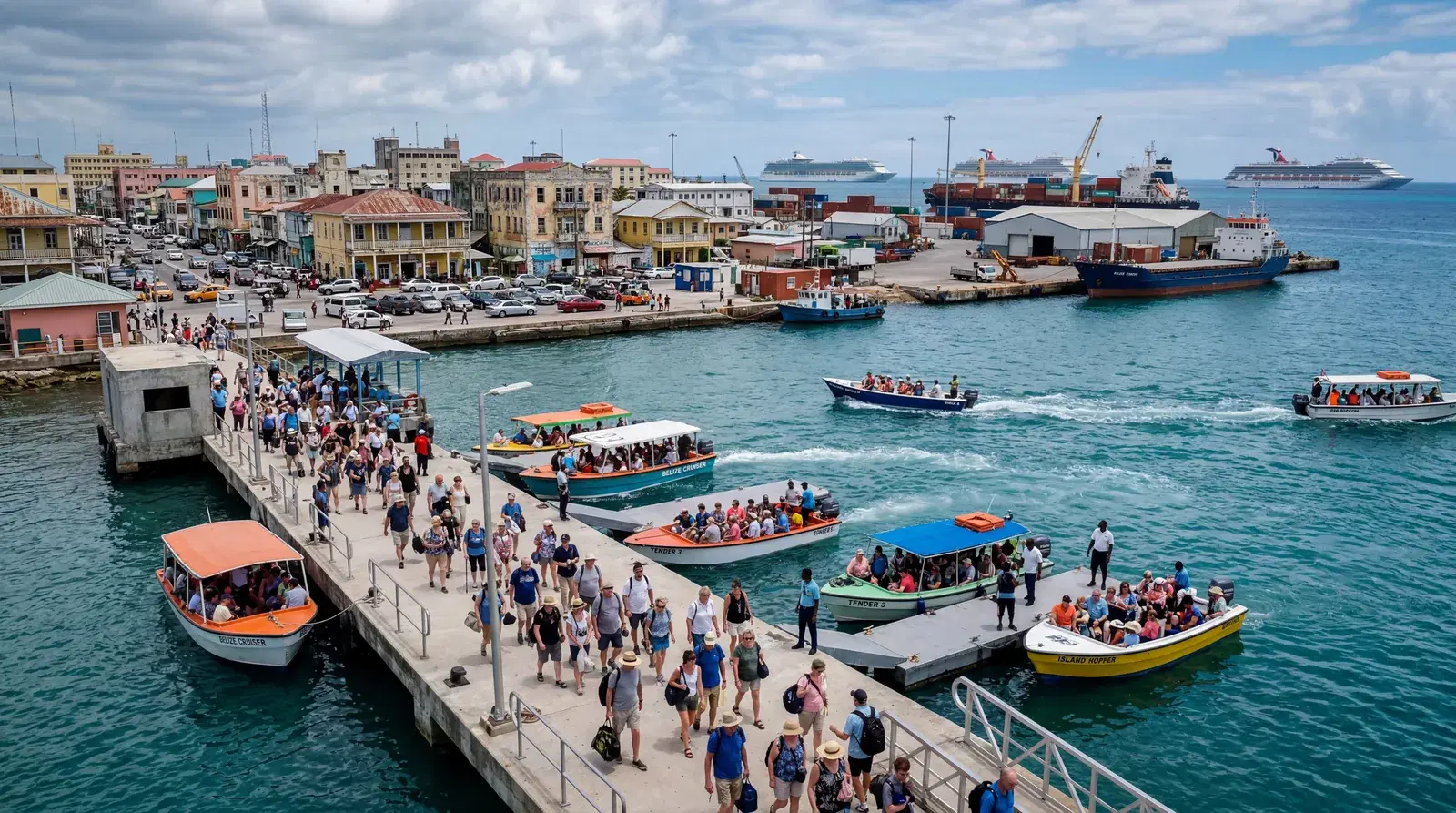
Belize City is the one place on a Western Caribbean run where the ship can’t be moored at a pier. The shallows mean you are tendered in by small boats, eating into your shore time by 30 to 45 minutes each way.
The city is no destination at all, merely a transit point with crime levels the cruise line is polite about calling “staying in approved areas.” The real draw, be it the Blue Hole or the Mayan ruins at Lamanai and Caracol, is hours away and demands a costly full-day excursion.
A couple from Arizona put it to me recently: they were out $280 apiece for the outing, put in 4 hours on a bus and made it back to the tender with 20 minutes to show for it and a case of exhaustion. Belize needs more of a day than a cruise will provide. From here on in it gets worse.
5. San Juan, Puerto Rico
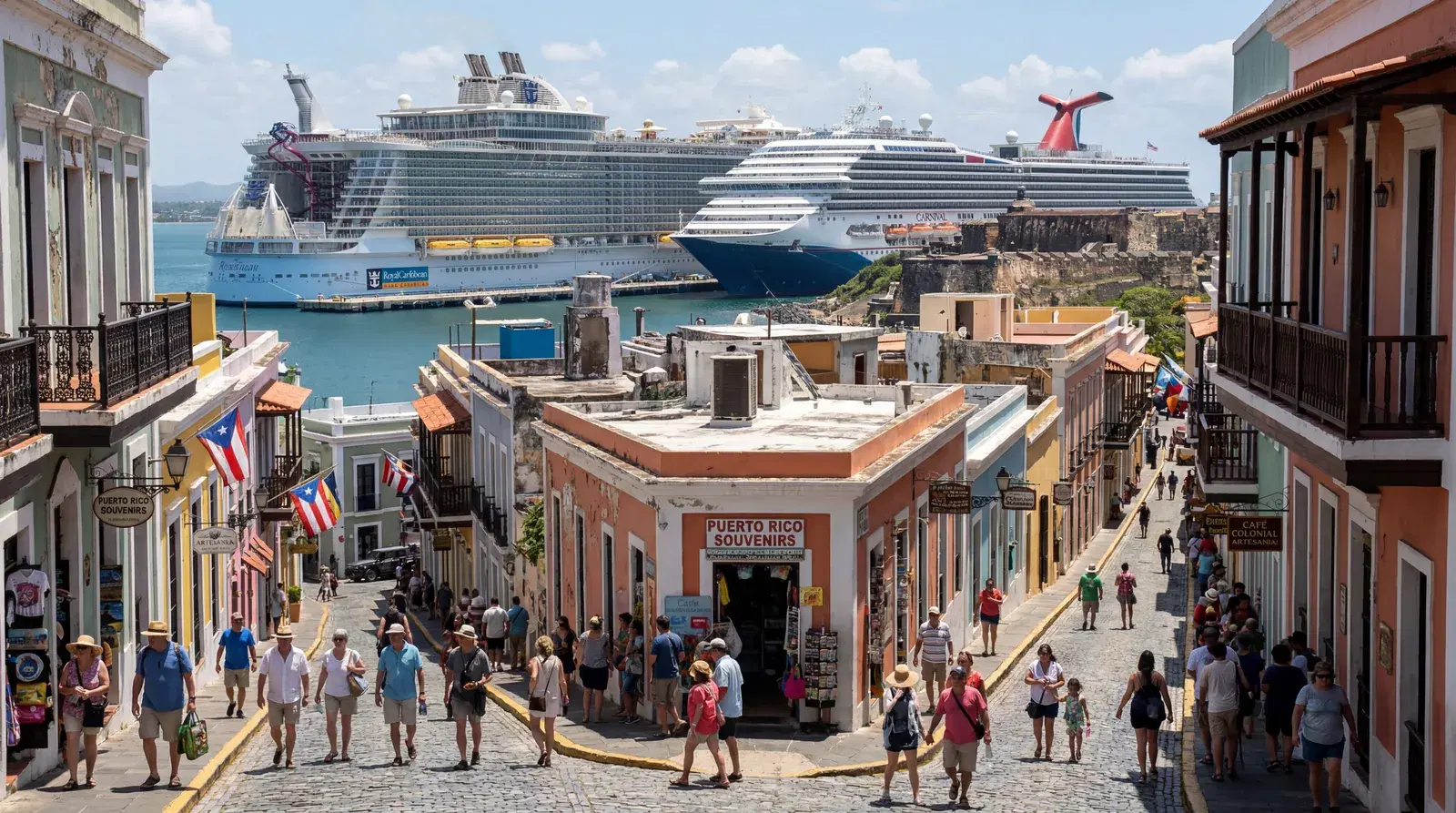
There is no denying that San Juan has its merits. One can put in for the colonial architecture of Old San Juan, the El Morro fortress or a food scene that has put in some hard work to improve of late.
But then there is the matter of what befalls the city under normal operating conditions, when you have three or four cruise ships in port at once. It becomes a physical chore to get around Old San Juan. The good restaurants are packed and the streets are gridlocked with tour groups proceeding at their own leisurely pace.
A week would be the right amount of time to do Puerto Rico as an island justice; as a four-hour call from a ship, it is a crowd-crushed caricature of a fine place. Any seasoned cruiser who has also been to the island on his own will tell you they are two entirely different propositions, with the cruise being the inferior one.
4. Amber Cove, Dominican Republic
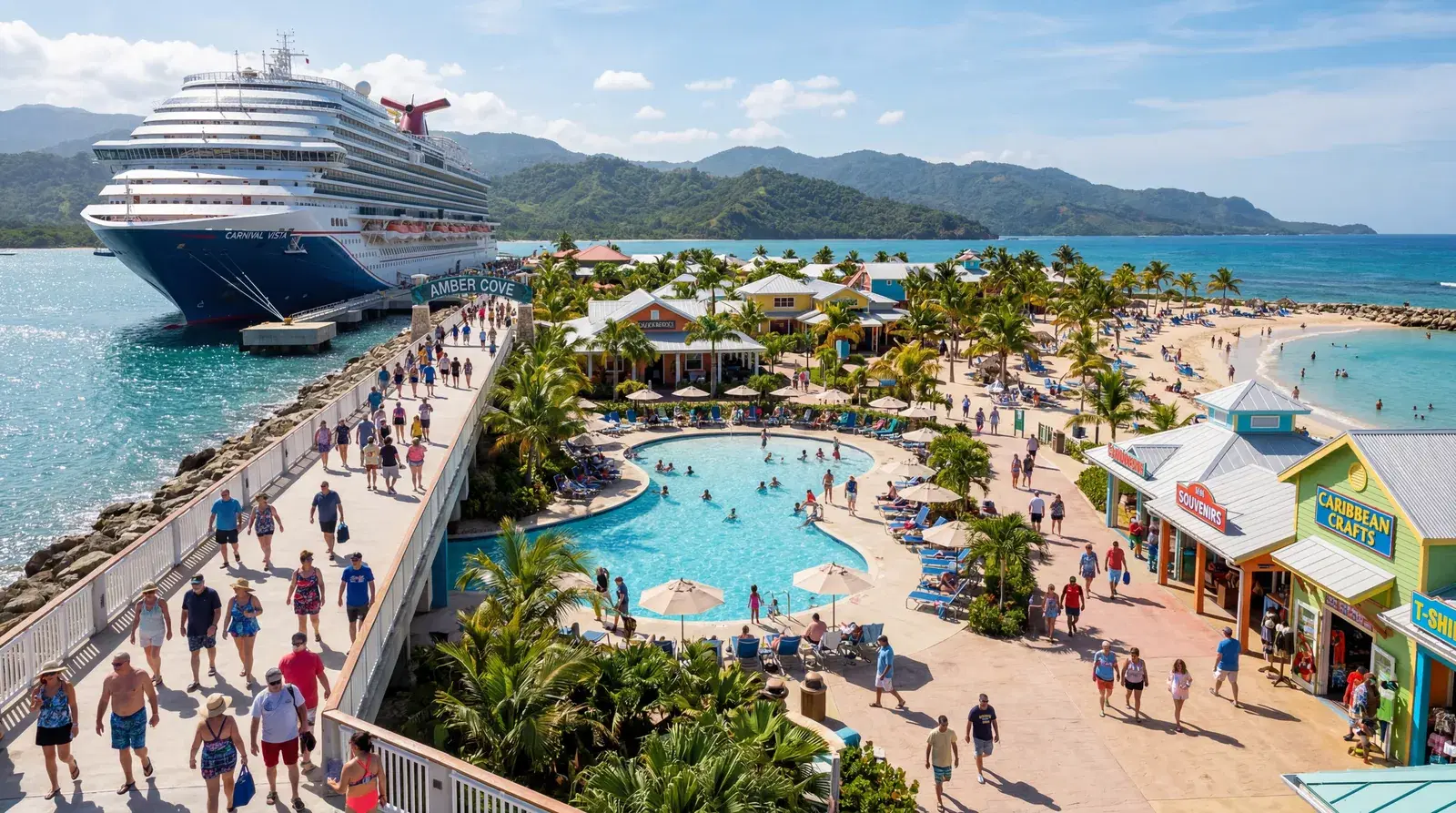
Then there is Amber Cove, another of Carnival’s private ventures on the Dominican Republic’s north coast. The place is well enough appointed with its pools and excursion desks and so on, but don’t mistake it for the Dominican Republic.
It is a walled resort compound that could be dropped in any country and pass for the same thing. You can take a short taxi to Puerto Plata for some authentic character if you like, though most won’t bother. The complex is put together to make departure seem like a hassle.
In a sense you have visited the DR much as one might visit the Caribbean exhibit at Epcot. The line builds them to keep your wallet in hand, and you go home with a passport stamp and little recollection of the country to show for it.
3. Harvest Caye, Belize
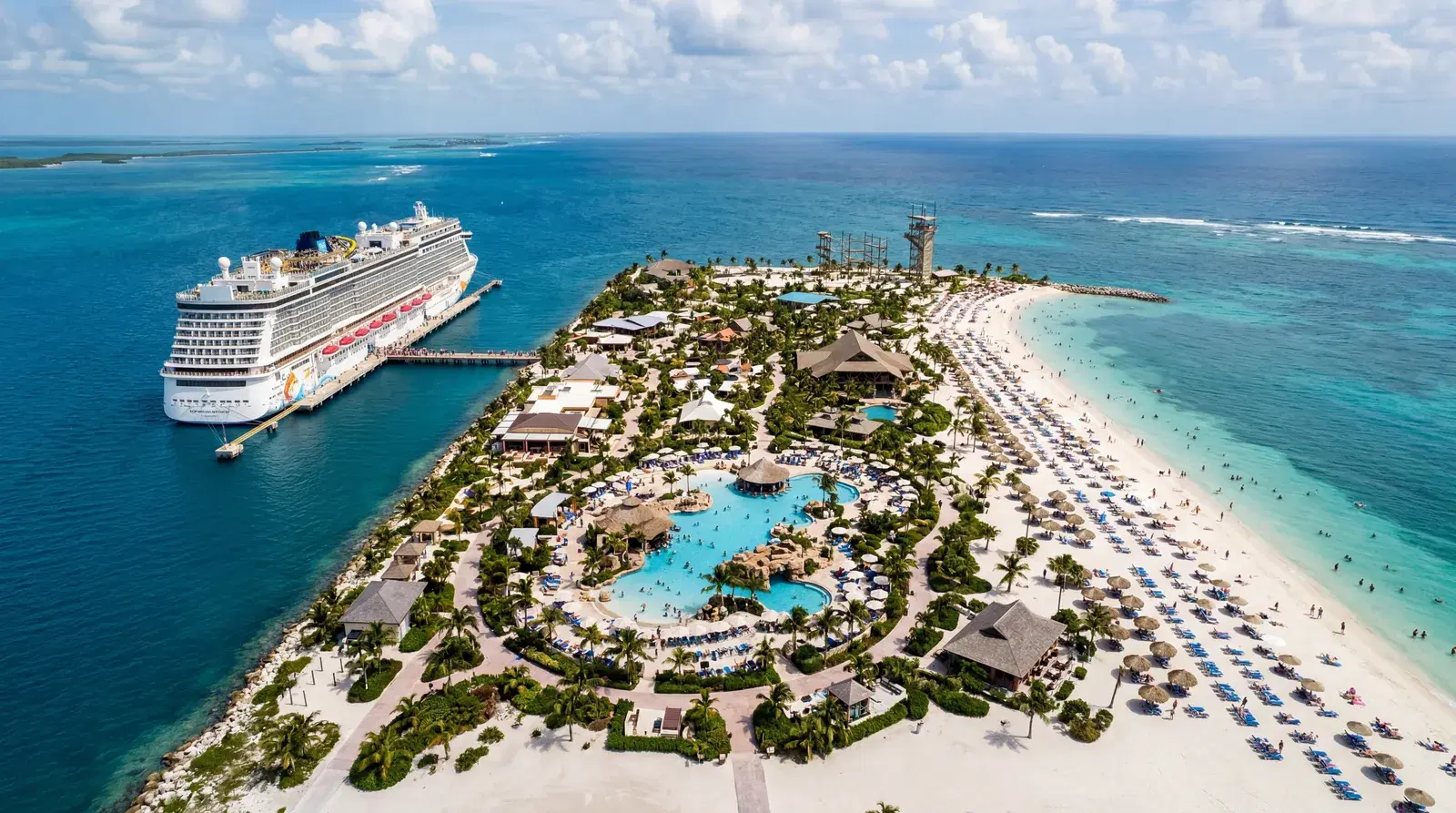
Norwegian Cruise Line has taken the Labadee formula and run with it at Harvest Caye in Belize. They put down $50 million on a 75-acre island that was empty before they got there. Now it has a water park, a wildlife sanctuary, bars and the like.
There is not a hint of Belize about it. You won’t meet a local or sample the cuisine. Some of their passengers put it at “the nicest beach day of the cruise,” which says it all: the bar here is a manufactured affair compared to the pool deck back on the ship.
For those who have been to the mainland, this is the priciest way to overlook a country of interest. Since the ticket covers it, the indignation is built in. Bad as it is, wait until you see #1.
2. Perfect Day at CocoCay, Bahamas
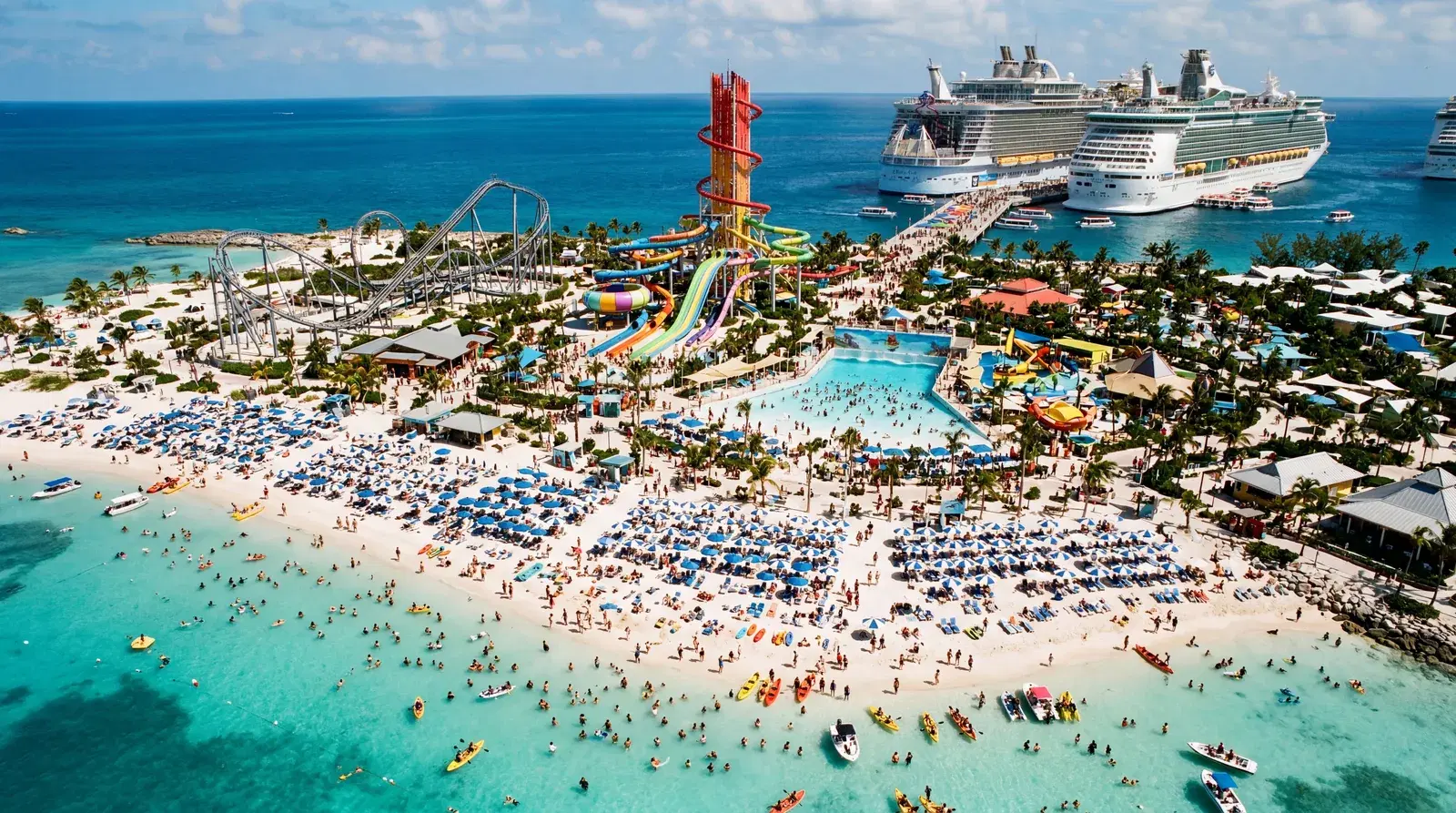
CocoCay is Royal Caribbean’s answer to the formerly scrubby Bahamian island, and with an outlay of in excess of $250 million they have made it the biggest private destination in the world. The money is visible in the form of overwater cabanas at $500 a day, a wave pool and a waterslide tower of 135 feet.
You can even ride a helium balloon at 500 feet. What you won’t see is anything of the Bahamas. You are in a theme park that just happens to be in Bahamian waters. The rides are something else, but the food is of the resort buffet variety.
And for the zipline or the balloon you can expect to fork over another $300 to $500 on top of the original fare. I was told by a couple from Virginia they put out an extra $1,400 for a “CocoCay upgrade day” and were raving about the slide when they got back. Their agent would have you believe it was a proper Caribbean vacation.
1. Mahogany Bay, Roatan, Honduras
The Most Manufactured “Island Experience” in the Caribbean
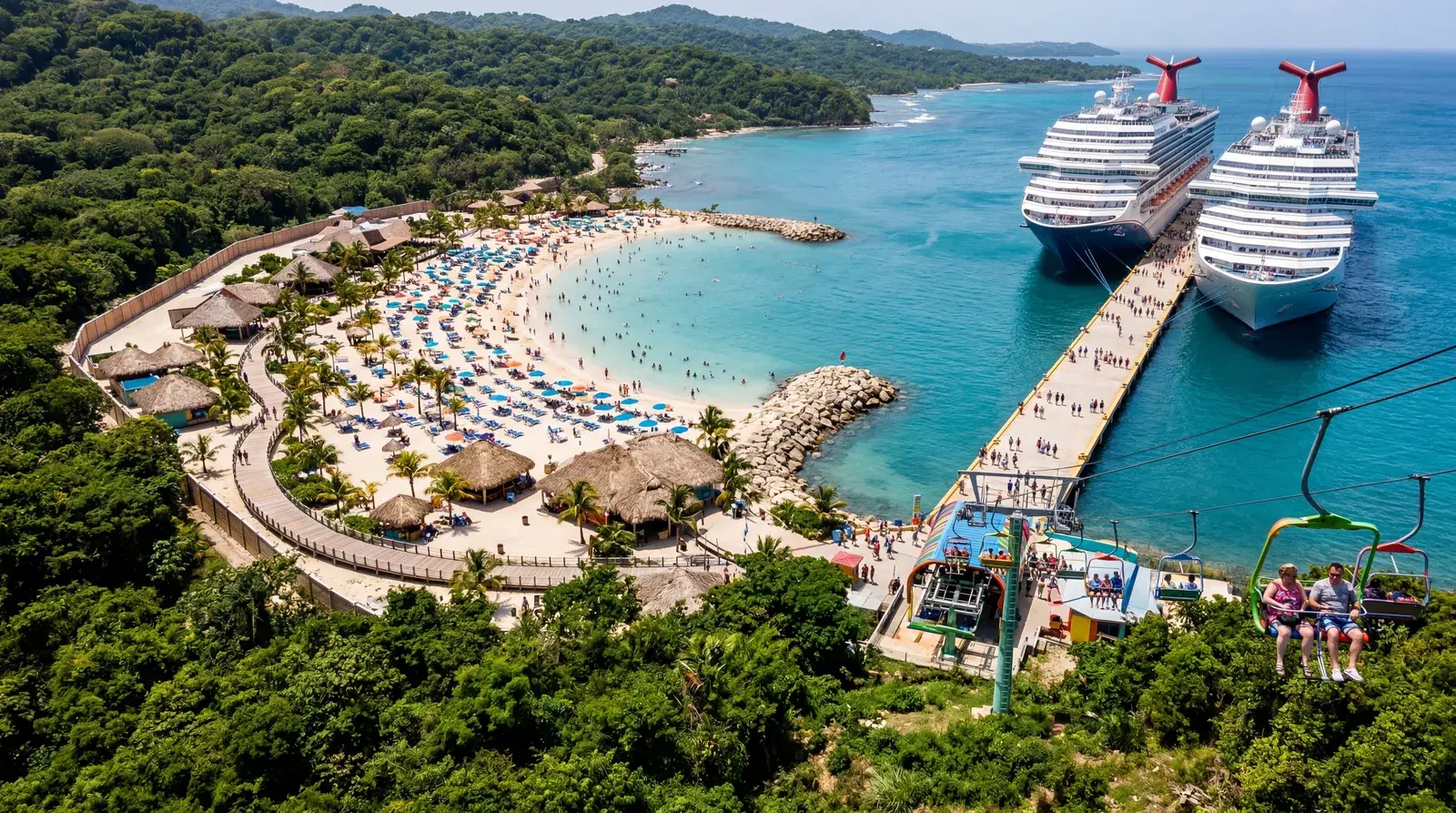
Mahogany Bay is the number one entry here because it is the purest example of the cruise line approach to Caribbean ports: build a wall around an extraordinary place so you don’t have to deal with it. Roatan is spectacular in its own right. The reef is top tier and the west end has beaches that will leave you speechless. You can have better seafood from a local for the price of a burger at the port. Yet Carnival has walled off Mahogany Bay as a private concern, complete with a chairlift to a contrived beach and its own entertainment.
It is all laid out so you have no reason to leave the compound and part with your money to someone living on the island. The #1 rating comes from the sheer pointlessness of it. From the edge of Mahogany Bay you can look over at the real West Bay beach 20 minutes off. There are cabs outside the gate. But the whole setup is meant to make leaving seem risky, and few put in the effort. As a retired nurse from Georgia put it: “We docked at Roatan twice.
The first time we stayed in the Carnival compound because we didn’t know better. The second time we walked out the gate, took a $10 taxi to West Bay, and spent the day at a beach bar eating grilled fish and swimming on a reef with nobody around us. It was like being on a different planet.” Every stop has that second version. The lines would prefer you didn’t come across it. Which is why we put this one last.
Book Smart, Not Just Early
You have seen what is behind the pier gates. The Caribbean is one thing; the cruise port version of it is another.
Put this in front of anyone looking at cruise prices these days. Their travel agent is not going to mention the bit where Carnival owns the beach.
Comments
The opinions and views expressed in the comments section are solely those of the individual users and do not represent or reflect the opinions, views, or positions of HumbleTrail. HumbleTrail does not endorse, support, or verify the accuracy of any user-generated content.
By posting a comment you agree to receive related emails from HumbleTrail in accordance with our Terms and Privacy Policy. You can unsubscribe at any time.