

Editor's note: These are styling suggestions, and the result depends on your hair and chosen cut.
This article adapts our earlier hairstyle guide and offers editorial suggestions, not treatment for hair loss or a promise of increased hair density. Discuss the shape, maintenance and suitability of a cut with your stylist. Images are for illustration purposes only.The outline of a haircut can change how full fine hair appears.
These styles offer different ways to keep shape and movement while fitting the time you want to spend styling.
25. A Collarbone Lob With a Defined Perimeter
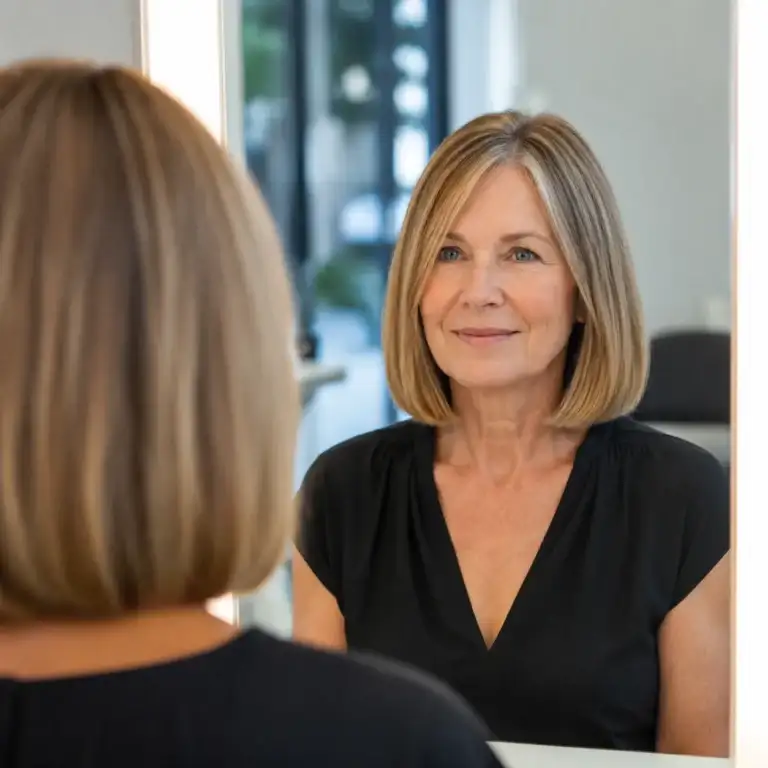
A collarbone lob keeps enough length for movement while giving the ends a clear outline. A blunt finish can make that outline appear more substantial than a heavily feathered edge.
Ask about light shaping near the face while keeping the perimeter you prefer. Before the stylist removes weight near the bottom, discuss how those layers will sit with your hair's texture and the way you normally dry it.
24. A Chin-Length Bob With a Consistent Bottom Line

A chin-length bob brings much of the hair to a similar finishing point. That compact shape can give fine hair a fuller-looking outline without relying on a heavily teased style.
Talk through the amount of tapering before the cut starts. If you want a solid edge near the jaw, explain that preference and ask how the front will sit when tucked behind an ear or left loose.
23. A Soft Pixie With More Length on Top

A soft pixie puts the longer pieces at the top while keeping the sides more compact. That contrast gives you different ways to arrange the crown and fringe without managing a longer perimeter.
Ask for enough length to move the top in the direction you like. A little styling cream may help separate pieces, but the amount and finish should suit your hair rather than follow a fixed rule.
22. Side-Swept Bangs That Join the Rest of the Cut

A side-swept fringe can frame the forehead and lead into the side sections of a haircut. The useful detail is how the bangs connect to the rest of the shape.
Ask the stylist to show where the fringe will begin and how it will sit as it grows. Keeping that balance in mind helps you choose between a lighter fringe and one that uses more of the hair at the front.
21. A Rounded Bob With Subtle Internal Layers

A rounded bob uses a curved outline to create shape around the head. Subtle internal layers can help it sit as intended while leaving the visible surface relatively smooth.
Bring a photograph that shows the side and back as well as the front. Ask which parts of the shape depend on the cut and which require styling, so you know what your morning routine is likely to involve.
20. A Shoulder-Length Cut With Limited Layering

Shoulder-length hair gives you room to tuck, clip or tie back the front. With fine hair, discuss whether the layers can stay concentrated near the face while the bottom retains a clear line.
The right balance depends on how your hair falls after washing. Our guide to haircuts with simpler styling routines offers other shapes to discuss if low maintenance is your main priority.
19. A Longer Pixie With an Off-Center Part

A longer pixie keeps some length at the crown, fringe and sides of the face. An off-center part gives you another way to arrange those pieces and adjust the shape at the top.
Try the part in a few positions before settling on one. Ask the stylist to demonstrate how the cut looks with your usual drying method, rather than judging it only after a salon blow-dry.
18. A Bob With a Gentle Angle Toward the Front

A slightly angled bob keeps the back shorter and allows more length toward the face. A small change in angle can alter the outline without creating a dramatic difference between the front and back.
Decide where you want the front to finish, such as near the jaw or collarbone. Ask to see the shape from the side, where the angle and neckline are easiest to compare.
17. A Bixie That Combines a Bob and a Pixie

A bixie combines the shorter shape of a pixie with some of the length and movement of a bob. It may suit someone who wants a compact cut but still likes pieces around the face.
Ask how much separation the style needs and which sections will require attention after washing. If you try texture cream, start with a small amount and adjust it to the finish you prefer.
16. Face-Framing Layers That Begin Near the Cheekbones

Face-framing layers can add movement at the front while the rest of the haircut keeps a more consistent perimeter. Beginning them around the cheekbones creates a different effect from a short fringe.
Ask the stylist to show where the shortest piece will land before it is cut. Think about whether you want to tuck those pieces back and how they will sit when you wear glasses.
15. A Wavy Bob With a Clear Edge

Loose bends can add visible space between sections of fine hair. Keeping a defined bottom line gives the waves an outline rather than making every part of the haircut equally layered.
Ask for a demonstration of the amount of bend you like. You may prefer movement through the middle with straighter ends, rather than a fully curled finish. Choose a styling routine that you are comfortable repeating.
14. A Short Shag With Softly Connected Layers

A short shag can work with a natural bend by using layers around the crown and face. The amount of layering matters more than the name of the cut.
Ask how the sections will connect and what the shape will do as it grows. If you want a softer outline, bring examples of that finish rather than a highly separated style that needs more daily arranging.
13. Curtain Bangs With a Medium-Length Cut

Curtain bangs frame both sides of the face and can be worn with a medium-length haircut. Their length and parting determine how easily they move off the forehead.
Consider the fringe alongside the collars and necklines you wear most. Our guide to everyday outfit details after 50 looks at those clothing choices without asking you to follow a single style rule.
12. A Jaw-Length French Bob With a Soft Finish

A jaw-length French bob places the ends above the shoulders, where they can form a compact outline. A side tuck or soft fringe gives you ways to adjust that shape.
Discuss how closely you want the hair to follow the jaw and how it behaves when it dries. The useful goal is a shape you enjoy wearing, rather than reproducing every detail of a styled reference photograph.
11. A Tapered Nape With More Shape at the Crown

A tapered nape creates a difference between the neckline and the longer hair above it. That contrast can make the crown's shape more visible.
Ask whether a soft taper or a sharper edge better suits the finish you want. Check the cut with a jacket or collar in mind, and find out how often the neckline will need tidying to keep the shape you have chosen.
10. A Wedge Shape With Softer Edges

A wedge can build a shaped outline at the back while keeping the neck relatively clear. Softer edges and movement through the top offer a less sharply defined version of the cut.
Look at photographs from several angles and explain which details you like. Ask how much brushing or drying is needed to hold that outline, so the salon finish does not become a routine you never wanted.
9. An Off-Center Part With Gentle Crown Lift

Changing the part can alter how the top of a haircut sits without changing its length. Try moving it slightly off center and notice where the hair naturally lifts or separates.
You do not need to choose a dramatic amount of height. Ask your stylist to show a small adjustment with your usual tools, then decide whether the result is worth adding to your everyday routine.
8. A Short Shape That Complements Silver Hair

Silver hair can be worn at different lengths, and a shorter shape offers one way to make its outline stand out. A clean edge and softly connected sections can give you a finish that is easy to see and arrange.
Choose the amount of texture by how your own hair behaves. Ask about upkeep and suitable products rather than assuming that everyone with gray or silver hair needs the same routine.
7. A Lob With Longer Pieces Around the Face

Longer face-framing pieces add movement to a lob while leaving much of the haircut at a consistent length. They can also give you options for a side tuck or a small clip.
Check that the front is long enough for the way you want to wear it. Try the shape with glasses if you use them, and ask how those pieces will sit as the cut grows.
6. A Blunt Bob With a Loose Bend

A blunt bob does not have to be worn completely straight. A loose bend through the middle can change the shape while the ends keep a more defined line.
A stylist can show how the cut responds to a brush or a larger curl before you choose a routine. Tell them if you prefer a soft turn rather than a clearly curled finish around the jaw.
5. A Textured Crop With a Lighter Fringe

A textured crop combines a short overall shape with separated pieces and a lighter fringe. It offers a different finish from either a blunt bob or a closely cut pixie.
Decide how much detail you want to arrange at the front each morning. Ask which pieces can dry into place and which need product or a tool, then choose a version that suits your habits.
4. A Cut Planned Around Your Glasses

Glasses change where the sides and fringe of a haircut rest. Hair can sit differently around the temples once the frames are in place.
Wear your usual pair while the stylist checks the front and sides. A small adjustment may make a tuck more comfortable or prevent pieces from bunching near the hinges. This is a practical fit check, rather than a reason to replace frames you enjoy wearing.
3. A Bob With Carefully Chosen Weight Removal

Before using thinning shears on fine hair, discuss how much of the cut’s weight to remove. A defined bottom line may be part of the fuller-looking shape you are trying to keep.
Ask the stylist to explain the intended result and how it will look after washing. Our guide to questions to consider before a haircut can help you prepare that conversation.
2. A Shoulder-Skimming Cut With Softly Turned Ends

A gentle turn at the ends can add movement to a shoulder-skimming cut without taking away its length. It is another option if you enjoy a medium haircut but want a different outline.
Decide how much turn you like and ask how to create it with the tools you already use. Check whether the effect comes mainly from the cut or from styling, since those are different maintenance commitments.
1. A Haircut That Fits Your Normal Morning

A useful haircut works with the way your hair falls and the time you want to spend on it. Reference photographs can help, but they are only the start of the conversation.
Tell the stylist how you normally wash, dry and arrange your hair. Ask which details you can reproduce at home and what will change as the cut grows. The right choice is personal, rather than a rule attached to an age.