

Some state parks reached federal inspection, proposed legislation or an approved site before the national-park dream stalled. Their histories include a rejection that helped create an entire park system, a forest rescued from logging and a community that raised the money itself.
Highlands Hammock, Florida: the neighbors helped buy what Washington declined
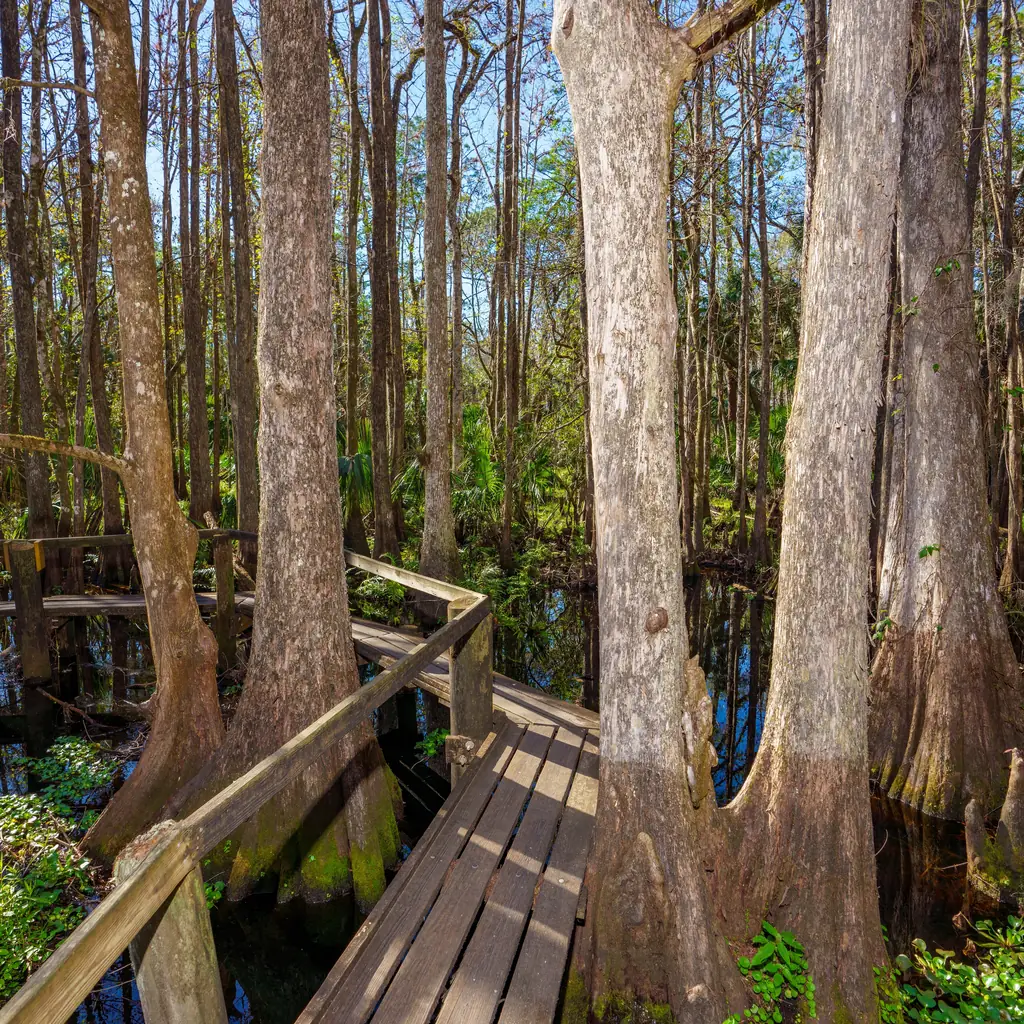
Highlands Hammock’s supporters wanted a national park. Federal officials inspected the Florida woodland in February 1930 and concluded that the proposed area was too small.
That could have ended the campaign. Instead, Margaret Shippen Roebling offered money toward the land purchase and asked the community to contribute. Residents raised the requested $5,000 through donations that ranged from a dollar to much larger gifts.
The result was a privately supported park, which opened in 1931. It entered Florida’s state park system in 1935. Roebling did not live to see the opening; her husband continued the project after her death.
There is a second human story worth remembering on a visit. Naturalist Carol Beck worked here from 1949 to 1965 and was the Florida Park Service’s first female field employee. Her wagon tours helped begin the park’s tradition of guided rides.
The national designation never arrived. The effort still protected the woodland and created a place where generations of visitors could learn to see what its early supporters had valued. Florida State Parks’ history
Silver Falls, Oregon: the waterfalls survived a landscape officials thought too damaged
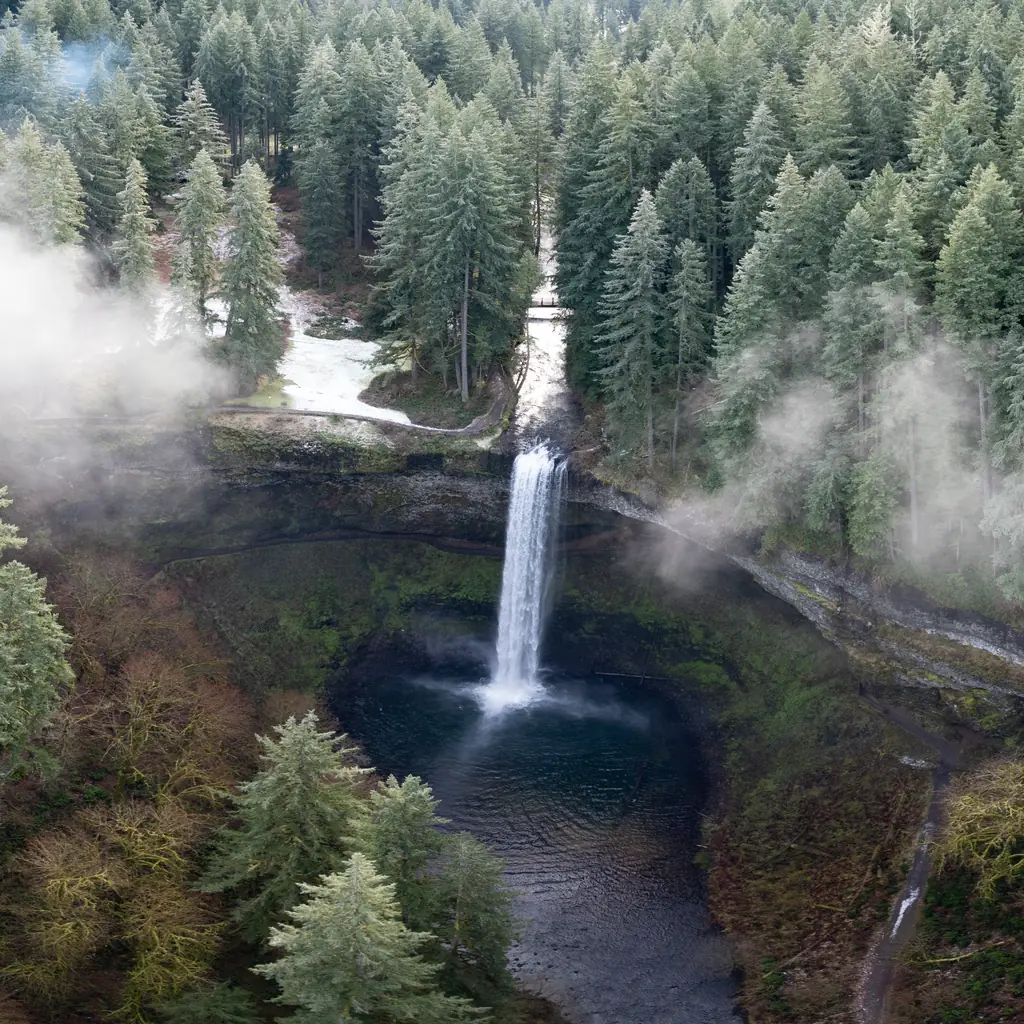
The waterfalls were not the problem at Silver Falls. The land around them helped derail the national-park proposal.
Photographer June Drake spent years showing people the falls through his pictures. Senator Charles McNary promoted federal protection, and bills proposing the area for the national park system were introduced in 1928.
National Park Service officials did not support them. A later inspection in 1935 again found obstacles: private properties complicated the boundaries, and logging had damaged too much of the landscape to meet the service’s criteria at the time.
Yet the federal government subsequently helped develop the area through a recreational demonstration project. That is the interesting turn in the story. The same damaged landscape that counted against national-park status could be restored and opened for public recreation through another program. National Register documentation
The Trail of Ten Falls is the obvious reason to visit today. The lodge and other Depression-era work add another layer: people did not simply protect a finished attraction. They helped repair the setting and build the paths that made it accessible. Oregon State Parks
Ricketts Glen, Pennsylvania: war interrupted the plan
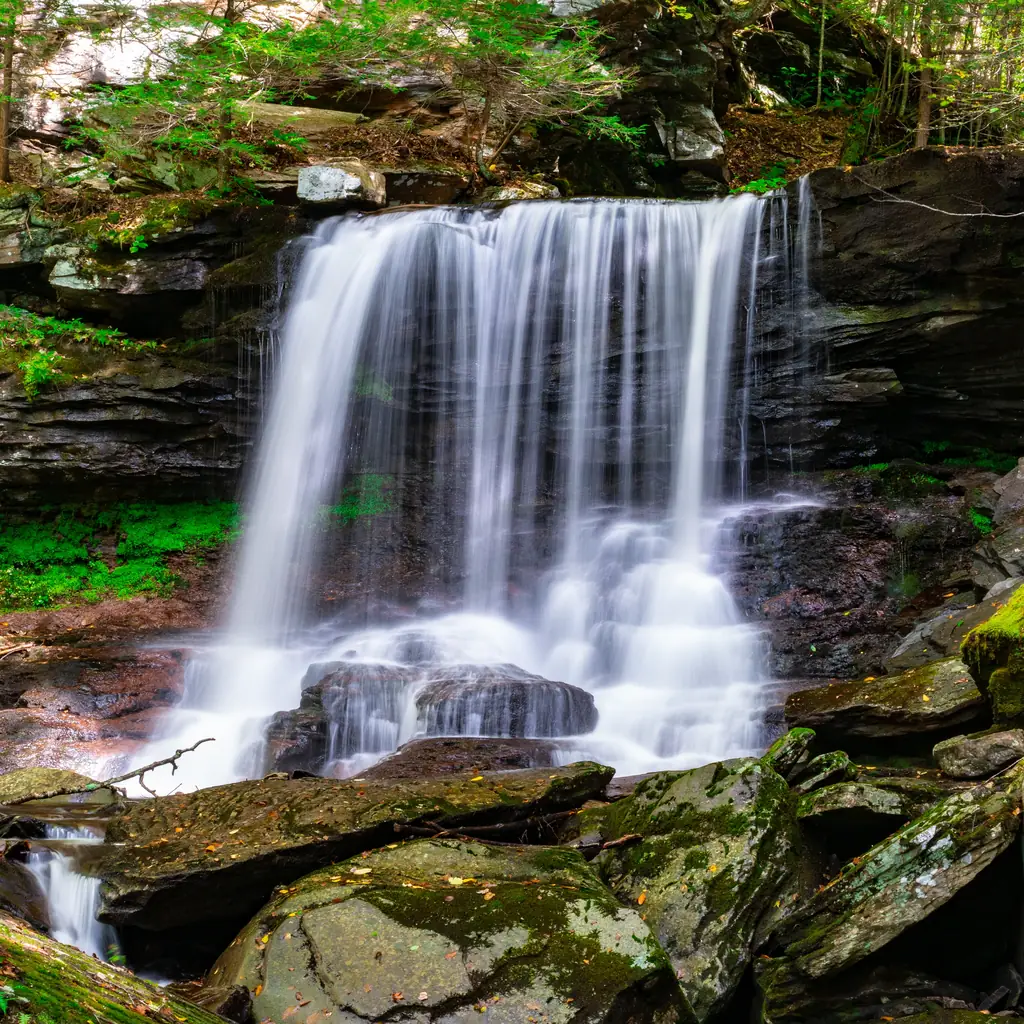
Ricketts Glen came closer than a hopeful campaign slogan. Pennsylvania’s official history says the area was approved as a national park site in the 1930s, before World War II brought those plans to an end.
The waterfalls already had a story of their own. In the nineteenth century, people fishing in the area brought the falls to the attention of landowner R. Bruce Ricketts. He later had trails and stone steps built through the glens, turning a difficult landscape into somewhere visitors could explore.
When the federal plan stalled, Pennsylvania acquired 1,261 acres from Ricketts’ heirs in 1942. The state park opened in 1944.
That sequence gives a walk through the glens a different meaning. The trails are part of a long effort to make a remarkable place accessible, interrupted by events far beyond Pennsylvania.
The national-park proposal is an intriguing piece of history. The enduring achievement is that the falls and surrounding forest received protection despite its failure. Pennsylvania DCNR’s park history
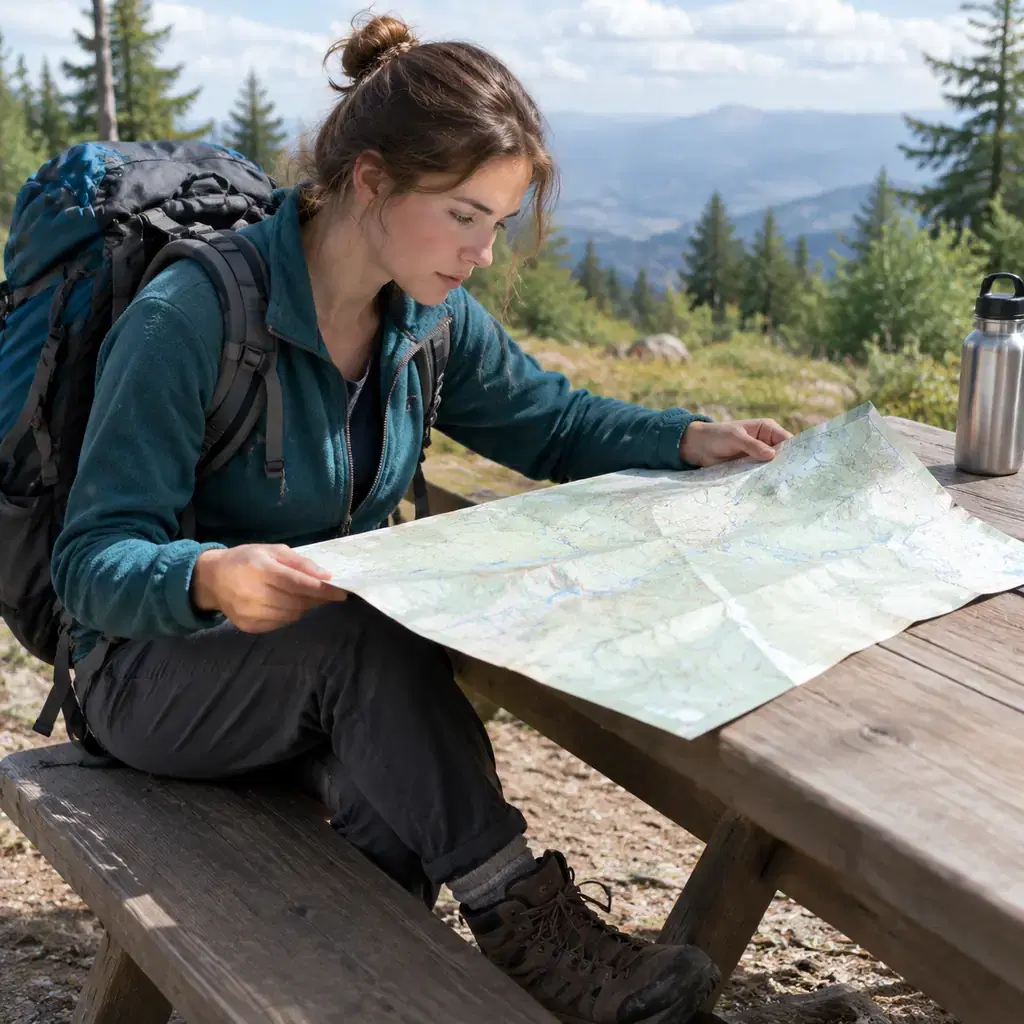
The history adds another reason to allow time on a park road trip. Our guide to scenic drives with worthwhile stops starts from the same idea: the places between the headline attractions can deserve more than a quick photograph.
Petit Jean, Arkansas: a federal “no” helped start a state park system
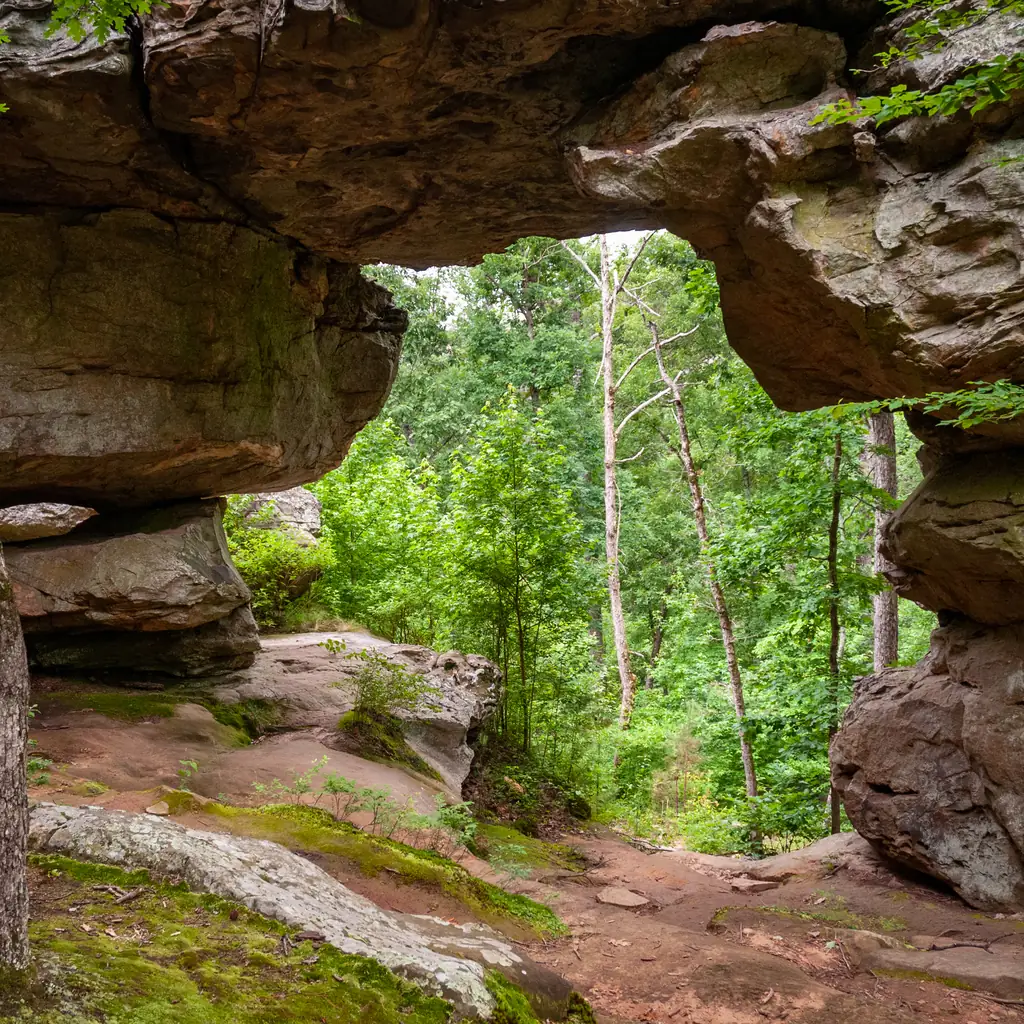
Petit Jean’s campaign has an unlikely beginning: officials from a lumber company were impressed enough by the mountain to discuss protecting it.
By 1921, company physician Dr. T. W. Hardison was pressing the case with National Park Service director Stephen Mather. Mather admired the place but did not believe it met the standard of national significance.
He suggested a different ambition. Arkansas could build its own state park system.
Hardison pursued that idea, and legislation in 1923 established the foundation of Arkansas State Parks. What began as a bid to protect one mountain helped produce something much broader. Arkansas’ official account
Cedar Falls remains one of Petit Jean’s great draws, but the Seven Hollows landscape helps explain why the early campaign reached beyond a single view. Rock formations, wooded passages and the mountain setting give visitors several ways to experience the place.
The rejection is worth remembering without accepting it as a verdict on the scenery. National designation and a rewarding visit are different questions; Petit Jean’s history makes that unusually clear. Arkansas State Parks’ Seven Hollows guide
Palo Duro Canyon, Texas: the scenery was easier to agree on than the land deal
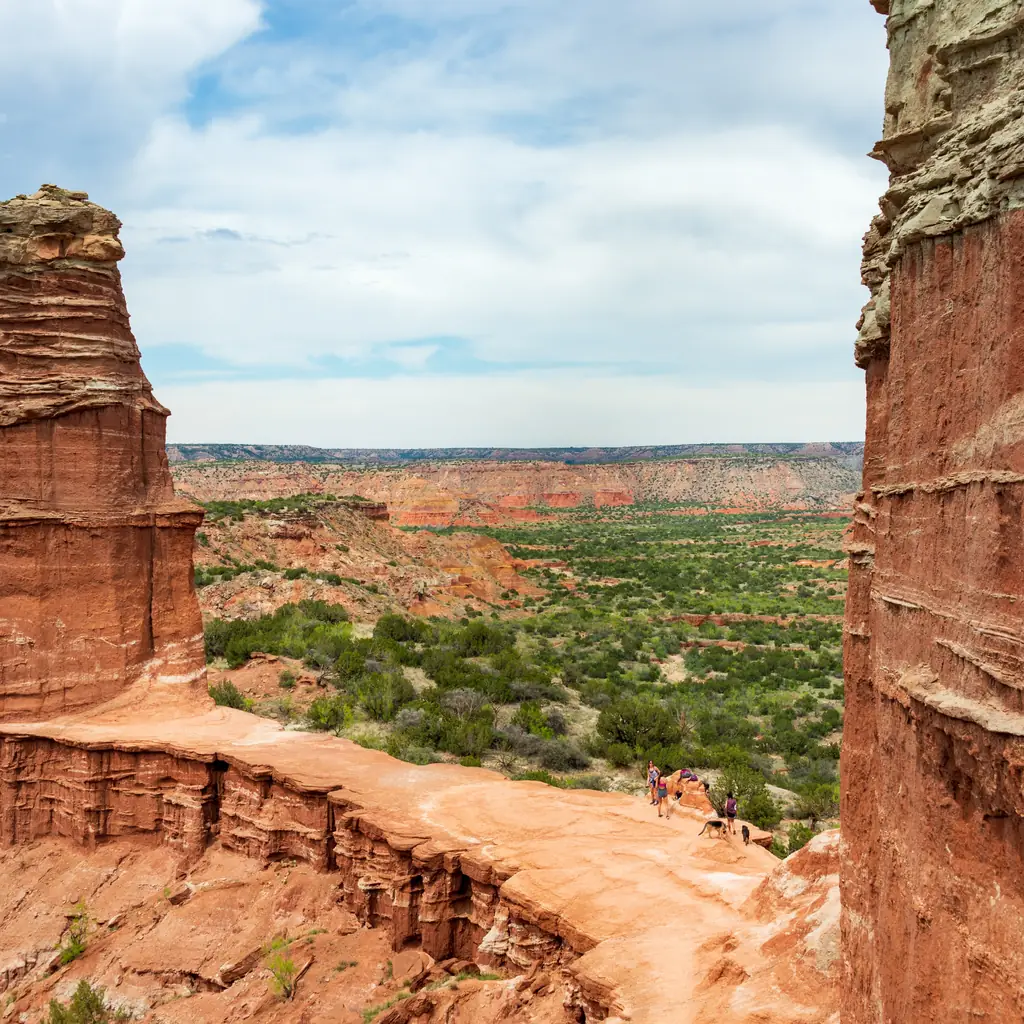
The national-park idea at Palo Duro was pursued repeatedly. A local resolution called for protection in 1906, and Congressman John H. Stephens introduced legislation in 1908, 1911 and 1915.
The proposals encountered problems that a magnificent view could not solve. Federal departments disagreed, and Texas land arrangements complicated the project. Early state efforts also ran into ownership questions.
The eventual state park required a financial arrangement as well as conservation enthusiasm. Land was conveyed to the State Parks Board in 1933, with park income intended to help service the debt.
Then Civilian Conservation Corps crews built the visitor infrastructure. Their work included a road from the rim to the canyon floor, trails, crossings and stone buildings. The park opened in 1934 while work was still underway.
On a visit, the drive down into the canyon is part of that legacy. The experience people now associate with the park depended on decisions about land, money and construction long after the first proposal reached Washington. Handbook of Texas
Porcupine Mountains, Michigan: saving the forest could not wait forever
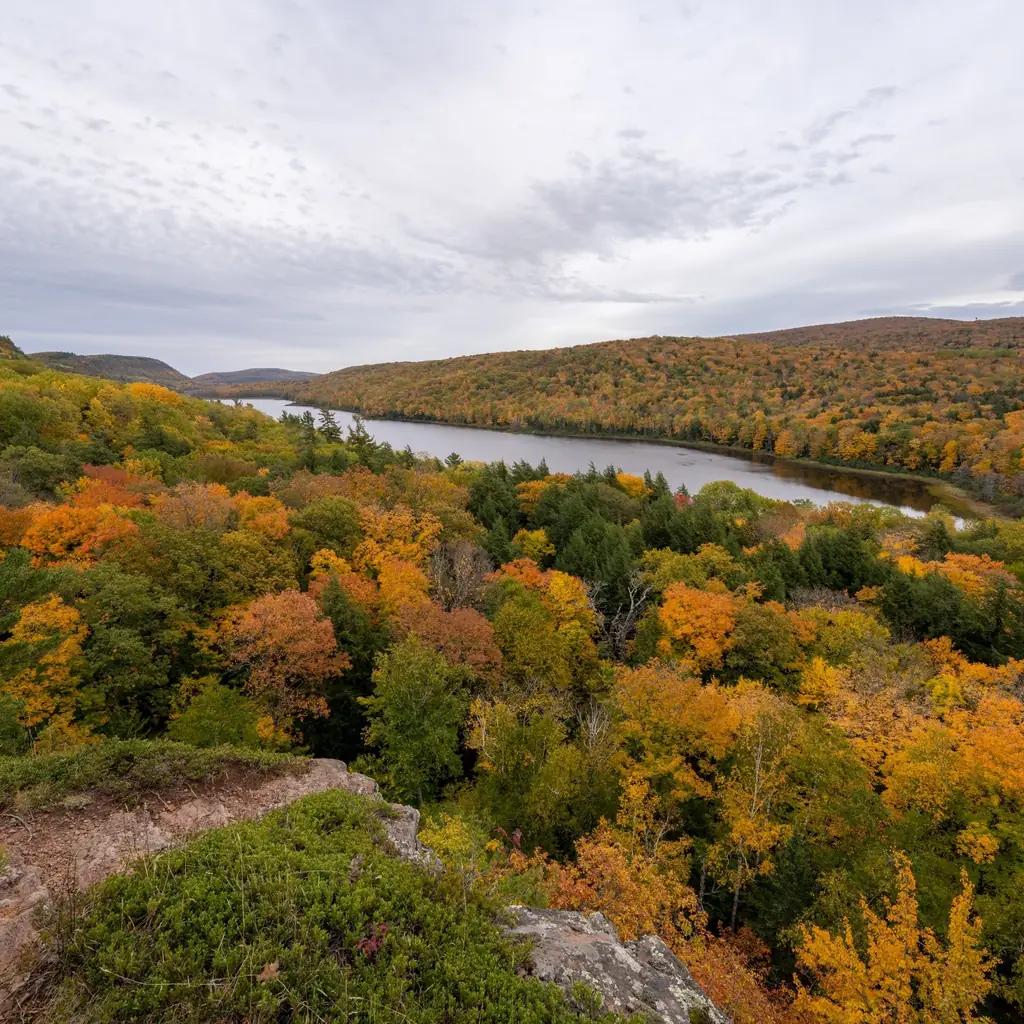
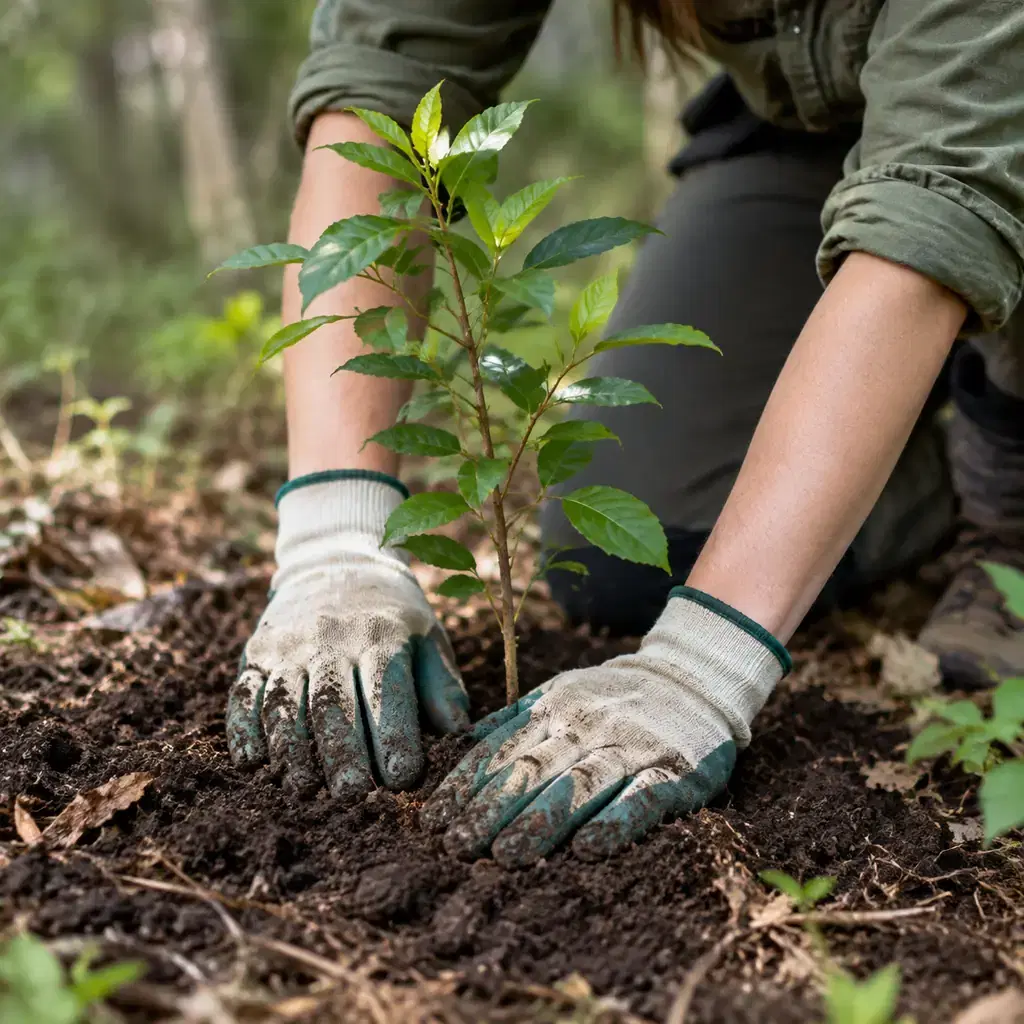
In the Porcupine Mountains, the prize was a large surviving expanse of old forest. Protecting it meant dealing with the possibility of logging and mining, not simply finding a suitable name for a scenic overlook.
A national-park petition appeared in 1928, according to Michigan’s park management history. The Depression and the war years complicated the effort. Michigan eventually acted through its own park system, allocating $1 million in 1944 toward protecting the land. Michigan DNR’s historical background
Lake of the Clouds supplies the celebrated view, but the forest around it is a reason to stay longer. Michigan DNR describes roughly 35,000 acres of primary forest within this landscape, an unusually large surviving tract of northern hardwoods and hemlock. DNR natural-area description
Protection has remained an ongoing task. In 2024, a land exchange brought thousands of acres of underlying mineral rights into state ownership. Even decades after a park opens, what happens beneath it can still matter. Michigan DNR’s mineral-rights announcement
Indiana Dunes needs a different ending
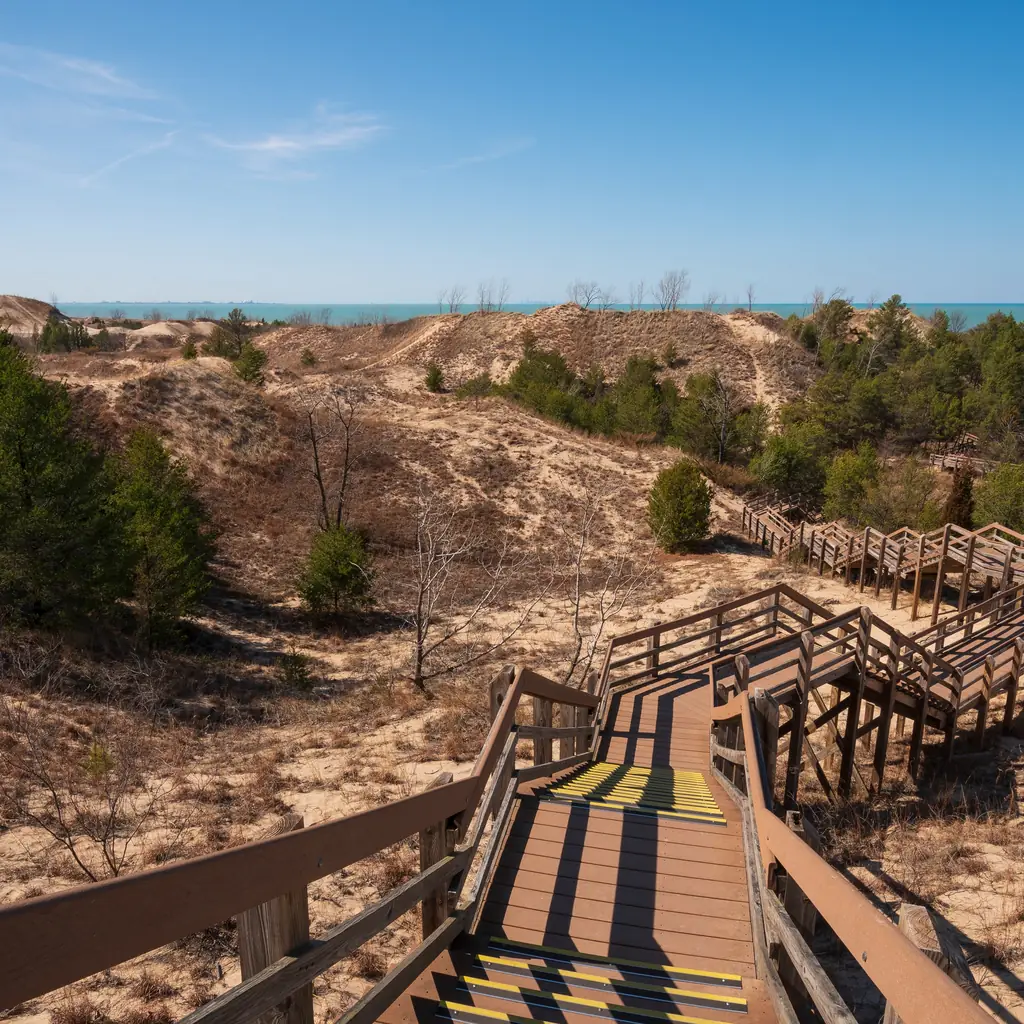
Indiana Dunes often appears in accounts of state parks that almost became national parks. The early story fits: a federal proposal gained attention in 1916, World War I intervened, and Indiana opened a state park in 1926.
But stopping there leaves out the most important development. Indiana Dunes National Lakeshore was established in 1966 and became Indiana Dunes National Park in 2019. National Park Service history
The state park remains separate. The national park’s new name did not transfer the state land or merge the two places. They have different management and separate fees and passes. National Park Service FAQ
So this is not another failed national-park dream. It is the case where federal protection eventually arrived alongside a state park, after decades of campaigning and losses along the lakeshore.
That distinction is useful on the ground, too: a visit can include both parks, but one park’s pass does not automatically cover the other. Fees and passes
Before extending the visit into an overnight stay, look at the practical details of the individual campground. The RV campground habits guide covers the small considerations that can improve a stay after the sightseeing is done.
Comments
The opinions and views expressed in the comments section are solely those of the individual users and do not represent or reflect the opinions, views, or positions of HumbleTrail. HumbleTrail does not endorse, support, or verify the accuracy of any user-generated content.
By posting a comment you agree to receive related emails from HumbleTrail in accordance with our Terms and Privacy Policy. You can unsubscribe at any time.