


Editor's note: Our balcony verdicts weigh scenery, deck access, and the added cost.
We used published itinerary and park information. Ships, routes and viewing conditions can change. Images are for illustration purposes only.A balcony can give you an extra morning in Alaska or sit empty for a week. Count the scenery you can see from your ship before you pay extra for the room.
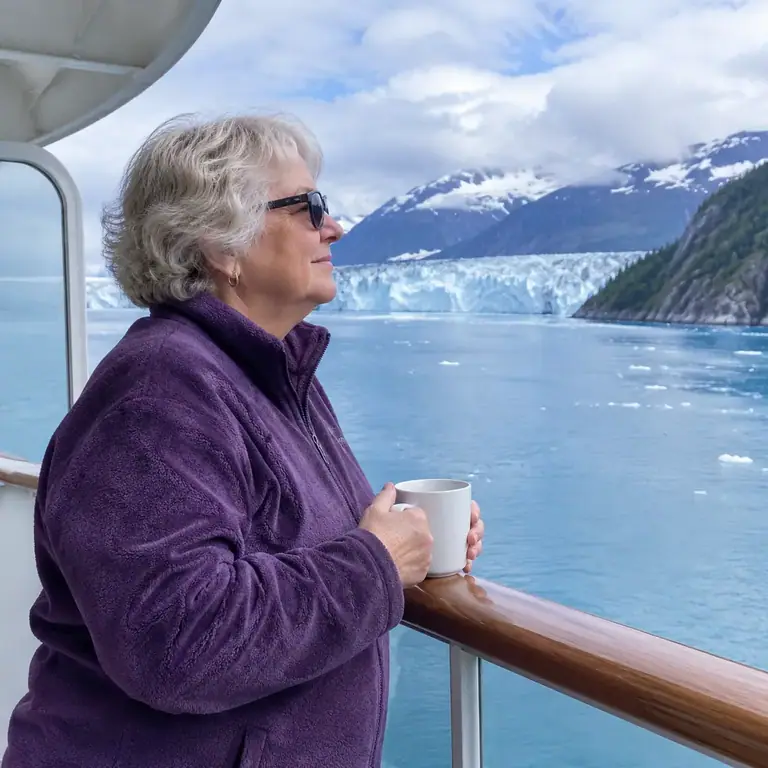
1. A Glacier Bay day gives you time to use the balcony
The National Park Service says a cruise ship typically spends nine to ten hours in Glacier Bay. The long visit makes it practical to step out, warm up and go outside again.
I would count Glacier Bay as a strong reason to upgrade when you want a place to sit between the better moments on the public deck. Check the ship's information about ranger commentary.
2. Northbound Glacier Discovery puts two scenic days in play
Holland America's Glacier Discovery describes Glacier Bay and College Fjord on northbound sailings. Those are two opportunities to use a quiet outside seat.
Read the exact itinerary for the departure you are considering. Two named scenic stops are more useful than an abstract promise of a glacier cruise.
3. Southbound Glacier Discovery changes one view

The line describes Glacier Bay and Hubbard Glacier on southbound versions of the same itinerary. That gives the balcony a different second use from the northbound voyage.
Open the route map before comparing cabin prices. A fare difference between directions can be a route decision before it becomes a room decision.
4. Hubbard Glacier makes a full view important

Hubbard sits at the head of Disenchantment Bay and is approached by ship. See Princess's Hubbard and Glacier Bay guide for the difference in approach.
A balcony can earn its keep on the way in. Take a public position if you want to turn and see the whole front as the captain approaches or moves away.
5. College Fjord has more to see than a single wall of ice
Scenic cruising in College Fjord is a reason to spend time looking while the ship moves. The appeal of a cabin here is being able to return to the rail between other ship activities.
I would count the whole scheduled scenic passage as potential viewing time, then subtract meals, sleep and other plans. The result is a better basis for the price than the number of glaciers by itself.
6. Glacier Bay still gives an inside cabin a good day

Rangers typically board visiting ships and provide interpretation. The park's ship guide also describes roughly an hour in front of a major tidewater glacier.
Try the public rail for the main stop if you are happy to be outside with others. Spend the upgrade elsewhere if that sounds like the day you wanted.
7. A public bow can make an inside cabin easier to choose
Holland America describes expanded bow viewing at several glacier days. That gives guests a direction of view a balcony on the side cannot reproduce.
A large public viewing space is an actual alternative to a private rail. Check the ship's information for the sailing rather than assuming the door will be open.
8. Endicott Arm rewards time outside before the glacier

An Endicott Arm sailing reaches Dawes Glacier through a fjord. The cliffs and water on the approach are part of the day.
If a private place to step out during that approach matters, price the balcony. If you mainly want to see the glacier itself, plan your public viewing spot.
9. A fjord itinerary can change after you book
Read the destination notes for the actual departure and save a copy of the schedule. The captain and operator can change a scenic call because of ice, navigation limits or weather.
A good cabin purchase should remain useful if one stop changes. Our Alaska mistakes guide has other choices worth making early.
10. The Inside Passage pays off when the timing works
On a day in sheltered channels, an outside seat lets you step out for short spells rather than claiming a rail for a morning. Look at where you will be in daylight.
A passage timed mainly for dinner or overnight offers a different case for paying extra. Check the actual timing and ask what the route description covers.
11. Seattle and Vancouver sailings deserve separate map checks
Travelers comparing roundtrips can find different tracks as the ships leave their departure cities. Read the map for each itinerary instead of deciding from the words Inside Passage alone.
Look at the scheduled hours for the named scenic stretch. A longer daylight passage makes a private perch more useful than the embarkation city itself.
12. More time ashore means less time in the cabin
List what you plan to do in Juneau, Skagway and Ketchikan. A string of full-length visits can leave very little time to sit outside on board.
An excursion that gets you close to the shore may matter more than a view of the harbor from the room. Read the excursion planning guide before splitting the money.
13. A late port departure changes the evening view

If the next day's scenery starts after an evening departure, decide whether you will be in the cabin then. An early dinner and a long sunset on board can make the room more appealing.
Take the actual sailing time and your dinner plans together. The balcony is most useful for an evening you expect to spend on the ship.
14. A sheltered balcony earns more dry viewing time
A protruding deck above the cabin can make light rain easier to sit through. An uncovered balcony will feel different once the wind and spray arrive.
Study a recent photo of the exact cabin stack or ask the operator what covers it. That detail matters more than the flattering broadside image on the booking page.
15. Clear rail panels matter when you sit down
A chair-height view can disappear behind the solid lower part of a rail. Ask whether the balustrade is transparent, metal or cut into the hull.
This matters when you want to watch for an hour from a seat. A view that works standing may make the cabin less good value for part of your group.
16. An obstruction can make the cheapest balcony a false economy
A boat, davit or framework may occupy a slice of the view marked obstructed. Find out whether the obstruction blocks the horizon, the water below or a particular side.
Looking at a named cabin can change the price comparison. The cabin mistakes guide covers other differences hidden in the room category.
17. A balcony behind a wind screen suits longer stops
Ask how enclosed the outdoor area is and find a real photo of the end walls. A solid partition and overhang can help when the ship is underway.
Check whether the shelter cuts into the viewing angle too. An end wall that is welcome in rain might limit the panorama you were paying to see.
18. A wake view offers its own kind of scenery
An aft balcony looks across the wake as the ship moves away from the coastline or ice. That can be beautiful when the ship has passed a landmark and the rest of the deck has moved on.
Compare that shape of view with the direction you care about. A forward-facing public space is more direct for the approach.
19. Cabins beside open decks get a different kind of sound

A balcony near a deck used for viewing can bring people and activity close to the cabin. Look a deck up and a deck down at the exact room position.
A quieter outlook is valuable if a private breakfast is part of the purchase. A location beside a high-traffic attraction may suit someone who plans to be out there anyway.
20. Port and starboard are weak shortcuts on glacier days
A ship can change heading for navigation, safety or viewing. A position on the correct side of an outbound leg may give the opposite view on the return.
Buy the category for the ability to pop outside at will. Use the public deck to follow whichever side has the better view at the time.
21. A fixed side makes more sense on a one-way passage
Mark the coastline against the ship's direction when you care about one long sailing leg. Think about whether the ship's published route is detailed enough to support the extra cost.
Use the map as a clue, with the understanding that real navigation takes precedence. It is still worth looking at a route where one side means hours of interest.
22. Shared balcony time can be part of the fare calculation
Two guests who enjoy looking out together may use the balcony more often than either would alone. Compare that with the easy reach of the cabin from a public deck.
For a traveler who likes long quiet spells, an hour outside with a book is part of the holiday. Price it as an experience both guests will actually want.
23. Limited steps can make a private seat useful

A route between your room and the public deck can cross several doors and lifts. A place just outside the room can remove some effort from a long scenic day.
Ask the ship for balcony threshold dimensions and accessible room details if crossing the door matters. Confirm the path before you count the balcony as easier.
24. A good lounge can carry a cold scenic morning

A warm forward observation area can be a useful fallback when the rail is cold or the rain drifts across the balcony. Check where its seat banks face.
Bring the same approach to the ship's indoor plan. Our rough seas guide describes other reasons to keep a weather fallback.
25. Your normal breakfast routine predicts use
If you already like coffee outdoors, an Alaska balcony can become the place you start each scenic morning. If everyone heads immediately to the buffet, breakfast there may never happen.
Check room service hours, any fee and whether the table has room for two. Give the upgrade credit only for a routine you would enjoy keeping.
26. A colder month changes the amount of time you can stay out
Read the climate averages for the ports and pack for the conditions on the water. Wind across an exposed rail can be uncomfortable even when the forecast on land looks mild.
An overhang and a fleece can make short visits pleasant. See the packing choices experienced cruisers make for a useful starting point.
27. A single scenic event puts more weight on the weather
A short glacier visit may be the main reason the balcony appeals. On that itinerary, a cloudy or rainy hour can eat a large share of the private view you expected.
Look for other uses on the same voyage before committing. If the cabin only makes sense for one hour, the public area is probably the better default.
28. An oceanview buys daylight at a different price
A window can bring the passage and the weather into the cabin. It is a reasonable middle fare for the traveler who wants a sense of the place while getting ready.
Open the floor plan and look at the window height. A helpful window experience depends on whether it is easy to stand or sit near it.
29. A guarantee cabin makes the exact view an uncertainty
The operator may choose the cabin when you buy a guaranteed category. Read the terms for where in the category it can place you.
If you need a covered rail or a clear seated view, price a cabin you can choose. The cheapest promise of a balcony may offer a different experience.
30. The best bid is one you are happy to win

An upgrade bid can look smaller on the screen when you only see a per-person figure. Read whether it is charged per passenger and how firm the placement and payment are.
Write the complete cabin supplement before you submit the bid. An upgrade is easier to enjoy when the result is within the number you meant to spend.
31. A wildlife excursion can offer a better second view
Compare the extra fare with an excursion you would otherwise leave out. A private rail on the ship and a smaller boat trip can solve entirely different problems.
Make a short list of what each experience adds. If the outing creates a view the ship will never provide, our cruise add-on guide can help you judge the price.
32. Usable hours make the final choice clearer
Use the actual cabin totals for two people and subtract the lower fare. Count only the daylight sessions when you expect to be at the cabin and comfortable going outside.
Divide the supplement by those hours. If an illustrative US$600 buys six hours, the test is whether those private hours feel worth US$100 each alongside the ship's public views.
Photo credits
- Glacier Bay Cruise Ship.jpg by Edward Weston from Wilmington, DE, USA. CC BY-SA 2.0. Cropped to square and converted to WebP.
- Hubbard Glacier - "Calving".jpg by roger4336. CC BY-SA 2.0. Cropped to square and converted to WebP.
- Tracy Arm Fjord near South Sawyer Glacier.jpg by Lauren from San Jose, CA, USA. CC BY 2.0. Cropped to square and converted to WebP.


