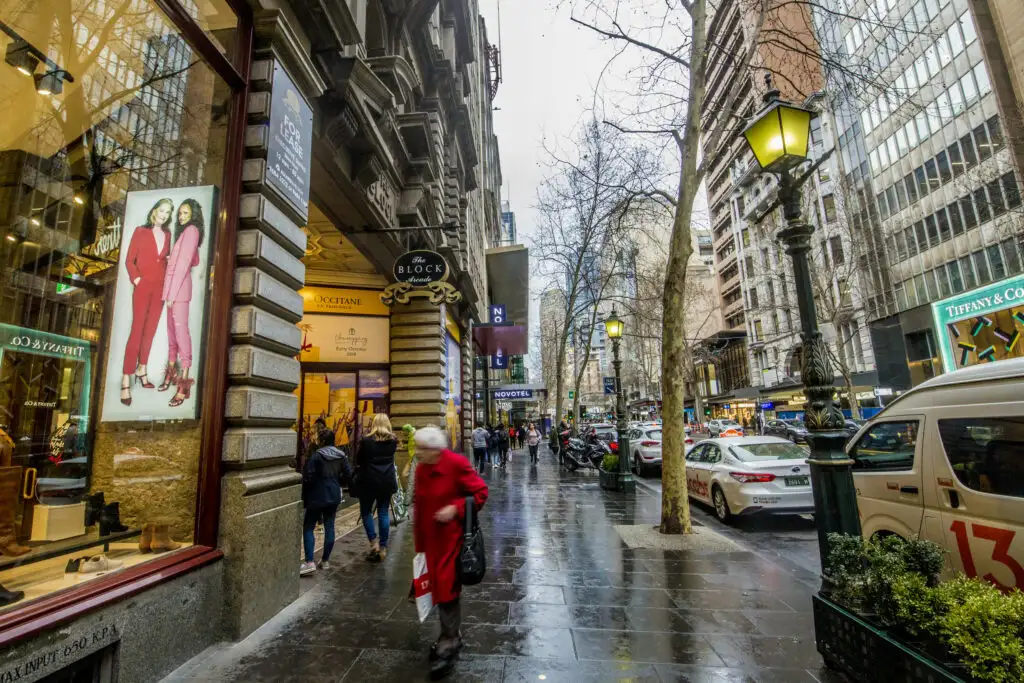


Editor’s note: Australian origins do not necessarily mean Australian ownership or manufacture today.
This selection draws on company histories, museums and public records. It is not a ranking or an endorsement of product quality. Images show the brands, their products or their people.Aesop's amber bottles and Speedo's racing suits may look like products of very different worlds. Both have Australian beginnings, along with these other familiar names.
1. Blundstone’s pull-on boots began in Hobart

Blundstone makes the elastic-sided boots seen on city pavements as well as at work. The broad shape, sturdy sole and pull tabs make its best-known styles easy to recognise.
The company's history reaches back to Hobart in 1870. Its early customers needed practical footwear for everyday life in Tasmania, long before the boots found an international fashion audience.
That workwear background helps explain the design. Elastic sides remove the need for laces, while the pull tabs help the wearer get the boots on and off.
The range expanded as the company reached overseas markets, including boots with different leathers, soles and uses. The Australian origin belongs to the business's history; the manufacturing location depends on the particular product.
2. R.M.Williams brought bush bootmaking to an Adelaide workshop

R.M.Williams is best known for leather boots, especially its Craftsman range. The company also makes clothing and leather accessories, but the boots remain the clearest expression of its origins.
Reginald Murray Williams learned leatherwork through life and work in the Australian bush. The business opened at 5 Percy Street in Prospect, Adelaide, in 1932.
A distinctive feature is the main leather upper cut from one piece of leather, with a seam at the back. The shape required careful work long before the finished boot reached a shop.
The Adelaide workshop turned those practical skills into a business with a much wider audience. The company's story connects outback leatherwork with boots worn well beyond the places and jobs that first shaped them.
3. Aesop’s amber bottles have Melbourne roots

Aesop makes skincare, hand and body care, hair products and fragrance. Its amber bottles and plain labels have become familiar in bathrooms, hotels and carefully designed stores around the world.
The business was established in Melbourne in 1987. Its identity developed around the products and the experience of using them, with a recognisable approach to packaging and shop design.
The first Aesop store opened in St Kilda in 2003. The space had previously been a ramp leading into an underground car park, an unlikely beginning for a brand now associated with distinctive retail interiors.
International growth did not erase that Australian beginning, even as ownership changed. L'Oréal completed its acquisition of Aesop in 2023, adding a Melbourne-born business to its beauty portfolio.
4. Speedo began with a Sydney knitwear factory

Speedo makes swimwear, goggles and other swimming equipment. The name is closely associated with racing suits and competitive swimming, as well as everyday laps at the local pool.
Its roots reach back to Alexander MacRae's Sydney knitwear factory in 1914. The business existed for years before the Speedo name appeared.
In 1928, the company introduced the Racerback swimsuit. Its design gave swimmers more freedom around the shoulders, linking the developing brand to movement and performance in the water.
The official heritage account separates those early stages. A business that began with knitwear became an international swimming name through the design of products for a very different setting.
5. Rip Curl developed around Victoria’s cold-water surf coast

Rip Curl's business includes wetsuits, surfwear and surf equipment. Wetsuits are an especially strong link between the modern brand and the place where it began.
Doug Warbrick and Brian Singer started Rip Curl in Torquay in 1969. Their first work was making surfboards in a garage, followed by a move into an old bakery.
The company later developed wetsuits for surfers spending long periods in cold water. Its wetsuit range grew around questions of warmth, movement, seams and fit.
The coastline near Torquay makes that product history easier to picture. Around places such as Point Addis, surfing means more than boardshorts and a warm beach, which helps explain why wetsuits became central to the business.
6. Billabong started by making Gold Coast boardshorts

Billabong sells surfwear, including boardshorts, swimwear and wetsuits. The boardshorts give the clearest introduction to the company's first business.
Gordon and Rena Merchant founded Billabong on the Gold Coast in 1973. They made shorts for surfers before the label reached overseas shops.
The products had a practical job: survive repeated time in the surf while allowing the wearer to move. That focus helped a small coastal clothing business develop a recognisable place in surf culture.
The company's historical shareholder document records its later international expansion. The Gold Coast origin remains part of the story behind clothes sold far from the beaches that inspired them.
7. Quiksilver shares Torquay’s surfwear beginnings

Quiksilver makes surf clothing and equipment, with boardshorts at the centre of its history. Its wider range also includes clothing and gear for snow sports.
Alan Green and John Law began making boardshorts in Torquay, south of Geelong, in 1969. That gives the Victorian surf town a place in the stories of both Quiksilver and Rip Curl.
The early product was clothing designed for people surfing, with movement and use in the water shaping its purpose. The brand's history follows that start before the name spread into a wider lifestyle business.
For visitors taking a road trip from Melbourne, Torquay has more than a collection of surf shops. Several internationally familiar names grew from people making equipment and clothing for the same local coast.
8. Qantas began far from the major international airports

Qantas is Australia's international and domestic airline, recognised by the flying kangaroo on its aircraft. The name began as an abbreviation of Queensland and Northern Territory Aerial Services.
The company was registered in Winton, Queensland, in 1920. Operations moved to Longreach in 1921, with early flights meeting the needs of inland communities.
Mail and supplies were part of that early work, alongside passengers. The Qantas timeline later records international services to Singapore beginning in 1935.
The airline's growth changed the scale of the journeys it served. For travellers preparing for an international flight, the familiar name on the ticket carries a history that began with distances between outback towns.
9. Breville made radios before coffee machines

Breville makes kitchen appliances, including espresso machines, grinders and food-preparation equipment. A home coffee setup is one of the most familiar ways people encounter the brand overseas.
Bill O'Brien and Harry Norville founded the business in Sydney in 1932. Parts of their surnames formed the company name, and the early products were radios.
Kitchen appliances came later, including the sandwich toaster that became closely associated with the brand. The company's annual report traces that move from electronics into the kitchen.
There is a further twist for overseas shoppers. The group's appliances use the Sage name in the UK and Europe, where the Breville name belongs to a separate business.
10. Yellow Tail’s kangaroo label came from the Riverina

Yellow Tail makes wine that is easy to recognise on a crowded shelf. The kangaroo label and bright packaging helped introduce Australian styles such as Shiraz and Chardonnay to overseas shoppers.
The label launched in 2001 from the Casella family's winery in Yenda, New South Wales. The family winery dated to 1969, giving the new brand decades of experience behind it.
The export idea was straightforward: make the wine approachable and easy to choose. The name and packaging became a large part of how people recognised the range in markets outside Australia.
Casella's 2025 packaging announcement kept the kangaroo while updating the design. The refreshed bottles still come with a regional origin that many overseas buyers may never have visited.
11. Penfolds grew from an Adelaide vineyard into a global wine name

Penfolds is the Australian wine producer behind bottles such as Bin 389 and Grange. The name reaches across a wide range of wines, with collectors especially familiar with its flagship releases.
The business began at Magill, near Adelaide, in 1844. The estate became the starting point for a wine company whose reach extended well beyond the original vineyard.
Winemaker Max Schubert began the experimental Grange project in 1951. The wine became the flagship of the range, giving the Penfolds story a second major chapter more than a century after its founding.
Magill remains the historic home, while the company draws on several vineyards and regions. Travellers comparing Australian wine regions can also explore our Yarra Valley winery guide for a separate Victorian wine-country experience.
12. Vegemite’s familiar jar began in Melbourne

Vegemite is the dark, savoury yeast-extract spread often eaten in a thin layer on buttered toast. The jar also appears in recipes, where a small amount adds a strong savoury flavour.
Chemist Cyril Callister developed the spread for the Fred Walker company. It reached Australian grocers in 1923, starting a Melbourne food story that took time to find its audience.
The National Museum of Australia describes slow early sales, followed by promotions and wartime conditions that helped establish the product. Its later familiarity can hide that uncertain start.
The brand's own history connects it with Port Melbourne. Visitors exploring the city through its well-known streets are close to the home of a product that became a much larger Australian symbol.
13. Canva grew from a school-yearbook design problem

Canva is an online design platform for making presentations, social posts and other visual documents. Templates and editing tools let users put a design together without starting with a blank page.
Melanie Perkins and Cliff Obrecht first tested online design through a school-yearbook business. Perkins describes working from her mother's living room and preparing letters to send to schools.
That earlier project tackled a specific problem: making a complicated design task easier to complete. Canva then launched in 2013 with Perkins, Obrecht and Cameron Adams as co-founders.
The company's timeline follows the move into a much wider design platform. The yearbooks came first, providing a practical starting point for software now used on projects far beyond the classroom.
14. Atlassian started in Sydney with a credit card

Atlassian makes software that helps teams organise work and share information. Jira is used to track tasks and projects, while Confluence gives teams a place to write and keep documents.
Mike Cannon-Brookes and Scott Farquhar founded the company in Sydney in 2002. The early business used $10,000 in seed capital from a credit card.
The company grew by building tools for problems that teams encountered at work. Its early-business account records the funding story behind the later international software business.
Many people meet Atlassian through a Jira task or a Confluence page without thinking about the company behind it. Those familiar workplace tools carry a Sydney origin story that is much less visible than the software itself.
15. Cochlear grew from an Australian hearing breakthrough

Cochlear makes implantable hearing systems. Its products combine an implanted component with an external sound processor, which is the part people may recognise beside or behind the ear.
The company's origins connect with Professor Graeme Clark's Australian research team. The team implanted its prototype in 1978, before the later commercial Nucleus Cochlear Project.
The NHMRC's history records the project recruiting its first staff in 1981. Research, commercial development and later company milestones were separate stages in bringing the technology into wider use.
The hardware changed markedly along the way. An early external processor was a box carried with a shoulder strap; the company's processor history shows how much smaller the visible equipment became.
16. Boost Juice started with a single Adelaide juice bar

Boost Juice makes juices and blended drinks, including fruit smoothies. Its brightly coloured cups and shopping-centre counters have become familiar in Australia and overseas.
On a trip to the United States in 1999, Janine Allis noticed the popularity of juice bars and smoothies. She saw an opportunity to bring that style of drink business to Australia.
She opened the first Boost Juice store in Adelaide in 2000. The shop made juices and smoothies to order, bringing the format into an everyday shopping trip.
The menu also grew beyond the original fruit drinks. A 2026 collaboration with Melbourne coffee roaster ST. ALi added iced coffees and coffee smoothies, showing how the juice-bar idea continued to develop.
Image credits
Brand and media photography: 1. Blundstone: Blundstone; 2. R.M.Williams: R.M.Williams / Man of Many; 3. Aesop: Aesop; 4. Speedo: Speedo / Pentland Brands; 5. Rip Curl: Rip Curl; 6. Billabong: Billabong; 7. Quiksilver: Quiksilver; 9. Breville: Breville; 10. Yellow Tail: Chris Pearce / Casella Family Brands; 12. Vegemite: Vegemite / Bega Group; 14. Atlassian: Atlassian; 15. Cochlear: Image courtesy of Cochlear Americas.; 16. Boost Juice: Boost Juice / ST. ALi.
Licensed stock: 8. Qantas: © lucidwaters / Depositphotos; 11. Penfolds: © ztudiototo / Depositphotos; 13. Canva: © FellowNeko / Depositphotos.