

Editor’s note: These are editorial selections based on public sources.
Some coastal towns get better the moment you park the car. These compact centers reward a slow walk with working harbors, surprising architecture and places where stopping is the point.
Our Atlantic Coast selection includes bays, tidal rivers, one nearby inland town and several small cities. It is an editorial selection of enjoyable centers, not an accessibility rating or a claim that every attraction is within walking distance.
1. Cape May, New Jersey: Look above the shop windows
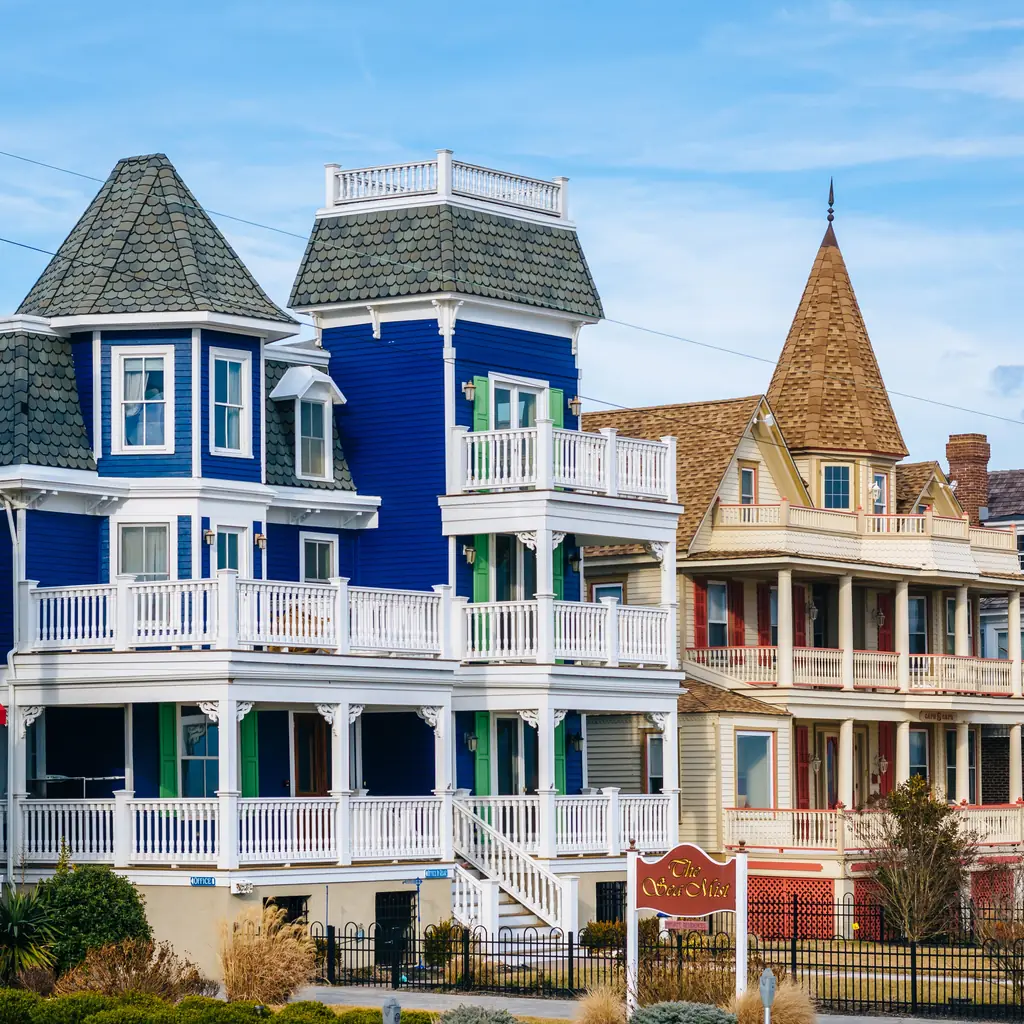
Start on Washington Street Mall, where the shopping street belongs to pedestrians. Then wander into the surrounding Victorian blocks and look upward: porch brackets, patterned shingles and elaborate rooflines turn a short walk into a hunt for details.
The pleasure is how quickly the scene changes. One moment you are choosing an ice cream; the next you are trying to work out how someone fitted that much ornament onto one house. Cape May MAC’s walking tours offer the stories behind the buildings.
Keep this outing centered on the mall and nearby streets. The lighthouse is a separate trip, not a landmark waiting around the next corner. Comfortable shoes matter more here than an ambitious mileage target.
2. Beaufort, North Carolina: Let Front Street set the pace
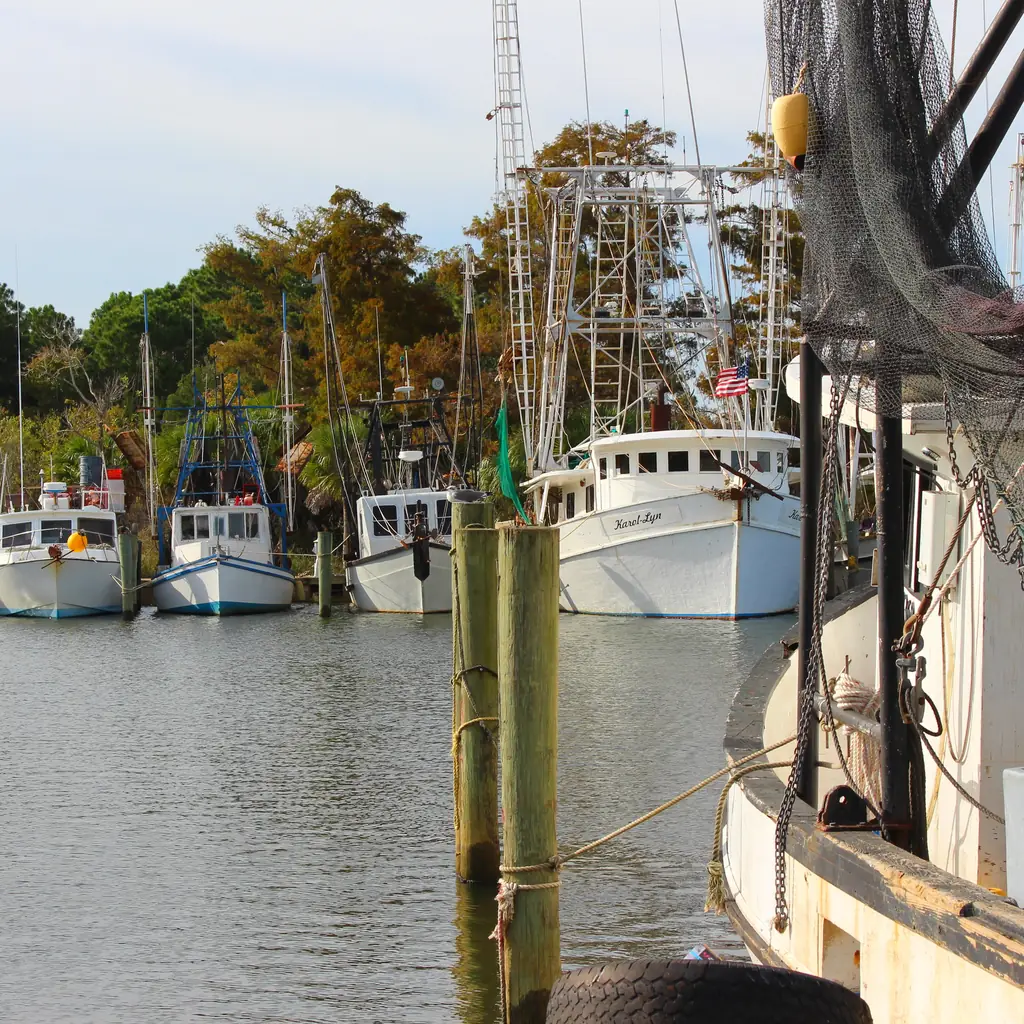
Front Street puts the boats on one side of your day and the old town on the other. Walk the waterfront, then turn away from the docks to notice the houses rather than treating the street as a restaurant corridor.
Visit North Carolina’s Beaufort itinerary places the waterfront and historic district together for good reason. You can enjoy the contrast without spending the whole afternoon moving between attractions.
The islands across the water add a tempting second act, but a boat excursion is a separate booking. For this walk, the reward is simpler: a harbor view, a shaded pause and time to watch somebody else’s vessel come and go. Say the name “BOH-fert” here; South Carolina’s Beaufort has a different pronunciation.
3. Rockport, Massachusetts: Follow Bearskin Neck to the water
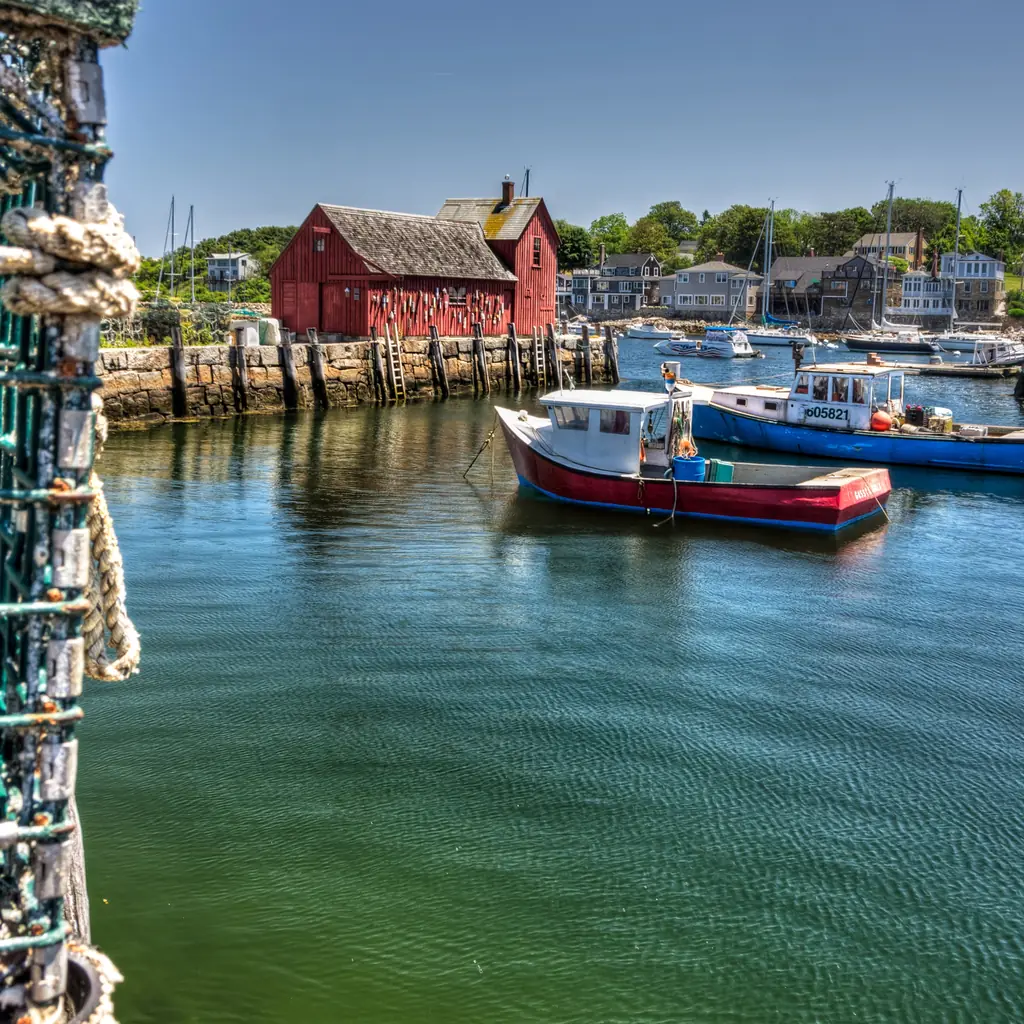
Bearskin Neck squeezes a surprising amount into a narrow harbor-side stretch: small storefronts, galleries and views that open between buildings. Follow the lane out toward the water, then return slowly enough to catch the details you missed.
The local walking map makes the center easy to understand before you set off. Main Street and the harbor belong in the same modest outing; every coastal attraction around Cape Ann does not.
This is a good place to resist the urge to march. Step aside when the lane gets busy, let other walkers pass, and give the harbor its own pause. The stonework and narrow passages are part of the character, but they also make this less effortless than a wide modern promenade.
4. Camden, Maine: A harbor day without a boat ticket
Camden hides a substantial piece of landscape design beside its harbor. Behind the public library, Fletcher Steele’s amphitheater uses grass, stone and trees to create an outdoor room; across Atlantic Avenue, the Olmsted Brothers’ Harbor Park opens toward the boats.
The library’s history explains that the two landscapes were created between 1928 and 1931. One feels deliberately composed; the other gives the harbor room to take over. Walk both and you can feel the difference without knowing a thing about garden design.
The route pairs well with the nearby downtown blocks. You get a working harbor, a distinctive public garden and the mountain backdrop within one compact town outing. Mount Battie itself is a separate hike.
5. Kennebunkport, Maine: Cross the river for another view
White Columns, at 8 Maine Street, gives a Dock Square walk a story beyond the storefronts. The Greek Revival house dates to 1853 and remained with the same family for 130 years; its original furnishings make the interior a much more personal encounter than a room assembled from period antiques.
The historical society’s tours connect the house with Kennebunkport’s shipbuilding families. The society also offers a roughly three-quarter-mile Dock Square walk through the surrounding streets.
Pair the house with the river crossing toward Lower Village and you have two useful perspectives: the port that made the money, and the domestic world the money helped build. The house tour uses stairs and is not wheelchair accessible; the exterior still gives the walk a recognizable landmark.
6. Portsmouth, New Hampshire: Read the buildings around Market Square
Market Square supplies Portsmouth’s bustle. A short downtown detour to Chestnut Street supplies a more sobering story: the African Burying Ground Memorial honors people whose burial place was later paved over and built upon.
Construction work uncovered remains in 2003. The memorial, dedicated in 2015, now holds reinterred remains and public artwork on the block between Court and State streets. It is a place for attention and respect, not just another stop to photograph.
Link Market Square, Pleasant Street and the memorial into a modest walk, leaving time to read the interpretation. Portsmouth’s appeal deepens when the handsome streets are allowed to tell difficult stories as well as prosperous ones.
7. Newburyport, Massachusetts: Finish at the Merrimack
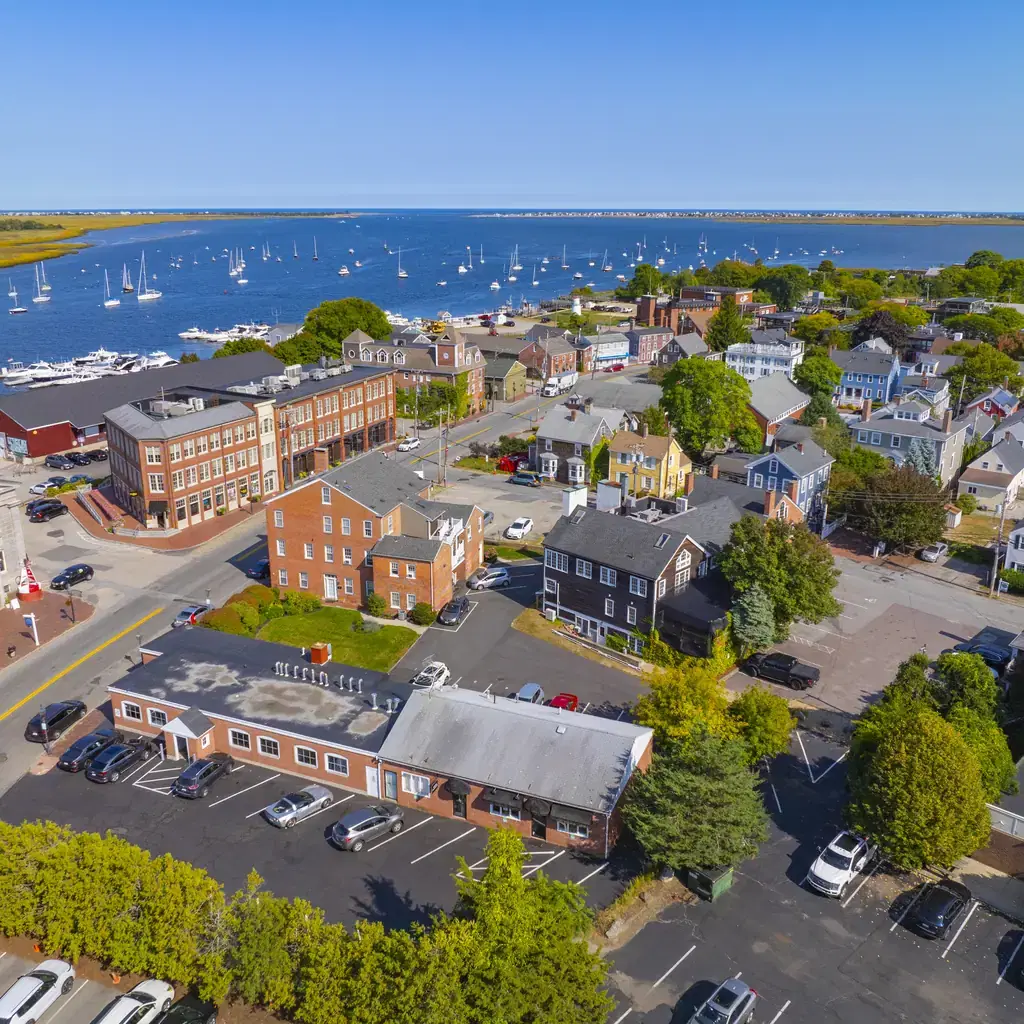
Newburyport’s waterfront once brought goods from overseas into a customs system that helped fund the young United States. The Custom House Maritime Museum, at 25 Water Street, occupies the granite building erected for that job in 1835.
Its architect, Robert Mills, also designed the Washington Monument. The heavy Greek Revival exterior makes more sense when you know that this was a statement of federal authority as well as an office for collecting duties.
Start in Market Square, walk toward the custom house, then finish beside the Merrimack. You have moved through the commercial center, its administrative machinery and the river that made both possible. Our coastal small-town selections offer more stops where a harbor view comes with a substantial story.
8. Provincetown, Massachusetts: Let Commercial Street surprise you
Commercial Street delivers an unexpected indoor stop: the Provincetown Public Library’s Rose Dorothea replica. At 66 feet, 6 inches long, this schooner model shares a building with bookshelves. The third-floor mezzanine lets you appreciate just how unlikely that arrangement is.
The original fishing schooner won the 1907 Lipton Cup despite losing its fore-topmast on the final leg of a 42-mile race. When it returned to Provincetown, a broom tied to the mast announced a clean sweep. That detail makes the replica more than a large nautical ornament: it commemorates a moment of enormous local pride.
Volunteers began building the tribute in 1977, when the building was a heritage museum, and dedicated it in 1988. Pick up the library’s walking-tour brochure near the model for the fuller story. Outside, Commercial Street resumes its busy mix of galleries, shops and glimpses of the harbor; you will now be looking at the water with something of the fishing town in mind.
9. Newport, Rhode Island: Take the harbor in small pieces

Bowen’s Wharf and Bannister’s Wharf offer a compact harbor outing with plenty to look at between stops. Walk toward the boats, browse the small businesses, and take your time where the waterfront opens up.
Discover Newport identifies these wharves among the city’s distinctive settings. Their appeal lies in the close-up experience: old surfaces, narrow passages and the contrast between buildings and water.
Cobblestones deserve practical attention, especially if someone tires easily or uses a mobility aid. Cliff Walk is a separate excursion with a different surface and effort level. If Newport inspires an overnight stay, distinguish the building’s appeal from the room’s comfort; our guide to historic hotels worth considering explores that part of the trip.
10. Mystic, Connecticut: The drawbridge is the show
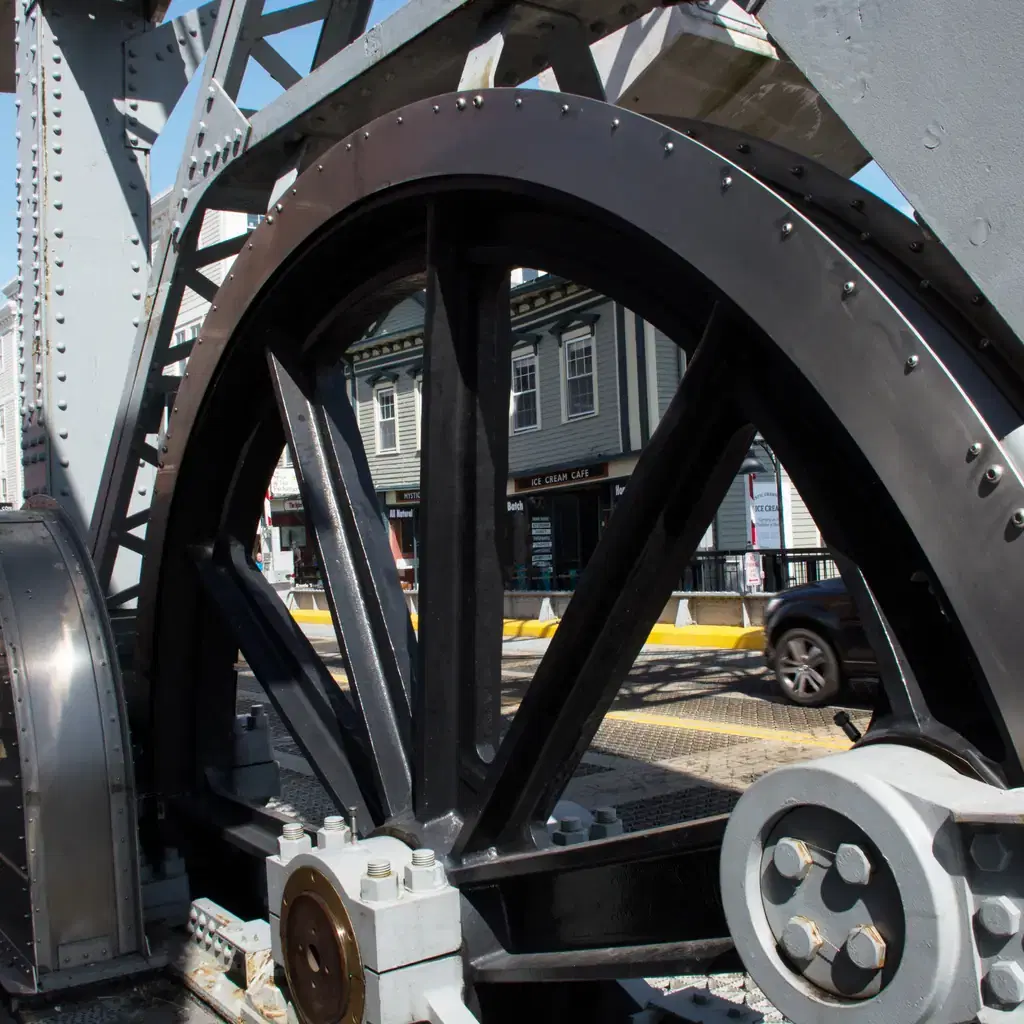
Downtown Mystic has an attraction you can encounter during an ordinary stroll: a working bascule bridge across the river. Follow Main Street to the crossing, then enjoy the waterfront from either side.
Connecticut’s tourism office describes the Mystic Bridge Cultural District as a walkable village setting with parks and places to linger. The bridge adds movement and a small sense of occasion to the view. If it lifts while you are there, the interruption becomes part of the outing.
Avoid folding every attraction with “Mystic” in its name into this short walk. The aquarium and a full maritime-museum visit need their own time. Downtown works perfectly well as a smaller pleasure, especially when you give the river more attention than your itinerary.
11. Greenport, New York: Trade the vineyard drive for a village afternoon
Greenport has a way to see its harbor that does not involve a boat or a phone. In Mitchell Park, a camera obscura uses a mirror and lens to project a live, full-color outdoor view onto a table inside a darkened room.
Boats and people move in the image. Nothing is prerecorded. The device makes an ordinary waterfront scene feel unexpectedly absorbing, and its volunteer-run hours are worth checking before your visit.
Add the park’s antique carousel and a stroll along Front and Main streets, and the village offers more than a pleasant backdrop. It is a good example of the rewarding stops in our scenic-drive guide: small places with something you genuinely did not expect.
12. Lewes, Delaware: Follow the small streets, not the beach traffic
A British bombardment is an unlikely subject for a quiet shopping walk, but Lewes puts the evidence close to hand. The Cannonball House Maritime Museum occupies the town’s surviving building known to have been damaged when Royal Navy vessels fired on Lewes during the War of 1812.
Use Second and Front streets to connect the historic center with the museum. The surrounding buildings become more interesting once you imagine a port defending itself, rather than an assortment of attractive storefronts.
Cape Henlopen deserves a separate park outing. For this town walk, a maritime story and a few compact streets are plenty. Readers who enjoy a weekend with less driving can find another version of that pleasure in our trail-town guide.
13. Berlin, Maryland: Walk into a movie town
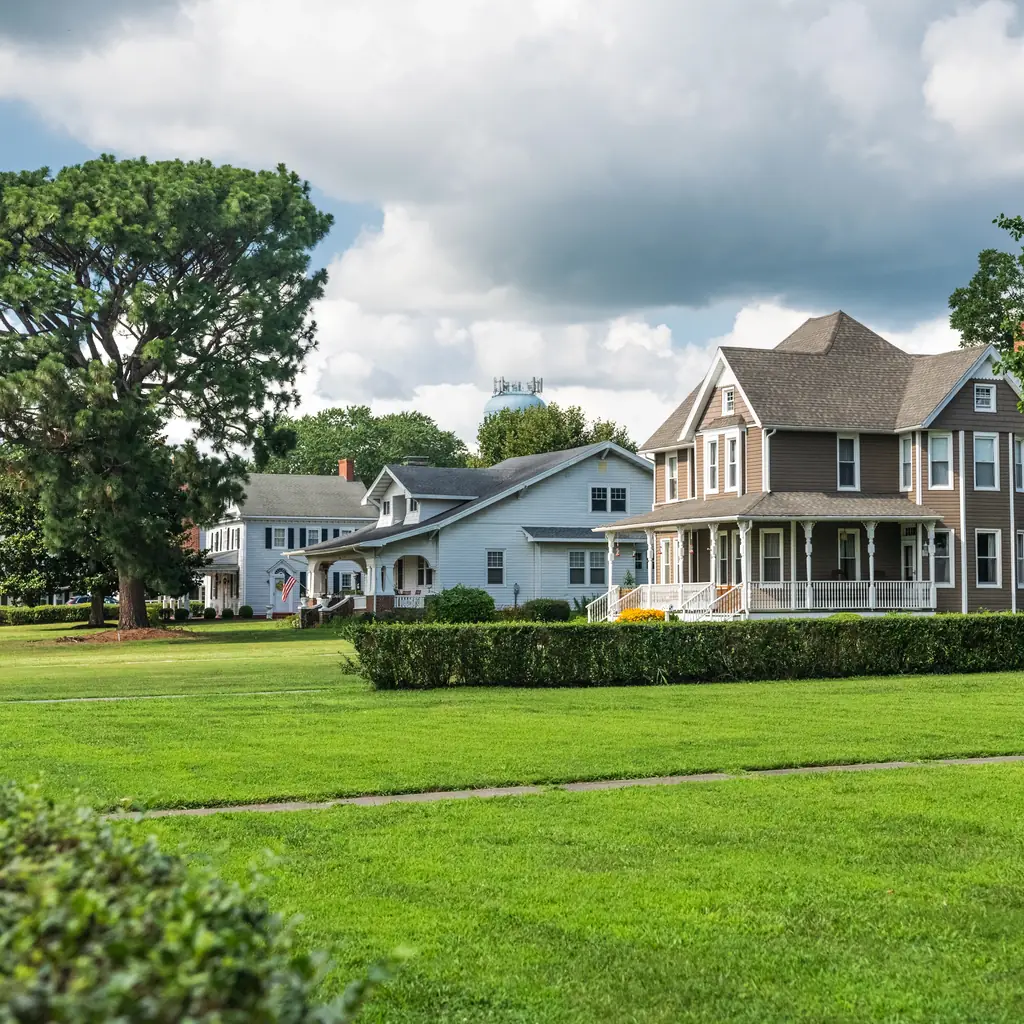
Berlin played the fictional town of Hale in Runaway Bride. The official filming-location walk gives its compact center a ready-made treasure hunt: the Atlantic Hotel at 2 South Main Street, the building used as Hale Hardware at 106 North Main Street and other familiar-looking storefronts.
The fun is comparing a real working town with its screen identity. Follow the map along Main Street, then look for the changes around the corners. Film-set names are historical labels, not a promise that the same businesses operate there today; stay in public areas and respect private homes.
Berlin is inland, roughly eight miles from Ocean City. That makes it a useful change of scene during a beach trip. The movie route supplies a reason for the walk, while the shops and a meal let you enjoy the town after the recognition game is over.
14. Chincoteague, Virginia: Give Main Street a turn in the spotlight
Many visitors arrive thinking about ponies and the refuge. Downtown Chincoteague offers another, smaller outing: the central Main Street blocks and Robert N. Reed Downtown Waterfront Park.
The local walking and parks guide identifies the park as a place to enjoy the waterfront. Use it as the pause in a short town walk, rather than treating the entire island as one pedestrian circuit.
The refuge and beach deserve their own transport and timing decisions. That distinction is helpful for anyone turning a pleasant visit into a possible longer stay. Our guide to test-driving a small town before moving asks readers to look beyond the best vacation afternoon and experience an ordinary day too.
15. Southport, North Carolina: The bench is part of the route

Southport offers a walking tour with an unusual subject: its trees. The city’s tree walk connects downtown landmarks with live oaks, magnolias and other specimens, including the large oaks beside the 1904 Old Brunswick Jail.
At the Old Smithville Burying Grounds, look for resurrection ferns on the oak limbs and the difference between spreading live oaks and laurel oaks. The guide turns shade you might normally take for granted into something worth examining.
Finish at Waterfront Park, where benches and swings face the Cape Fear River. That combination gives the walk a satisfying arc: old buildings, living landmarks and a river view that does not require buying a ticket.
16. Beaufort, South Carolina: Follow Bay Street into the shade
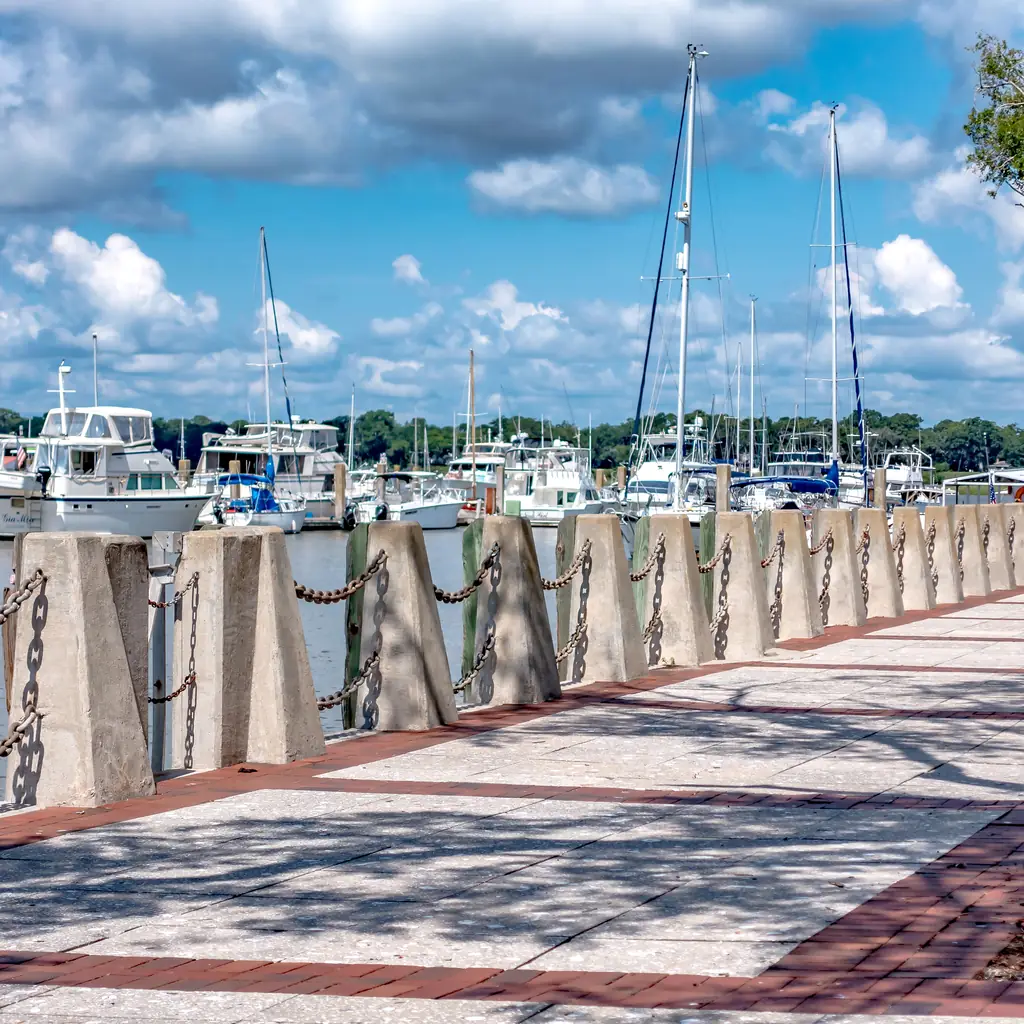
Bay Street opens onto Henry C. Chambers Waterfront Park, where riverside swings provide an unusually pleasant place to pause. Behind the water, Beaufort’s older streets hold a second, more intimate story.
The Pat Conroy Literary Center connects the town to an author whose work drew deeply on the Lowcountry. Pair it with the waterfront for an afternoon that has both a setting and a voice.
This Beaufort is pronounced “BEW-fert,” unlike North Carolina’s “BOH-fert.” If the visit starts sounding like a winter-long possibility, our snowbird travel guide explores the practical side of a seasonal stay.
17. St. Marys, Georgia: Enjoy the waterfront before chasing the island
St. Marys lets you combine a riverfront walk with a look through a working submarine periscope. The Submarine Museum, at 102 West St. Marys Street, displays models, uniforms and patrol reports as well as that unexpectedly hands-on view.
Nearby, the town’s History Walk packs 24 interpretive panels into a 600-foot trail at Bartlett and West St. Marys streets. You can follow the story at your own pace, then continue to Howard Gilman Memorial Waterfront Park.
That gives this small center a clear identity beyond its role as the gateway to Cumberland Island. The ferry trip is a separate adventure. Downtown has enough of its own: regional history underfoot, naval history indoors and the river in front of you.
18. Fernandina Beach, Florida: Walk Centre Street toward the harbor
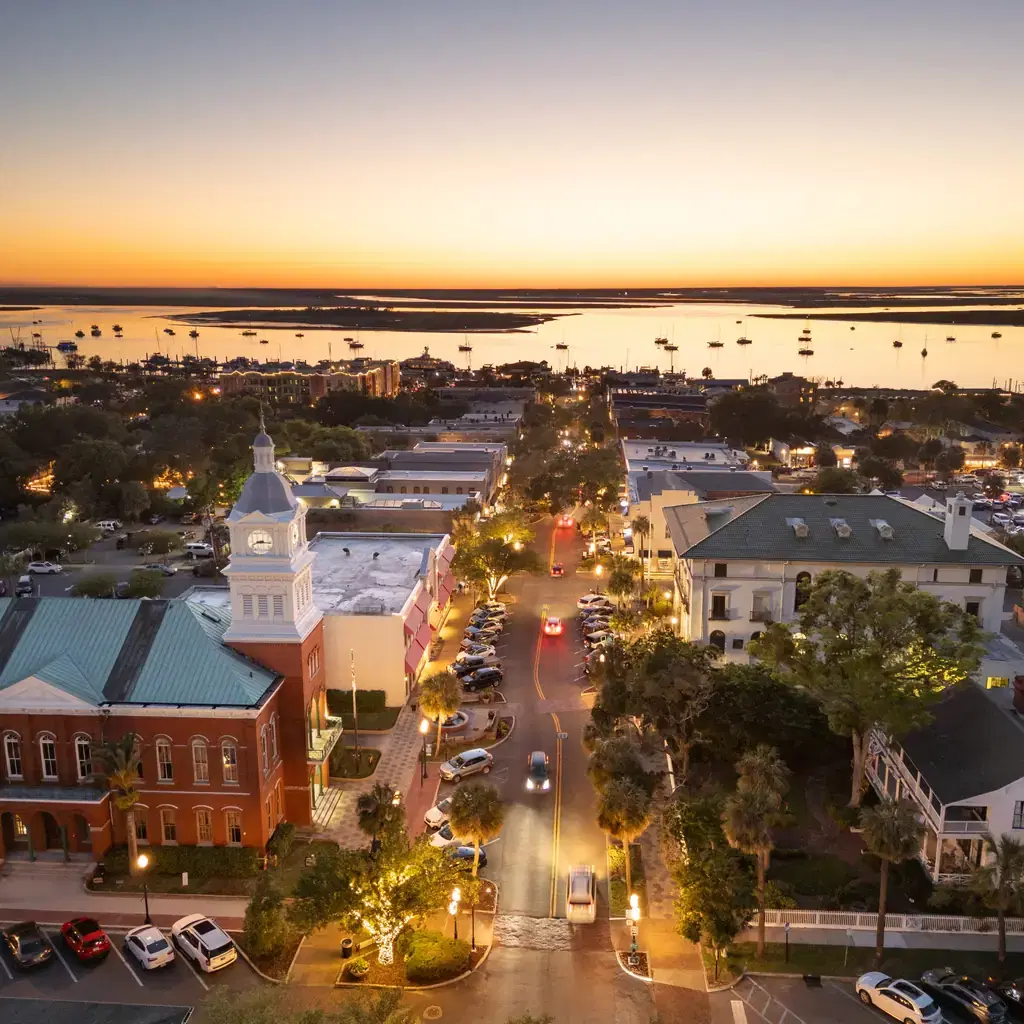
Centre Street’s Victorian storefronts make Fernandina Beach an easy place to begin. For the less polished stories behind the scenery, turn onto South Third Street toward the Amelia Island Museum of History, housed in the former Nassau County Jail.
The building is part of the attraction: one of its cells remains. Exhibits and guided storytelling reach beyond the familiar pirate imagery to the island’s Indigenous and later coastal history.
Return to Centre Street and continue toward the harbor. You have gone from attractive facades to the lives behind them, then back to the water that shaped the town. The Atlantic beach is elsewhere on the island; this afternoon belongs to Fernandina’s streets.

Comments
The opinions and views expressed in the comments section are solely those of the individual users and do not represent or reflect the opinions, views, or positions of HumbleTrail. HumbleTrail does not endorse, support, or verify the accuracy of any user-generated content.
By posting a comment you agree to receive related emails from HumbleTrail in accordance with our Terms and Privacy Policy. You can unsubscribe at any time.