

Editor’s note: These travel recommendations reflect our editorial judgment.
A silver-dollar dress, a working railroad town and a house made from bottles all belong to the Nevada beyond the Strip. These small towns, small cities and rural communities give you a reason to stop before the next long stretch of highway.
1. Virginia City has a dress you could once have spent
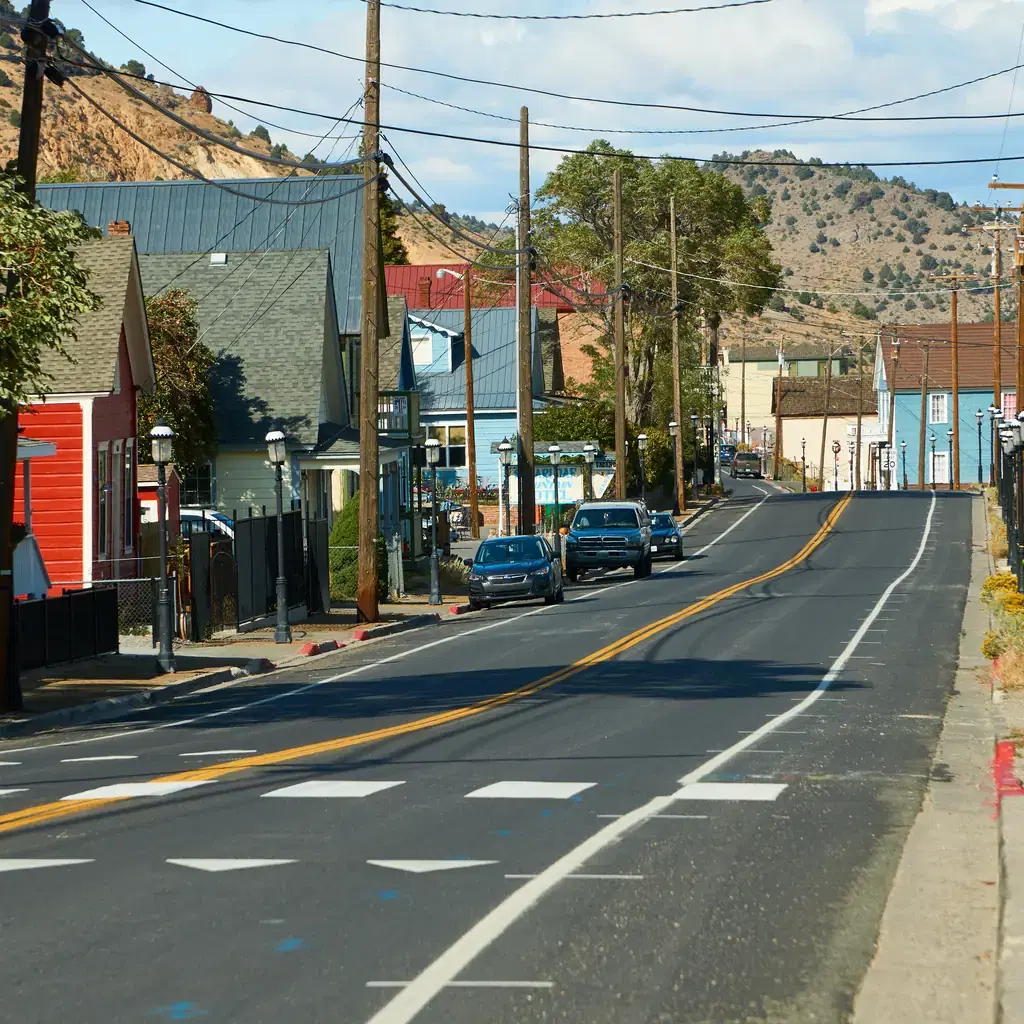
The Silver Queen portrait has a dress made with 3,261 silver dollars. In a town built on mining wealth, that is a much better introduction than another plaque explaining that silver used to be important.
Virginia City lets you follow the money underground. The Chollar Mine tour enters workings beneath the town, where timber supports make the labor behind the elegant buildings easier to picture. Back on C Street, wooden boardwalks connect the shops and saloons.
Give the Fourth Ward School Museum some time, too. A mining town needed classrooms as well as bars, and the old school adds that less theatrical side of the story.
The Virginia & Truckee Railroad supplies another way into the story. Its route toward Gold Hill passes through the mining landscape that paid for so much of the town. Between the mine, the school and the train, there is enough here to give the boardwalk more than a souvenir-shop visit. Travel Nevada’s Virginia City guide
2. Ely still puts its railroad to work
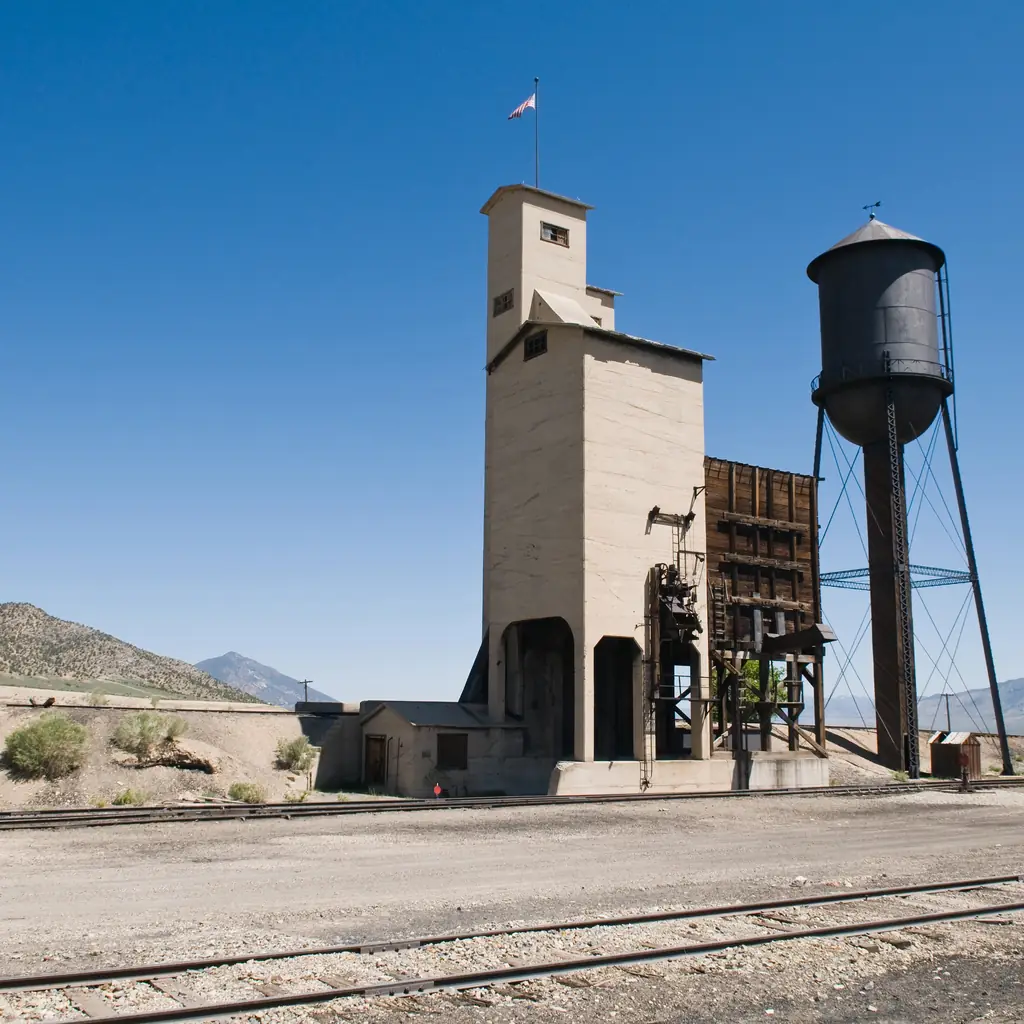
In Ely, the railway is more than something to photograph behind a fence. The Nevada Northern Railway operates train excursions from a historic railroad complex, with experiences that bring visitors close to the equipment and the people maintaining it.
That makes Ely especially rewarding if you like seeing how things work. Start at the railroad, then walk through town’s murals. At Renaissance Village, historic homes introduce the immigrant communities that helped build the area.
There is another unexpected sight outside town: the beehive-shaped kilns at Ward Charcoal Ovens State Historic Park. Their shape is memorable enough on its own. Knowing they supplied charcoal for the mining economy connects them to the machinery back in Ely.
Back in town, Economy Drug’s old-fashioned soda fountain offers a smaller piece of history to enjoy over something cold. Travel Nevada’s Ely guide
3. Beatty puts a bottle house beside a very strange art collection
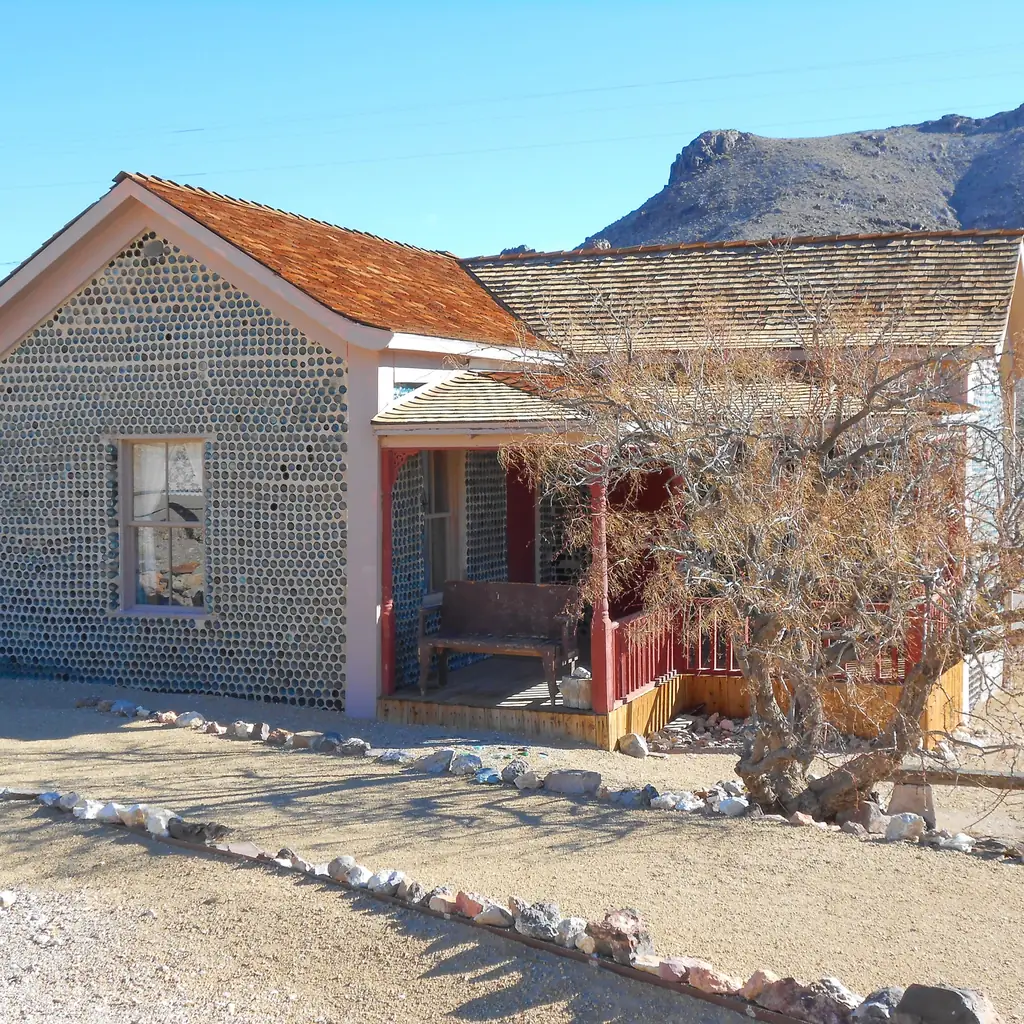
Near Beatty, the Tom Kelly Bottle House at Rhyolite turns discarded containers into building material. Its walls incorporate tens of thousands of bottles, an ingenious response to a place where ordinary lumber was hard to come by.
The surrounding ghost town offers a different lesson: substantial buildings can outlive the boom that paid for them. Rhyolite’s surviving depot and broken masonry make the rise and collapse visible without much explanation.
Then the mood changes completely. At the nearby Goldwell Open Air Museum, ghostlike figures form an outdoor interpretation of the Last Supper. Other sculptures make equally improbable company for the desert.
Beatty works as a base for Death Valley, but these stops deserve their own time. The bottle house, ruins and open-air art give you three very different reasons to get out of the car. Travel Nevada’s Beatty guide
4. Incline Village gives you Tahoe at walking speed
The Tahoe East Shore Trail follows roughly three miles of shoreline between Incline Village and Sand Harbor. On foot or by bike, you can stop for the coves and granite boulders that disappear quickly through a car window.
It is a paved, shared-use trail, with benches and viewpoints along the way. That makes the shoreline the outing itself, rather than scenery glimpsed while driving to another attraction. Tahoe East Shore Trail
Sand Harbor adds the beach at the southern end. Its pale sand, rocks and clear water are the familiar Tahoe combination, but the approach along the lake gives the visit a slower rhythm.
Plan the route in both directions: the three-mile distance is one way. Sand Harbor has its own admission and seasonal vehicle-reservation arrangements, so use the park’s current instructions when deciding where to start. Nevada State Parks
5. Austin has a castle that barely got lived in
Stokes Castle stands above the Reese River Valley, a granite tower left by Nevada’s mining wealth. According to Travel Nevada, the family used it for only about a month.
That short stay is what makes the building interesting. Someone had the means to construct a conspicuous stone residence in this landscape, then barely occupied it. The tower tells a boomtown story without needing a room full of exhibits.
Austin has enough surviving nineteenth-century buildings to carry the story into town. Its historic churches include the former St. Augustine’s church, now a cultural center. The old courthouse provides another stop, while local turquoise shops connect the mining past to something you can hold in your hand.
The castle is the obvious photograph. The quieter reward is walking the town afterward and seeing which institutions outlasted the rush for silver. Travel Nevada’s Austin guide
6. Pioche still has ore buckets hanging above town

Look up in Pioche. The surviving aerial tramway once carried ore, and its suspended buckets make the mining past unusually easy to imagine.
On the ground, the Million Dollar Courthouse has a name that practically invites a question. It sits among the old buildings on the town’s historical walking route, alongside Thompson’s Opera House and other reminders of a much busier mining community.
Pioche also makes a good pairing with Cathedral Gorge State Park. The park’s narrow passages and eroded spires offer a dramatic change after a morning of buildings and machinery.
This is a satisfying stop for someone who likes evidence left in place. You do not have to imagine where the ore went or what the town built with its wealth; pieces of both are still in front of you. Travel Nevada’s Pioche guide
For the roads between these stops, HT’s scenic-drive guide makes a case for allowing time outside the car.
7. Tonopah has a much deeper view than the highway suggests
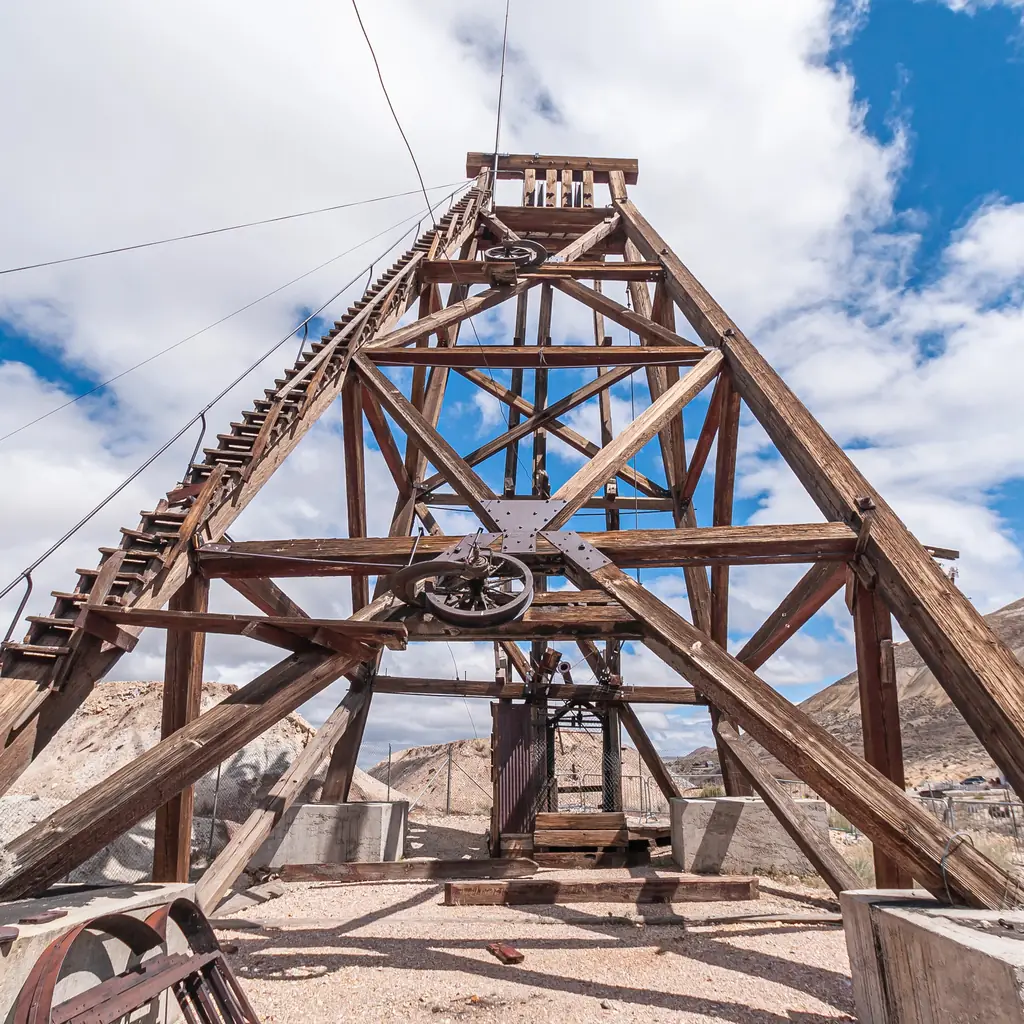
At Tonopah Historic Mining Park, a grate lets visitors look down a roughly 500-foot-deep stope, the space left after miners removed ore. A hole in the ground becomes a very different experience when you can stand above that much empty space.
The park occupies the area of the original mining claims. Buildings, equipment and underground features explain how a discovery became a town. Give it more than a quick roadside stop; the machinery makes more sense when you can follow what each part did.
Tonopah has other, stranger attractions, including its clown-themed motel. But the mining park provides the substance behind the spectacle.
An overnight stay also makes room for the town’s dark skies. After spending the afternoon looking down into a mine, looking up becomes a pleasing second act. Travel Nevada’s Tonopah guide
8. Genoa remembers the man who carried mail across the mountains
At Mormon Station State Historic Park, a statue honors Snowshoe Thompson, who carried mail across the Sierra Nevada between Genoa and Placerville. Picture that journey before looking at the mountains behind town.
Genoa began as a trading stop for travelers approaching the Sierra. The park’s reconstructed trading post and museum bring that role into focus: this was a place to obtain supplies before the difficult part of a journey.
The Genoa Courthouse Museum adds more local history. The Genoa Bar & Saloon, established in 1853, offers a different surviving connection to the town’s early years.
River Fork Ranch Preserve adds a different kind of walk, through a wetland landscape below the mountains. Pair it with the trading post for an afternoon that includes both the valley’s wildlife and the people who once depended on the route across it. Travel Nevada’s Genoa guide
That combination of town and walking space also runs through HT’s trail-town guide.
9. Goldfield still wears the buildings of a much bigger town
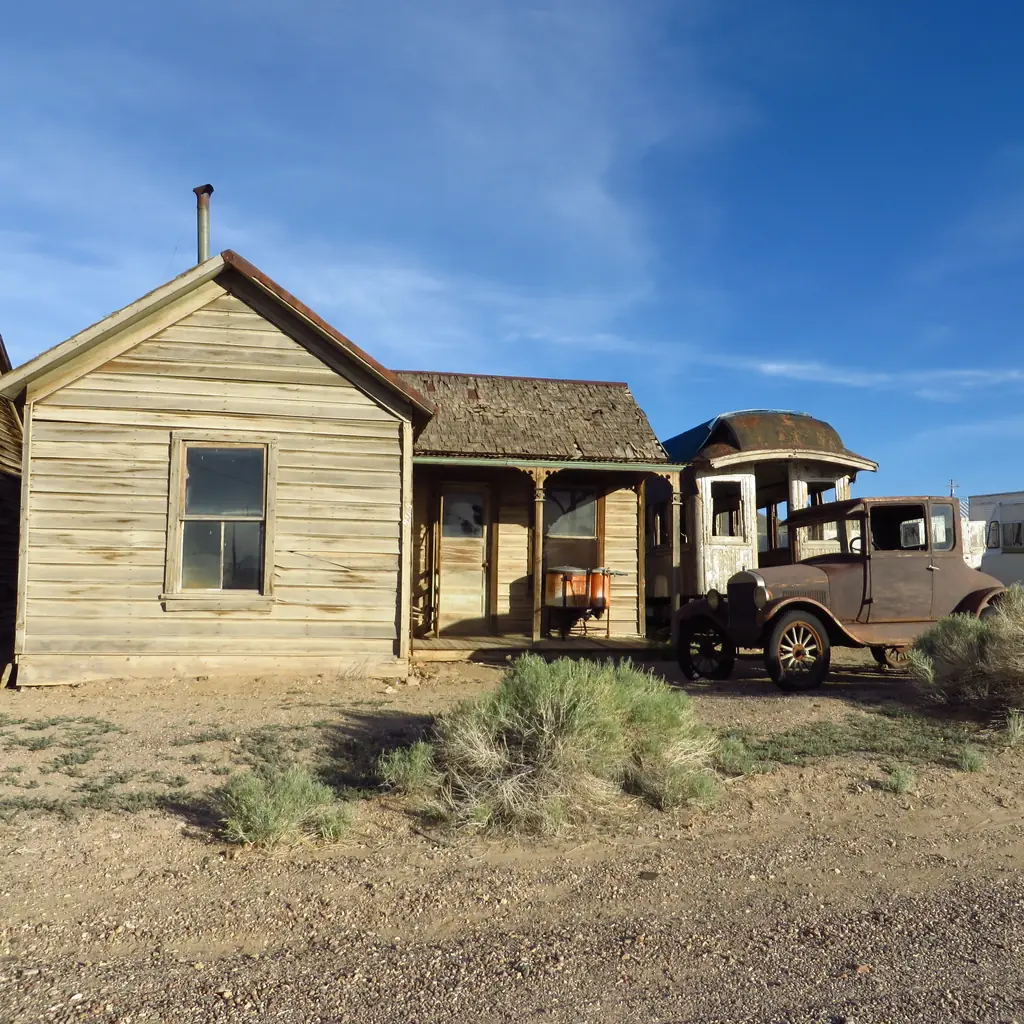
The scale feels surprising in Goldfield. The town is small today, but the surviving Goldfield Hotel belongs to a period when a gold strike supported grand expectations.
The hotel opened in 1908 with electricity, telephones and an elevator. Its substantial exterior is a useful place to begin imagining the busy town that once surrounded it. Admire the building from public areas; it is a historic attraction, not a promise of an operating hotel room.
The Florence Mine offers a more direct encounter with the industry that financed the boom. Its tours cover the grounds, equipment and hoist house.
Goldfield rewards a traveler willing to look beyond the phrase “ghost town.” People still live here. The interest lies in the contrast between the present community and the outsized buildings left by a brief period of extraordinary wealth. Travel Nevada’s Goldfield guide
10. Caliente starts with a station and opens into canyon country
Caliente’s Spanish Mission-style railroad depot is an unexpectedly elaborate arrival point for a small desert town. The building survives as a place for art, local history and events.
Rail travel helped shape the town, but a visit today can revolve around much smaller wheels. Barnes Canyon has mountain-bike trails of different difficulties, and Caliente also has a skills park.
For an outing on foot, nearby Kershaw-Ryan State Park offers canyon scenery without turning the day into a remote expedition. Rainbow Canyon provides another reason to extend the drive.
Travel Nevada’s Caliente guide
Travelers who enjoy the railway story can find more journeys in HT’s scenic train guide.
11. Eureka kept its printing presses
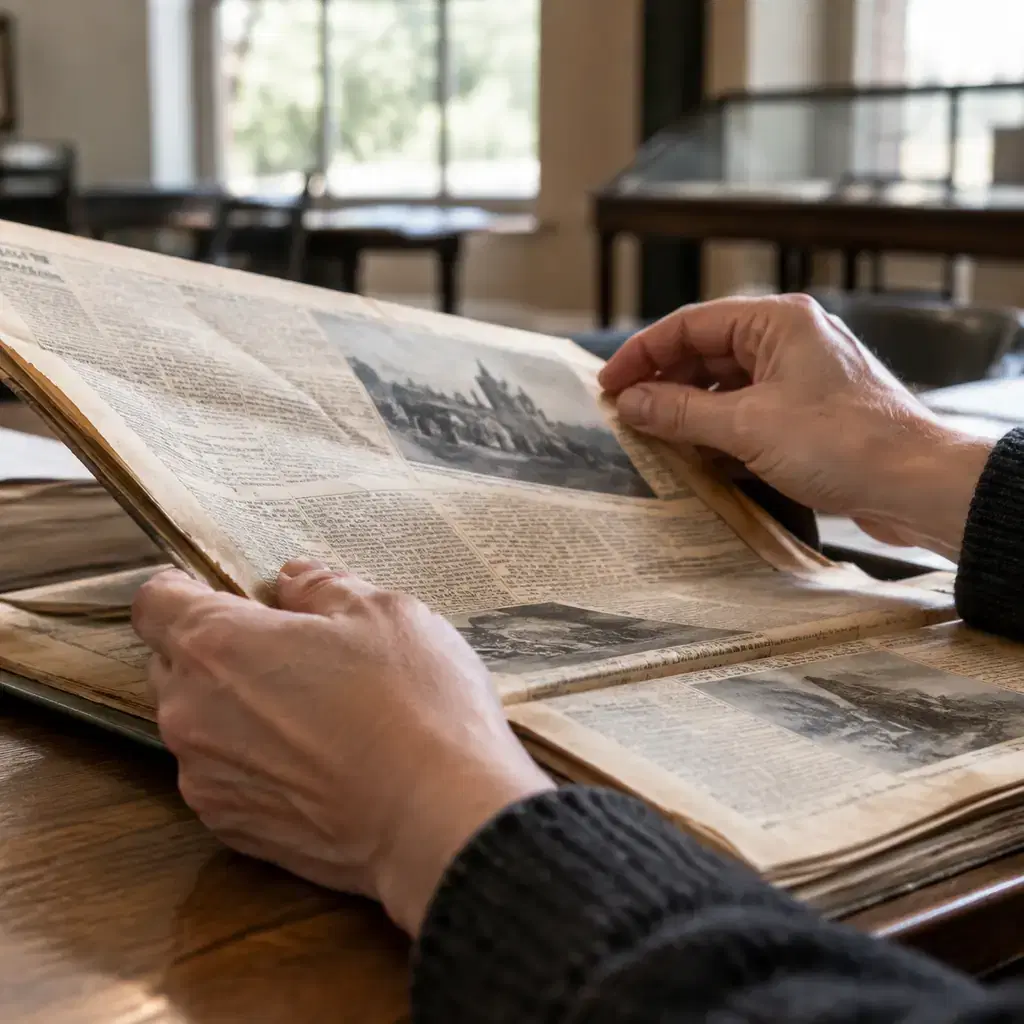
At the Eureka Sentinel Museum, the old newspaper’s printing equipment remains part of the story. It is a reminder that a successful mining town needed news, arguments and advertising as well as ore.
Nearby, the 1880 Eureka Opera House adds another unexpected institution. Plays, masquerade balls and early films all had a place in a town that might otherwise sound like a collection of mines and saloons.
Eureka’s historical walking tour brings these buildings together with the courthouse and other surviving structures. Many stops are close enough to make walking more rewarding than moving the car between them.
There is an especially extravagant detail at the courthouse: a flag decorated with silver tassels and gold stars, according to Travel Nevada. It makes the town’s former wealth considerably less abstract. Travel Nevada’s Eureka guide
12. Boulder City tells the human side of Hoover Dam
Boulder City was established in 1931 to house the people building Hoover Dam. That gives the town a story closely tied to the famous attraction nearby, but worth understanding in its own right.
Walk through the historic center before heading to the dam. The buildings and street scene supply a sense of the community created around the project. Then the scale of the dam has a human counterpart: this is where many of its builders lived.
For a second outdoor stop, the Historic Railroad Trail follows part of the route used during dam construction. The surviving tunnels turn a transport link into a memorable walk. Use the trail’s current conditions and heat guidance when planning a visit.
Travel Nevada’s Boulder City guide
If the town’s scale appeals beyond a holiday, HT’s small-town trial-visit guide suggests how to look at everyday life too.
13. Lovelock’s oldest story involves handmade ducks

Lovelock Cave yielded tule duck decoys made more than 2,000 years ago. They are a remarkable reminder that careful observation and skilled design were part of life here long before the railroad arrived.
The cave is a sacred place to the Northern Paiute. The story deserves more attention than the sensational legends sometimes attached to it: people made convincing waterfowl shapes from bundled plant stems, and those objects survived for centuries.
The Lovelock Cave Backcountry Byway connects the town with the site. Begin at the Marzen House Museum for context, rather than expecting the original decoys to be waiting inside the cave.
Back in town, the round Pershing County Courthouse provides a very different architectural curiosity. Behind it, Lovers Lock Plaza gives couples and families a designated place to leave a padlock as a souvenir of their visit. Travel Nevada’s Lovelock guide
14. Elko serves the West in a family-style dinner
Elko’s Basque restaurants offer an introduction to a part of Nevada history that does not fit neatly into cowboy-movie scenery. Basque sheepherders came to the region for work, and the food remains a visible part of local life.
The Star Hotel is a well-known stop for a family-style meal. Around town, leatherwork at J.M. Capriola Co. and the Cowboy Arts & Gear Museum show another living tradition: making equipment that has to work before it can become an heirloom.
Elko is one of the larger small cities on this list, and it earns that place through the concentration of things to do. You can give a day to food, craft and murals, then head toward the Ruby Mountains and Lamoille Canyon.
For a trip built around storytelling, investigate the National Cowboy Poetry Gathering. It brings poetry, music and accounts of working life to the stage, with the contemporary West as well as its history represented. Travel Nevada’s Elko guide
For the longer highway stretches between local meals, HT’s road-trip dining guide offers additional stopping ideas.
15. Mesquite has a river story underneath the resorts
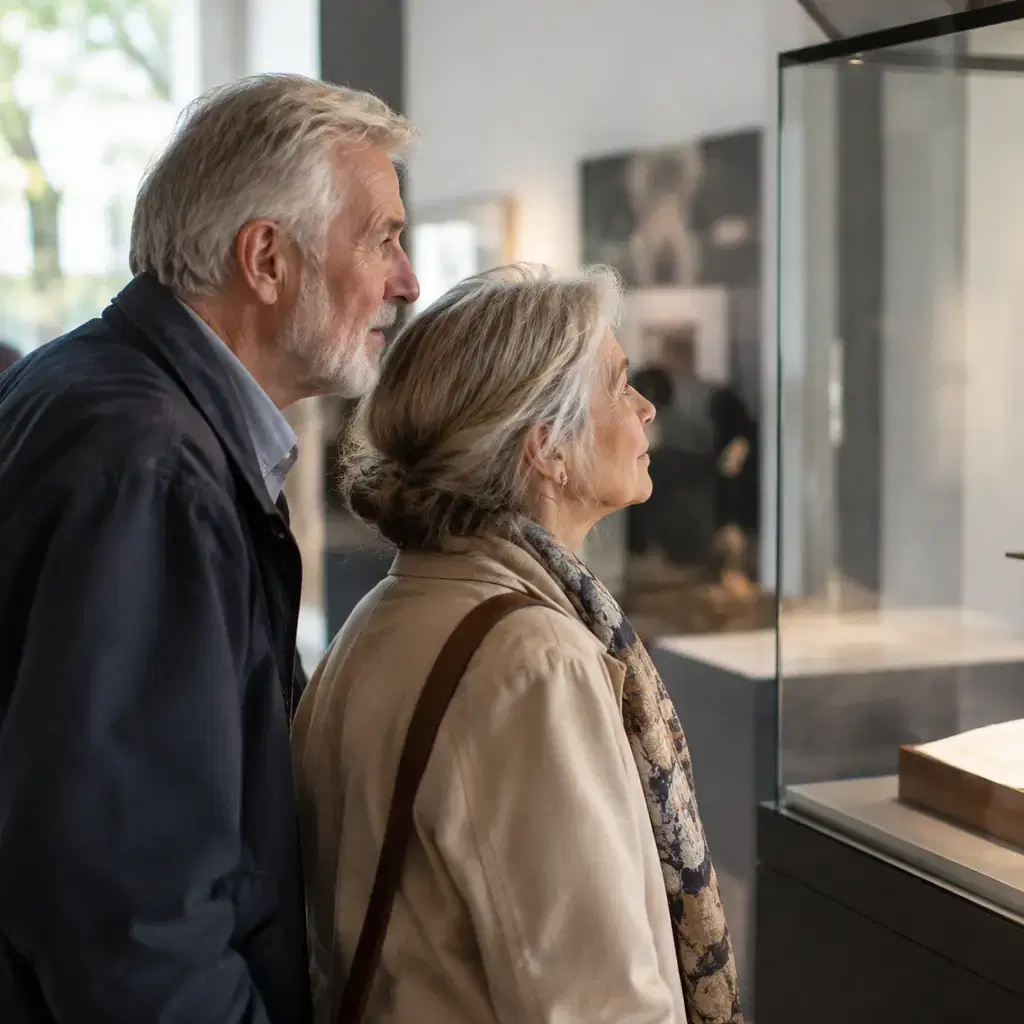
Mesquite’s early settlers tried more than once to establish a lasting community. Flooding from failed irrigation canals defeated two attempts before a permanent settlement took hold in 1894.
That history makes the Virgin Valley Heritage Museum a useful first stop. Water shaped this place long before golf courses and resort pools became part of its visitor appeal.
Mesquite suits a slower trip with a comfortable base. Golf is a major draw, while the Fine Arts Center & Gallery provides an indoor alternative. Farther afield, Gold Butte National Monument offers rock formations and petroglyphs, but its remote roads deserve a properly planned outing.
Travel Nevada’s Mesquite guide
A distinctive overnight can give a longer trip another story; HT’s historic-hotel guide offers places to investigate.
16. Baker puts a cave and an ancient forest in the same trip
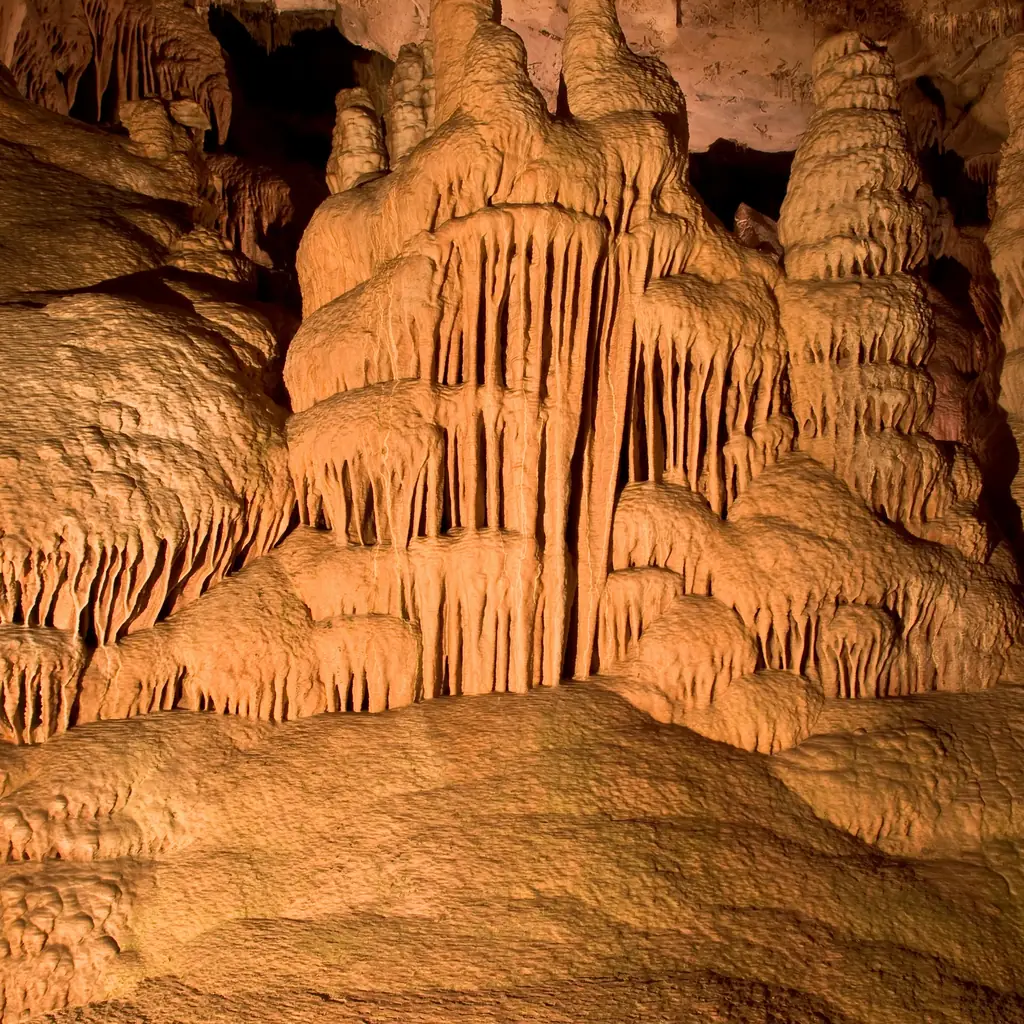
Baker is a tiny community with an unusually large backyard: Great Basin National Park. Its strongest claim on your itinerary is the chance to experience underground chambers and high mountain country from the same base.
Lehman Caves contains distinctive formations called shields. A cave tour makes the park more than a mountain view, while trails higher up introduce the bristlecone pines that draw many visitors to this corner of Nevada.
There is a human story nearby as well. The Baker Archaeological Site preserves the location of a Fremont village, with interpretation of the people who lived in the valley centuries ago.
Reserve the cave tour before committing to the drive; entry is by guided tour only. National Park Service tour information
Give Baker time beyond the drive in and out. The caves, the trees and the night sky reward different parts of the day. That variety is what makes this small place feel like a destination rather than simply the last stop before a park entrance. Travel Nevada’s Baker guide
Comments
The opinions and views expressed in the comments section are solely those of the individual users and do not represent or reflect the opinions, views, or positions of HumbleTrail. HumbleTrail does not endorse, support, or verify the accuracy of any user-generated content.
By posting a comment you agree to receive related emails from HumbleTrail in accordance with our Terms and Privacy Policy. You can unsubscribe at any time.