

Editor’s note: These travel recommendations reflect our editorial judgment.
A town that renamed itself after a radio show. A gallery where a family’s weaving tradition is still changing. A mountain village with a railroad bridge hanging above the trees. New Mexico’s small communities give you much better reasons to stop than a pretty storefront.
These sixteen places include villages, towns and smaller cities. They spread across the state, so choose a region rather than trying to collect the whole list on one trip.
1. Taos: start with the living community behind the postcard
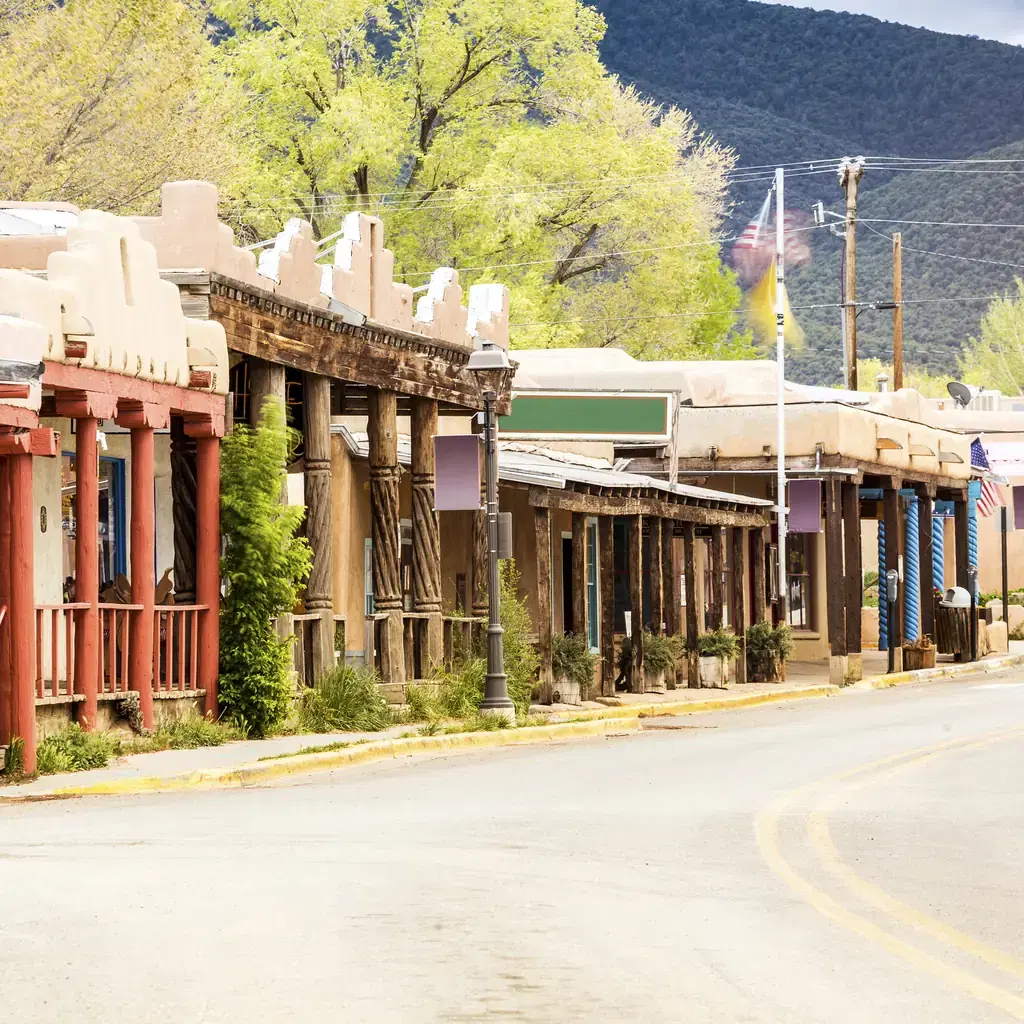
The multistory adobe buildings at Taos Pueblo are beautiful. The more interesting fact is that they belong to a living Native community whose history here stretches back more than a thousand years. A visit changes when you understand that you are entering someone’s home, with permission.
Read Taos Pueblo’s own visitor guidance before arriving. Some buildings contain clearly marked businesses; others are private. Ask before photographing people, and respect closures for community and religious events.
The community’s rules also make a useful distinction between a general travel photograph and a commercial photo shoot. Professional photography requires prior approval. Even an ordinary visitor should leave the chapel interior unphotographed and stay out of the river, which supplies drinking water. Those details are practical ways to be a better guest.
Then give Taos town a separate afternoon. Its galleries and museums belong to another part of the story, one shaped by generations of artists drawn to northern New Mexico. Resist treating Pueblo culture, landscape and paintings as one interchangeable attraction. Seeing each on its own terms makes the trip richer.
2. Truth or Consequences: the old name explains what to do
Before it became a wonderfully awkward name to fit on a road sign, this town was called Hot Springs. In 1950, residents accepted radio host Ralph Edwards’s challenge and voted to rename their community after his show. The city’s account of the change is more entertaining than any invented ghost story.
The springs remained. Historic bathhouses and modern soaking businesses offer different ways to spend an unhurried hour in warm mineral water. Some emphasize private baths; others offer shared pools, so compare the actual setup before booking.
Build your day around a soak and the compact downtown’s galleries, rather than treating the town as a quick joke on the highway. Its bathhouse tradition gives you a good excuse to finish sightseeing early.
3. Chimayó: watch a tradition continue, rather than just buy the souvenir
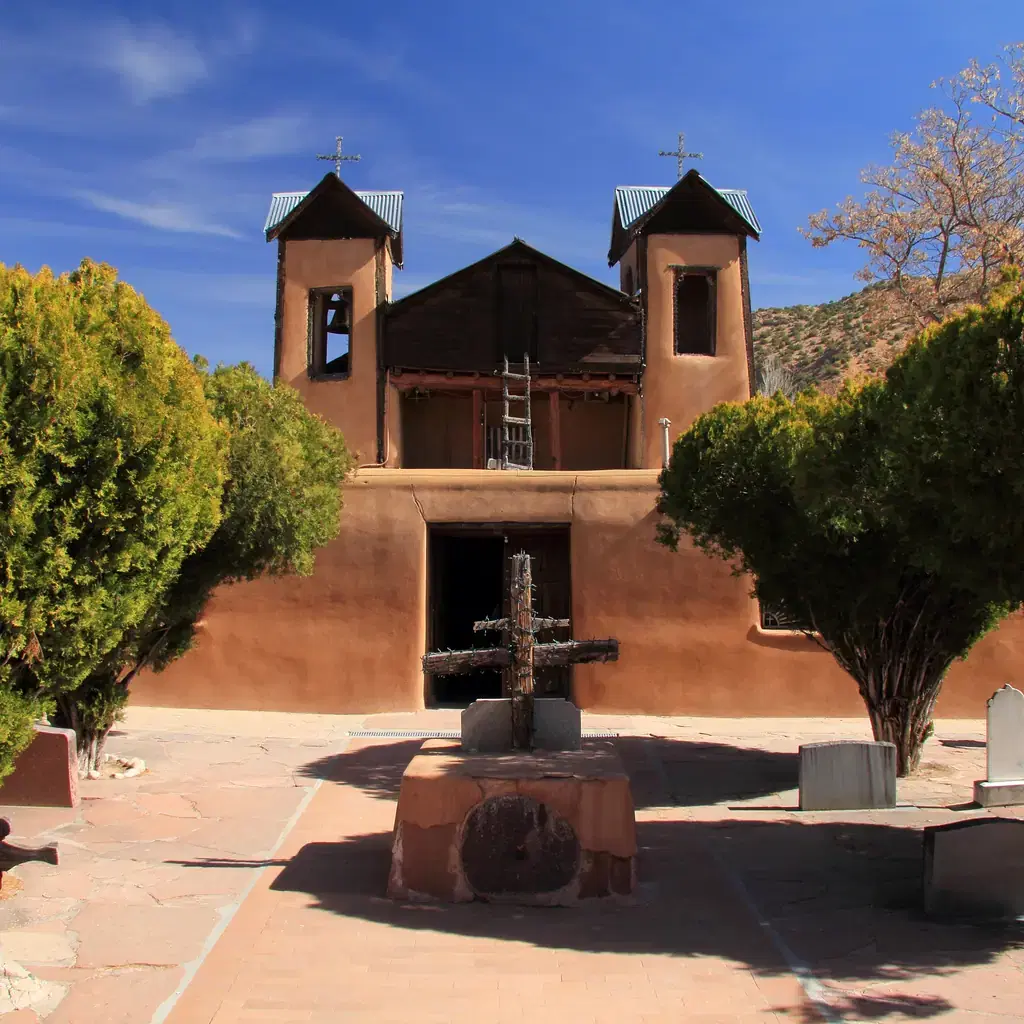
A woven piece can look like a handsome pattern until someone explains the choices inside it: the yarn, the dye, the tension and the time. Chimayó makes those details worth asking about.
The Trujillo family’s weaving connects generations of northern New Mexico craft with designs still being developed today. At Centinela Traditional Arts, handwoven work provides a specific place to begin looking.
Ask which pieces were made locally and how the designs differ. Do not assume that a studio visit includes a live demonstration; contact the gallery if that matters to you. Even a short conversation can make the object you take home much more interesting than something selected only because its colors match a room.
4. Mesilla: the border moved, and the plaza kept going
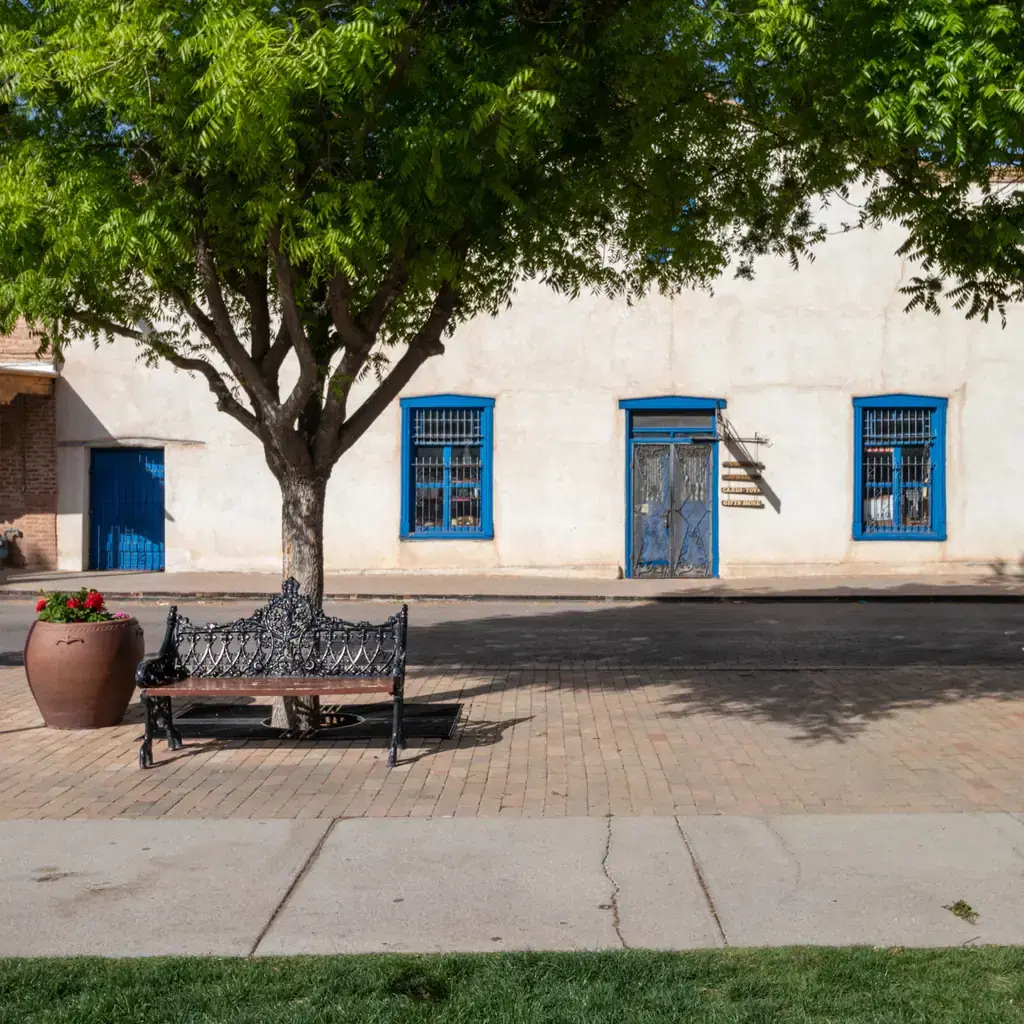
Mesilla’s plaza is a place to sit down before you start ticking off buildings. The surrounding adobe, the church and the shops make a compact afternoon, but the history gives the scene another layer.
When the Gadsden Purchase brought this area into the United States in 1854, residents did not have to move for their national border to change. New Mexico’s Mesilla history connects that moment with the town’s role on stagecoach and trade routes.
Look at the plaza with movement in mind: travelers arriving, goods changing hands, families living through a political change. Then have lunch nearby. You can absorb a surprising amount here without turning the stop into a long drive between separate attractions.
5. Silver City: the most memorable art may be inside a bowl
The Western New Mexico University Museum gives Silver City an unusually strong indoor stop. Its Southwest cultural collections include Mimbres pottery, with painted forms that reward close attention rather than a quick walk past the cases.
Take one object at a time. Notice how a shape or animal fits the curve of the bowl, then read the interpretation that explains its context. A museum visit becomes far more absorbing when you stop trying to see everything at equal speed.
Downtown provides a different kind of looking, with galleries and historic commercial buildings. The local chamber’s museum listing gives practical details for finding the campus collection. Keep it separate from any longer trip into the Gila country; this town has enough to hold an afternoon of its own.
6. Madrid: a coal town found a second use for its buildings
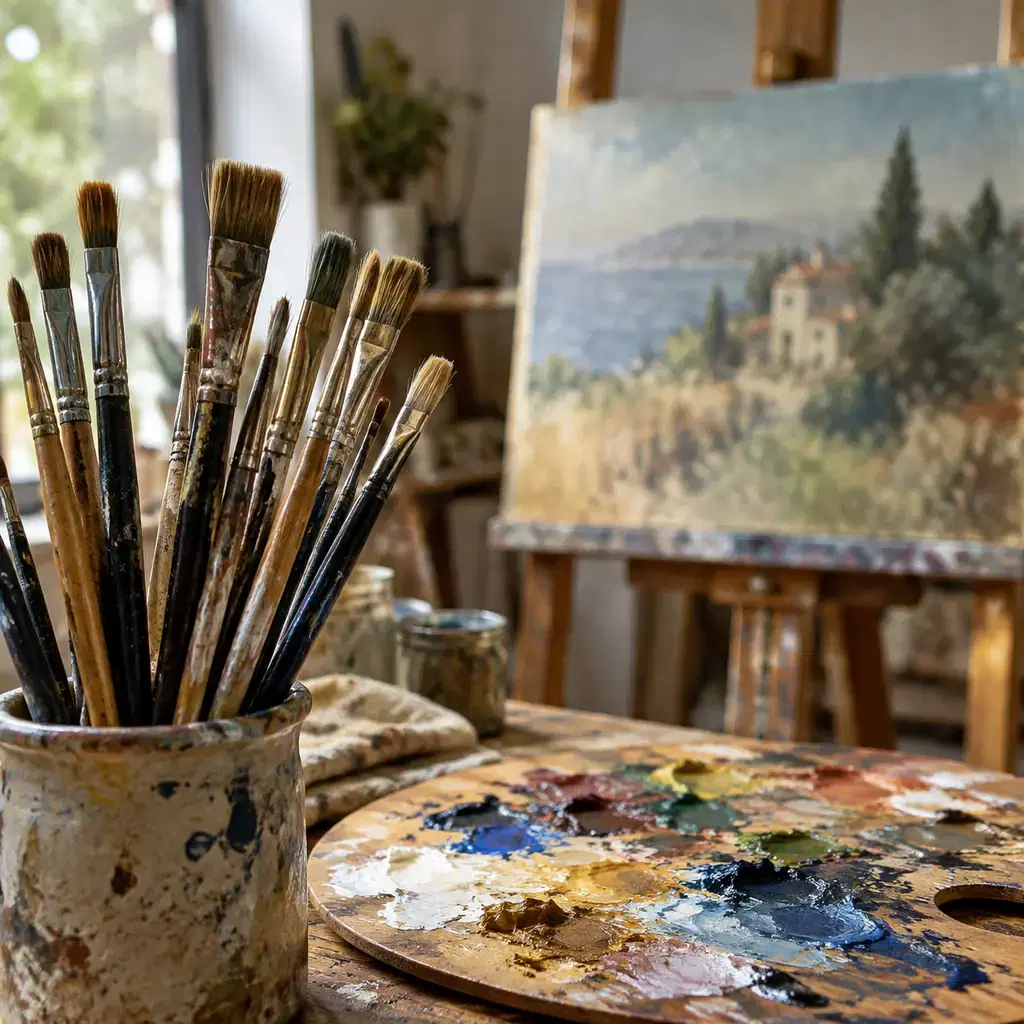
Madrid’s galleries make more sense once you know what came before them. This was a company coal town; after the mines declined, buildings stood empty before artists and other newcomers helped bring the community back.
The state’s account of Madrid traces that change. Walk the main road looking at the scale of the old buildings, then step inside a gallery whose work interests you. The reward is the contrast between the town’s industrial purpose and what people make here now.
Madrid suits the kind of scenic drive with frequent stops that leaves room for an unplanned conversation. Give yourself permission to miss a shop and spend longer in another.
7. Cerrillos: follow the minerals instead of a movie-set fantasy
Madrid’s neighbor offers a quieter way into the Turquoise Trail. At Cerrillos Hills State Park, interpreted trails pass evidence of mining across many centuries.
The story changes with the people seeking the minerals. Indigenous miners valued turquoise and galena; later newcomers pursued different uses and markets. The park’s trail guide helps explain what would otherwise look like another hole in a dry hillside.
Choose a trail for its length and exposure, and view the historic workings from the designated route. This is a chance to understand the landscape, not explore an abandoned shaft. Back in the village, the small scale is part of the appeal: you can let a modest stop stay modest.
8. Jemez Springs: the canyon town with two very different kinds of quiet
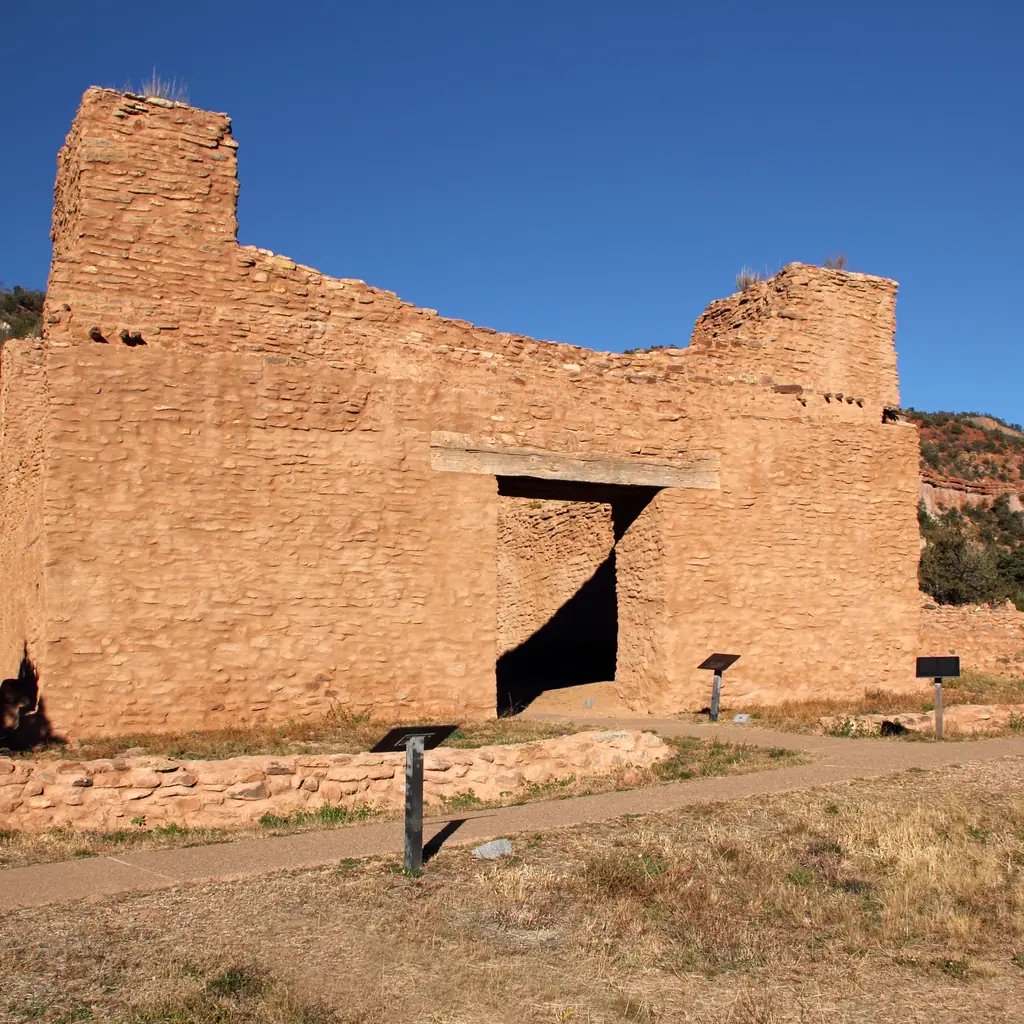
Warm-water bathing gives Jemez Springs a slow afternoon. The nearby Jemez Historic Site asks for a different kind of attention, with the remains of the ancestral village of Giusewa and a Spanish mission.
Do one without rushing toward the other. At the historic site, read the interpretation rather than treating the walls as a picturesque backdrop. For a bath, compare private and shared arrangements and reserve the experience that suits you.
New Mexico’s village guide is a useful starting point. This is also the kind of place where a good overnight stay can change the pace; our guide to historic hotels with a reason to linger explains what to look for beyond an attractive lobby.
9. Cloudcroft: find the railway that climbed into the trees
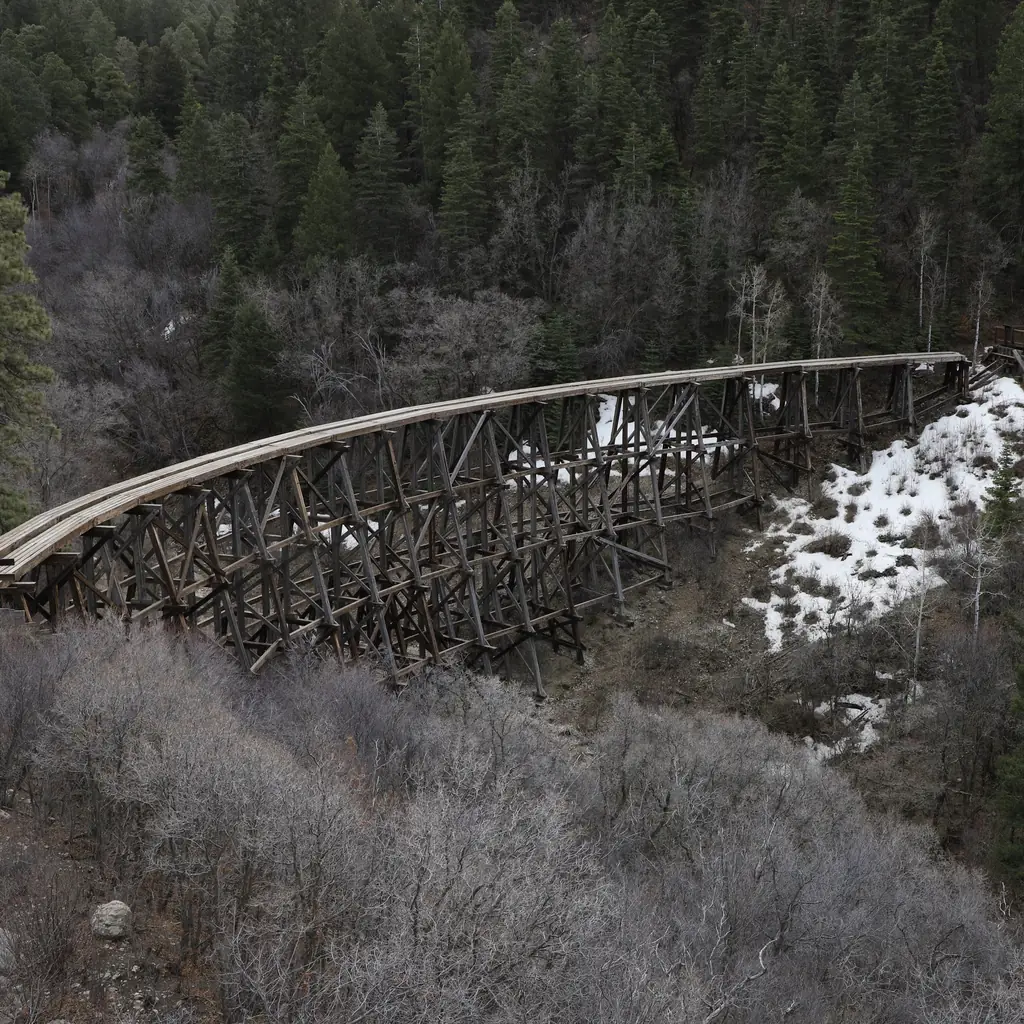
The Mexican Canyon Trestle is a remarkable object to encounter above a wooded ravine: a wooden structure built for a railway that once reached Cloudcroft’s high mountain setting.
The Forest Service’s historical record dates the trestle to 1899 and connects it to the Alamogordo and Sacramento Mountain Railroad. Seeing it helps explain how a small mountain community developed before visitors simply drove up for the day.
Use the local tourism guide to choose the appropriate viewing route; admiring the structure does not mean walking onto it. Then return to town for lunch. If rail engineering interests you as much as the scenery, these train journeys chosen for the view offer another way to build a trip around the tracks.
10. Red River: check the community calendar before buying another activity
The Red River Community House offers a small-town pleasure that is easy to overlook when planning a mountain vacation: a calendar of activities built around doing things together.
Depending on the season, that can mean guided walks, crafts, music or family games. The program is particularly busy in summer. Check the actual day’s schedule rather than assuming an activity runs whenever you arrive.
It gives a visit some human texture. A mountain view is wonderful, but an hour making something, learning a dance or walking with people who know the area may be what separates one mountain town from the next. Leave a gap in the itinerary for it.
11. Corrales: a rural afternoon close to a city

Corrales is a useful corrective to the idea that every memorable New Mexico village must be remote. Near Albuquerque, fields, orchards and village businesses offer a noticeably different afternoon from the city.
Casa San Ysidro provides a tangible way into that history through an adobe house and its collection. Match your visit to the museum’s current tour arrangements, then leave time for the village rather than immediately driving away.
A growers’ market, when scheduled, adds a second reason to stop. Look at what is actually in season and talk to the seller. Anyone considering life in a smaller community can apply our advice on visiting a town before imagining a move: spend some time with the ordinary day, too.
12. Hatch: ask one better question about the chile

In Hatch, “How hot is it?” is a reasonable first question. “Which variety is this, and how would you cook it?” is a better second one.
Chile is an agricultural product with growers, harvests and different uses, not just a flavor printed on a gift-shop sign. A stop during roasting season can make that easy to understand: look for sellers who can explain what they are roasting and where it was grown.
The state’s guide to New Mexico chile provides useful background. Choose a meal that lets the ingredient take the lead, and think about transport before buying a large quantity. The best souvenir is something you will enjoy using, with a story you can explain at the table.
13. Las Vegas: follow the old travelers from the plaza to the tracks
Las Vegas, New Mexico, has two historical centers that tell different travel stories. The plaza belongs to the older town; the railroad district reflects the arrival of passengers and commerce by train.
At the Castañeda Hotel, the long arcade and trackside position make the railway connection visible. The building was part of the Fred Harvey hospitality system, which helped shape how passengers ate and stayed across the Southwest.
See the exterior, then use whichever public dining or tour arrangements are available during your visit. Continue to the plaza instead of assuming one historic block represents the whole town. For a food stop along the way, our road-trip restaurant guide is a useful fallback; here, leave at least one meal for a local place you discover on foot.
14. Ruidoso: give the mountain trip a town afternoon
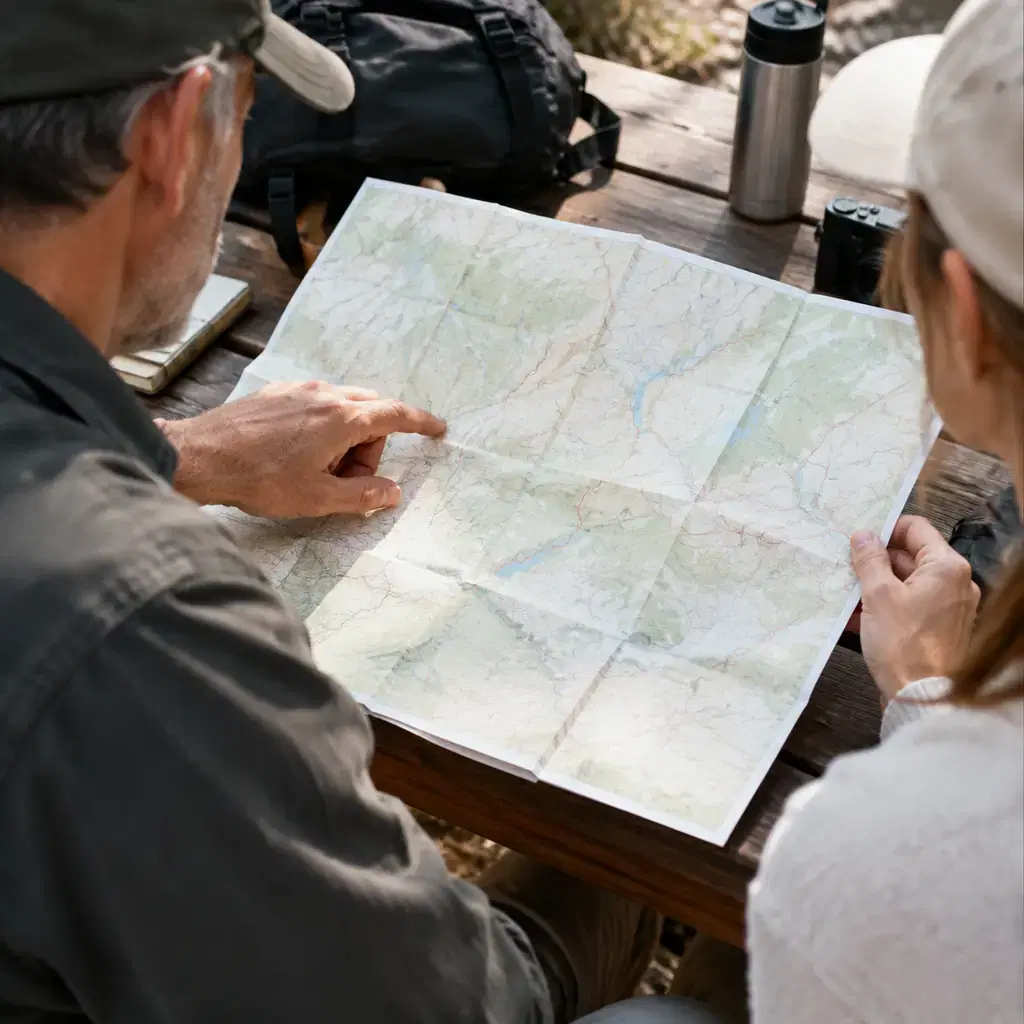
Ruidoso’s Midtown offers an easy change of pace from a vacation organized around outdoor activities. Galleries, shops and places to eat let you put the keys away for a while and choose by what catches your attention.
The state’s Ruidoso guide gives the broad picture. For forest outings, use current local and land-manager information: fire, flood recovery and weather can change which routes are available.
The town stop does not have to fill an entire day. Pick a gallery, have a proper lunch and leave some empty time before the next drive. The idea also guides these trail towns with rewarding off-trail hours: give the town part of the trip a reason to exist.
15. Mountainair: the imposing walls are only half the story
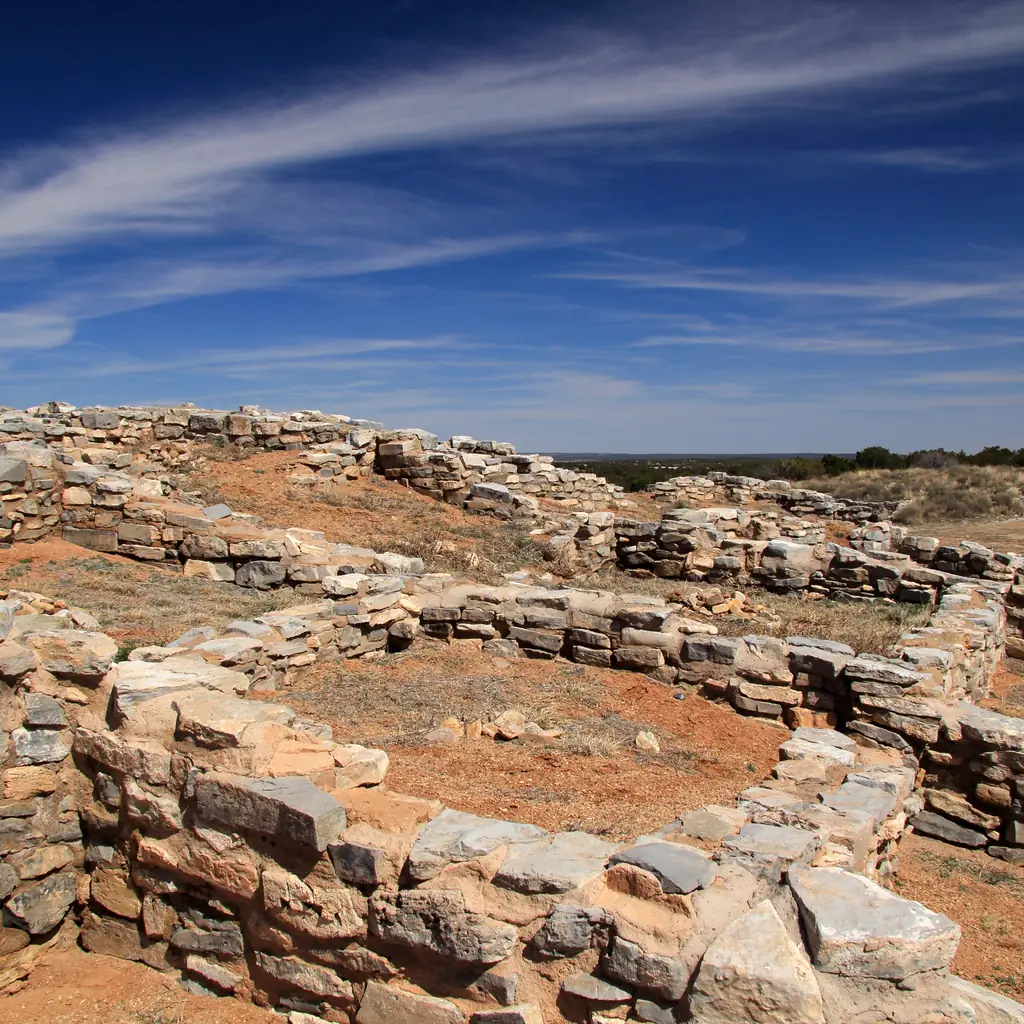
At Salinas Pueblo Missions National Monument, tall church walls are the first thing likely to catch your eye. The pueblos around them tell the longer story of communities, trade and the difficult encounters that followed Spanish colonization.
Begin at the visitor center in Mountainair. The National Park Service’s guide explains the three separate units: Abó, Quarai and Gran Quivira. They are not three neighboring buildings you can stroll between.
Choose one or two sites with enough time to read the interpretation and look beyond the church ruins. This is where a road trip built around frequent, meaningful stops pays off. The experience improves when you have time to understand what the most photogenic structure leaves out.
16. Tularosa: look for the water that holds the village together
Tularosa offers a different kind of desert discovery. Its historic acequia system brings water from the Tularosa River into the village, helping explain the relationship between settlement, gardens and agriculture.
The village’s comprehensive plan describes these community-managed ditches as part of the historic district’s identity. Once you know to look for them from public streets, they make the village more legible.
Walk slowly, respect homes and working irrigation channels, and resist turning every pretty yard into a photo opportunity. This is a lived-in place. Its value is the chance to notice how an everyday piece of infrastructure shapes a community in a dry landscape.
Comments
The opinions and views expressed in the comments section are solely those of the individual users and do not represent or reflect the opinions, views, or positions of HumbleTrail. HumbleTrail does not endorse, support, or verify the accuracy of any user-generated content.
By posting a comment you agree to receive related emails from HumbleTrail in accordance with our Terms and Privacy Policy. You can unsubscribe at any time.