

Editor’s note: This article is general information based on publicly available sources we found online.
It is not legal, financial or medical advice. Rules, prices and policies change, so check the source before you act. Images are AI-generated illustrations.Frequent flyers get through airports on a short list of dull habits, most of them settled before they leave the house. Each of these 21 comes with a real rule, price or deadline, and the newest only started in September. The habit at #1 carries the biggest dollar figure on the page, and it costs you one question at the gate. Keep score as you go.
21. Checking the ID in your wallet before you check the flight

A temporary driver's license, the kind you get while the new card is in the mail, does not count as ID at a TSA checkpoint. TSA calls it "not an acceptable form of identification," and a traveler can learn that at 5:15 a.m. with a line forming behind them.
Since May 7, 2025, a license without the REAL ID mark (a star, a flag or the word "Enhanced") no longer works for domestic flights either. A passport does. TSA currently accepts an expired ID up to two years past its expiration date, for the forms of ID on its list. Children under 18 need no ID on domestic flights.
With no acceptable ID, TSA offers ConfirmID for $45, prepaid at Pay.gov and good for 10 days. TSA says it cannot guarantee it can verify you, so you may still miss your flight. Tonight, check your card for the mark and read the date. No mark means the passport goes in the carry-on.
20. Weighing the bag on a bathroom scale

Two pounds over can cost more than the bag fee itself. At the counter the scale reads 52, and Southwest adds $100 to its normal fee for any bag from 51 to 70 pounds. On Basic, Choice and Choice Preferred fares, a first bag costs $45 on tickets booked and ticketed, or changed, on or after April 9, 2026, up from $35. With the $100, that is $145 each way, or $580 round trip for a couple with one such bag each.
Delta's limit is 50 pounds, and its bags cost $45 and $55 each way in Main and Comfort. Its page lists no overweight fee, so look yours up.
Better move: Stand on the scale holding the packed bag, then subtract your own weight. Also check who flies free. Delta waives the first bag for Medallion members and eligible SkyMiles American Express cardholders. Southwest does the same for A-List members and Rapid Rewards credit cardholders, who must enter their number at booking. If a bag never shows up, the refund is waiting at #13.
19. Emptying every pocket, even the one with the breath mints

Even breath mints should not stay in your pocket, say TSA's own officers. In an August 2023 list of checkpoint tips, they say to empty your pockets completely, "even non-metallic items from tissues to breath mints," because it helps avoid pat-downs. The same list says to put your phone inside your carry-on, not in a bin, and never to bring a bottle of water to the checkpoint. Bring an empty one and fill it past security, which they say saves a few bucks.
Shoes used to go in the bin too. They do not have to now, and #9 explains the one catch.
18. Saving the Known Traveler Number in every booking, spelled exactly as enrolled

PreCheck costs $85 or less for five years, about $17 a year, and it does nothing for you if your number is missing from the booking. TSA says to enter your Known Traveler Number in airline reservations and travel profiles. Its FAQ adds the catch: the name on the reservation must match your application exactly, middle name included if you gave one. A nickname on the booking is not an exact match.
TSA says about 99% of passengers wait less than 10 minutes, though no one is guaranteed expedited screening. Children 17 and under can join an adult in the PreCheck lane for free.
The check: Open each airline app and compare the saved name and number with your enrollment. If the PreCheck indicator is missing from your boarding pass, TSA asks you to contact it within 72 hours of the problem, if possible. The same number does something new this fall, at #3.
17. Keeping medicine within reach and telling TSA about it

It is 9:40 p.m., the flight is canceled and your blood-pressure pills are in the checked bag. Keep every medication you cannot miss in the carry-on, in one pouch you can pull out in seconds.
TSA lets you bring more liquid medicine than the 3.4-ounce limit allows, in "reasonable quantities for your trip." You must declare those liquids to officers at the checkpoint. TSA recommends labeling medications but does not require it, and insulin pumps and supplies must be accompanied by insulin.
Oversized medical liquids that alarm during screening may not be allowed through, so pack what the trip needs and no more. Put the pouch at the top of the carry-on with any liquids you will declare beside it, so both come out in one motion.
16. A tracker in the checked bag, and knowing where the share button is

An AirTag in the suitcase is half of the habit. The other half is handing the airline a link. Apple says you can share an item's location from the Find My app. It says sharing covers more than 50 airlines, including Delta, Lufthansa, Singapore Airlines and United. The alternative is describing a black suitcase to an agent.
Sharing stops when you are reunited with the bag, or after seven days. The Points Guy's March 2025 guide says to paste the link into the airline's app or give it to the agent helping you. That guide listed 19 airlines, and Southwest was not among them, so ask yours.
Try it once: Practice the share option at home, not at a baggage office at midnight. Apple says the owner needs iOS 18.2 or later to create the link, so update your phone first. With another brand of tracker, ask your airline what it accepts. 25 Things Experienced International Travelers Always Pack That Most People Never Think Of in 2026 includes a bag tracker among its picks.
15. Treating the Sunday after Thanksgiving as a different airport

On the Sunday after Thanksgiving last year, TSA screened about 36 people every second for 24 hours. That was 3,134,613 people on November 30, 2025, the busiest day in its 2025 table. The Tuesday after drew 2,233,828, which is 900,785 fewer. Thanksgiving Day itself was the quiet one, at 1,559,165.
Thanksgiving falls on November 26 this year, which puts the same Sunday on November 29. Summer can rival the holidays: the busiest day of 2026 so far, in TSA's table through October 26, was Thursday, June 18, with 2,988,204.
If your ticket lands on a peak Sunday, add an hour to the airline's recommended arrival time. If the Sunday trip breaks, the fix is at #2.
14. Standing up before the flight, not only during it

CDC warns that anyone traveling more than four hours, by air, car, bus or train, can be at risk for blood clots. Add an hour at the gate and a five-hour flight is six hours in a chair. CDC's advice is to move your legs often, walk around every 1 to 2 hours, and flex your ankles while seated.
Some people may benefit from graduated compression stockings, and CDC says to talk with your doctor if you think you may be at risk. 25 Things Frequent International Flyers Always Pack That Nobody Ever Mentions in 2026 lists medical compression socks among its picks.
The habit starts at the gate. Walk the concourse instead of sitting under a charging post for the last stretch before boarding. Set a timer: 90 minutes once the door closes sits inside CDC's window. A long delay on the ground makes the habit matter more, and the clock that governs it is at #4.
13. Filing the bag report before leaving the airport

A badly late bag earns your bag fee back, but only if you file the report. Under 14 CFR 260.5, an airline must refund the fee for a lost bag. The refund becomes automatic once a bag is significantly delayed and you have filed a Mishandled Baggage Report. Without the report, the airline has no duty to refund the fee.
The clock starts when you are allowed off your last flight at your final airport. A domestic bag counts as significantly delayed after 12 hours. International trips get 15 hours, or 30 hours when the nonstop segment runs longer than 12 hours. At stake: $45 for a first bag and $55 for a second at Delta, and the same at Southwest on newer tickets.
Walk to the baggage service office before you leave the carousel, file the report and keep the reference number. Put a change of clothes and a power bank in the carry-on. 25 Carry-On Items International Flyers Regret Not Packing in 2026 lists both.
12. The bag cutoff, not the “two hours early” rule

Delta's two-hour advice is a suggestion. The bag cutoff is a deadline. It is 8:20 a.m., the 9:00 flight shows "boarding soon," and the bag drop closed five minutes ago.
Delta's domestic cutoff is 45 minutes before departure at most airports (60 at JFK, longer at a few others), and you must be at the gate and ready to board 15 minutes before. Delta recommends arriving two hours ahead, and it will not take bags more than six hours before departure. On a 9:00 a.m. flight, bags close at 8:15 and you must be at the gate by 8:45.
Quick check: Set your alarm from the cutoff, not from the departure time, then add the drive and the walk to the counter. Other airlines publish different numbers, so look up yours.
11. Running the per-year math on Global Entry

Global Entry costs about $35 more than PreCheck over five years, and it includes PreCheck. It costs $120 for five years, which is $24 a year. PreCheck costs $85 or less over the same five years, or $17 a year. The extra buys the faster customs line on the way back in. CBP's page, last updated in July 2025, says minors are free when a parent is in or applying for the program.
Every applicant gets a background check, and first-time enrollees need an in-person interview, so apply well before the trip.
If you leave the country even once in five years, price both on paper. If every flight stays inside the United States, PreCheck does the job alone. A free option for international arrivals comes next, at #10.
10. Downloading Mobile Passport Control before landing

The cheaper way through U.S. customs costs nothing. CBP's Mobile Passport Control app is free for U.S. citizens and a few other groups, and it works at 63 sites, including 37 U.S. international airports. You submit your answers up to four hours before landing, and you can add up to 12 people to a submission from one device.
CBP's own comparison table names the catch. With MPC you must talk to a CBP officer in customs, while Global Entry members are not always required to. Install the app and scan your passport on the ground, not at the top of the jet bridge.
9. Keeping your shoes on until an officer asks

A traveler who last flew in 2024 may still be unlacing shoes in line. On July 8, 2025, DHS announced that passengers at domestic airports can keep their shoes on through screening. It called the change the end of the shoes-off policy.
The catch is that officers can still ask. At the announcement, Homeland Security Secretary Kristi Noem said someone will occasionally still have to remove shoes for extra screening, CBS News reported. TSA's page for travelers 75 and older describes the same case. After an alarm you may be asked to remove your shoes or take a pat-down, and you can ask to sit for that part. That page adds that a light jacket still comes off for the body scanner, and that anyone 75 or older who cannot stand is screened by other methods.
Wear shoes you can slip off anyway, because the officer makes the final call.
Read more: Premium Economy or Business Class on a Long-Haul Flight: What the Extra Money Actually Buys
8. CLEAR+ next to PreCheck, in dollars

CLEAR+ costs about 13 times what PreCheck does each year. The Points Guy put CLEAR+ at $219 a year on September 25, 2026, while PreCheck costs $85 or less for five years, about $17 a year. Over five years, CLEAR+ adds up to $1,095, which is $1,010 more.
TPG says CLEAR helps flyers jump to the front of the TSA line, and that it remains separate from PreCheck. PreCheck is the one that lets you keep your belt and light jacket on and your electronics and liquids in the bag. One Mile at a Time's writer said in July 2026 that he skips CLEAR for the PreCheck line more often than not.
CLEAR fans point to its 150-plus lanes. TSA's PreCheck page says PreCheck is free (terms apply) when you join CLEAR+, but TPG puts the bundle at $219 in total. Verdict: Buy PreCheck first, and add CLEAR only if you can name the airport where its line saves you real minutes.
7. The camera at the ID check is optional

You can say no to the camera at the ID check, and TSA says you will not lose your place in line. Participation is optional, and if you opt out an officer checks your ID the standard way. TSA's page on its facial identification evaluation says DHS deletes the data within 180 days.
Phone IDs have their own rules. TSA says a digital ID works at more than 250 airports, in Apple Wallet, Google Wallet, Samsung Wallet or a state app, but you must still carry your physical ID.
Decide early: Make the call while you wait in line, not at the podium. For a phone ID or the camera, tell the officer before you hand over your ID.
6. Calling TSA Cares three days before flying

TSA can arrange a trained officer to assist you through screening, and it asks you to request one at least 72 hours before your flight. You can call (855) 787-2227 or fill in the TSA Cares form. That officer is a Passenger Support Specialist, a TSA officer trained to assist people with disabilities or medical conditions.
The line is open 8 a.m. to 11 p.m. Eastern on weekdays and 9 a.m. to 8 p.m. on weekends and holidays. The service does not exempt you from screening, and TSA does not provide wheelchairs: airport wheelchair service comes from your airline, which is a separate call covered at #5.
Put the number in your phone on the day you book. TSA lists medically necessary liquids over 3.4 ounces as one reason to call.
5. Asking for wheelchair help when the walk is the problem

If a disability makes the terminal walk hard, the airline must provide help, and under 14 CFR 382.27 it cannot make you give notice. Under 14 CFR 382.91, passengers with a disability get help from the terminal entrance to the gate. That also covers connections between gates and the trip from the gate back to the entrance or pick-up point, including baggage claim.
Some needs do carry a deadline. An airline may require 48 hours' notice, and check-in an hour early, if you will use a CPAP machine or portable oxygen concentrator on board. At the gate, 14 CFR 382.93 requires the airline to offer preboarding to a passenger with a disability who says there that they need extra time or help to board.
The move: Ask when you book anyway, so the request is on the record. If you use a CPAP machine or an oxygen concentrator in flight, ask your airline about its 48-hour deadline before you pay for the ticket.
Read more: 15 Things No One Tells You About Snowbird Travel After 70
4. The tarmac clock

Hour two on a stuck plane, the snacks are gone and the captain says a few more minutes. A federal clock is running: three hours on a domestic flight, four on an international one. Under 14 CFR 259.4, an airline must offer you the chance to get off before a tarmac delay passes that mark. It must also provide food and drinkable water by hour two, unless the pilot finds that safety or security prevents it, plus working restrooms and medical attention if needed.
Three exceptions apply. A departing flight meets the rule if it begins heading back to a gate within three hours of the door closing (four on an international flight). A pilot's finding that deplaning would risk safety or security also counts, and so does air traffic control advice that a return would significantly disrupt airport operations. The rule gives you an offer to get off, not a promise that the plane turns around.
Note the time: Write down when the delay starts. At two hours, ask about food and water. At three hours on a domestic flight, ask about deplaning. Long-Haul Flight Mistakes You'll Feel for Hours lists what to keep within reach.
3. Using Gateside to meet the plane at the gate
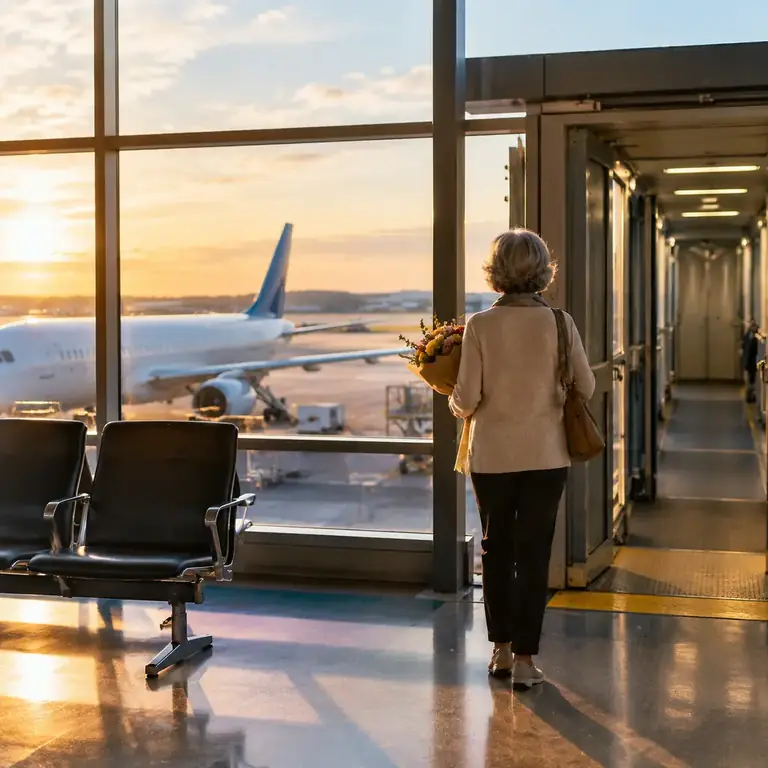
Gateside is the newest habit on this list, and the only one with an asterisk. Since early September 2026, a PreCheck member can request a free pass to go past security without a flight. Use it to walk a family member to the gate, greet an arriving passenger or eat in the terminal.
You need a Known Traveler Number and a request one to three days ahead at tsa.gov/gateside. A pass is good for one calendar day, airports cap daily passes, and TSA does not accept screenshots or printouts of your approval.
The asterisk is the map. Only 13 airports offer it: Dallas/Fort Worth, Los Angeles, Las Vegas, San Diego, Salt Lake City, Detroit, Indianapolis, Columbus, Oklahoma City, Omaha, Wichita, Little Rock and Mesa Gateway. FOX Local reported on October 19 that a planned rollout to 301 more airports is delayed, and a TSA spokesperson said Gateside is in the "operational assessment phase" at the 13.
If your airport is on the list, request a pass and meet an arriving grandchild at the gate instead of at baggage claim. Check tsa.gov/gateside first, because the list can change. The last two habits are about the day your plan changes.
2. Rebooking yourself before the line forms

By Delta's own account, the agent at the desk sees the same rebooking options your phone does. When a flight is delayed more than 30 minutes or canceled, you can rebook in the Fly Delta app, on delta.com or at a kiosk, and your bags are re-routed to the flight you pick. Group, cruise and unaccompanied-minor bookings are excluded.
Federal rules cover what happens if you dislike the options. An arrival three or more hours late on a domestic trip (six on an international one) is a significant delay. If the airline cancels your flight or significantly delays or changes it and you decline the alternative, 14 CFR 260.6 says you are due a full refund. A voucher counts only as an explicit alternative that states your right to the refund.
At the first delay alert, open your airline's app before the desk line forms. A first-timer might join the line first. If no option works, ask for the refund, not the voucher. If the flight is the first leg of a cruise, 27 Pre-Cruise Mistakes Travelers Tend To Make covers the backup plan. The last habit carries the page's biggest dollar figure.
1. Asking what the airline owes before volunteering your seat

The biggest dollar figure on this list is in the federal rule on oversold flights. If an airline bumps you against your will on a domestic flight, the pay depends on the substitute flight. One due more than 1 but less than 2 hours after your original arrival earns 200 percent of the fare to your destination, up to $1,075. A later one, or none, earns 400 percent, up to $2,150: $1,200 on a $300 fare. No pay is owed if you miss the check-in deadline.
Airlines must tell volunteers what a forced bump would pay them, but volunteers can accept any amount. If you are bumped against your will, free travel offered instead of cash must be worth at least the cash, and you can take the cash instead.
The caps rose from $775 and $1,550 for travel on or after January 22, 2025, so check the current figure.
Ask this: Before you say yes, ask what cash the airline would owe if it bumped you. It costs nothing, and the rule makes the airline answer. That question separates a frequent flyer from a first-timer.
Read more: 21 Things Experienced Cruisers Pack That First-Timers Forget
Sources (42)
- TSA: Identification requirements at the checkpoint
- TSA: REAL ID
- TSA: ConfirmID
- TSA: TSA PreCheck
- TSA: TSA PreCheck FAQ
- TSA: Gateside by TSA PreCheck
- TSA news release, Sept. 10, 2026: Gateside launch at Eppley Airfield
- FOX Local, Oct. 19, 2026: TSA's plan to expand gate access for non-passengers at hundreds of airports stuck in testing phase
- TSA: Passenger support and TSA Cares
- TSA: Screening passengers 75 and older
- TSA news release, July 8, 2025: DHS to end the shoes-off travel policy
- CBS News, July 9, 2025: Can I keep my shoes on at airports? Here's what to know about TSA rule change
- TSA: Medical items and liquids
- TSA: Digital ID
- TSA: Evaluating facial identification technology
- TSA: 2025 checkpoint passenger volumes
- TSA: 2026 checkpoint passenger volumes
- TSA news release, Aug. 8, 2023: top six checkpoint dos and don'ts
- CBP: Global Entry
- CBP: Mobile Passport Control
- CDC: Understanding your risk for blood clots with travel
- Apple: AirTag
- Apple Support: How to use Find Lost Item
- The Points Guy, March 3, 2025: Apple AirTag Share Item Location with airlines
- The Points Guy, Sept. 25, 2026: CLEAR as a TSA PreCheck enrollment provider
- One Mile at a Time, July 1, 2026: CLEAR+ Membership Price Increases (Again), Amex Credits Also Bumped
- CLEAR: membership and lanes
- Delta: Domestic check-in time requirements
- Delta: Baggage and travel fees
- Delta: Rebook me
- Southwest: Optional travel charges
- 14 CFR 260.2: Baggage and flight delay definitions
- 14 CFR 260.5: Refunds of checked-bag fees
- 14 CFR 260.6: Refunds for canceled or significantly changed flights
- 14 CFR 259.4: Tarmac delays
- 14 CFR 382.27: Advance notice for services to passengers with disabilities
- 14 CFR 382.91: Assistance moving through the terminal
- 14 CFR 382.93: Preboarding
- 14 CFR 250.2b: Requests for volunteers
- 14 CFR 250.5: Denied boarding compensation
- 14 CFR 250.6: Exceptions to compensation
- Federal Register, Oct. 24, 2024: Periodic revisions to denied boarding compensation