

Editor's note: This article is an opinion piece based on publicly available traveler reviews, official policies and industry reporting we found online.
The fare screen for an overnight flight often shows two prices for the same departure: one for premium economy, and one two to four times higher for business class. This guide takes the differences one at a time, using the airlines’ own product pages, so you can see where the extra money goes.
It is a decision guide for a 2027 trip to Europe, Asia or the southern hemisphere, not a review of any airline. Frequent long-haul flyers disagree about the answer, so both camps get their say, along with the route-length rule many of them use.
1. Recline: seven inches of tilt against a bed that lies flat
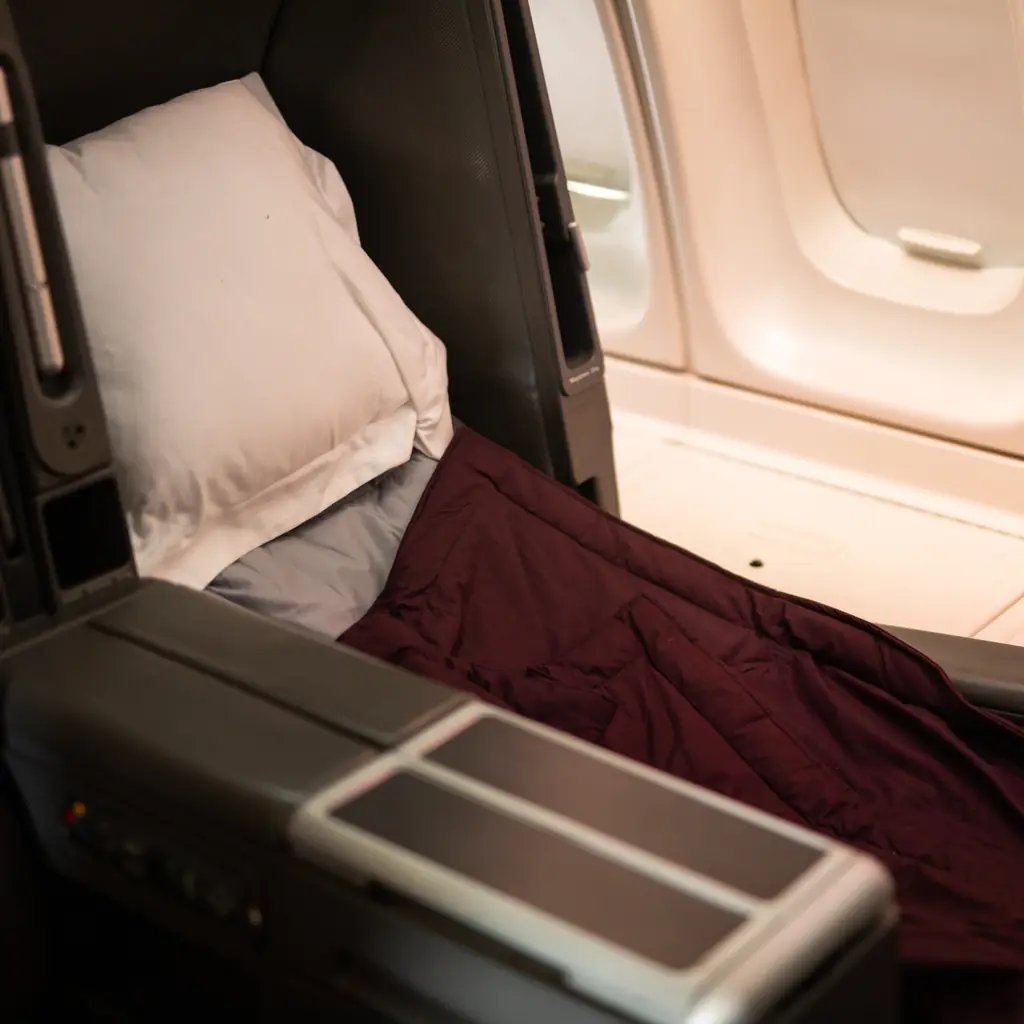
The largest single difference is what the seat does when you press the button. Delta describes Premium Select as up to 7 inches of recline with an adjustable leg rest. Delta One is a 180-degree lie-flat seat that becomes a bed.
Why it matters at hour nine: a recliner holds you at an angle, so your weight still rests on your hips and lower back. A flat bed spreads that load along your whole body, which is why many people who cannot sleep sitting up can sleep in business class.
Everything else on this list is smaller than this difference. Premium economy is a bigger seat, and business class is a bed.
2. Pitch and width: what 38 inches actually buys you
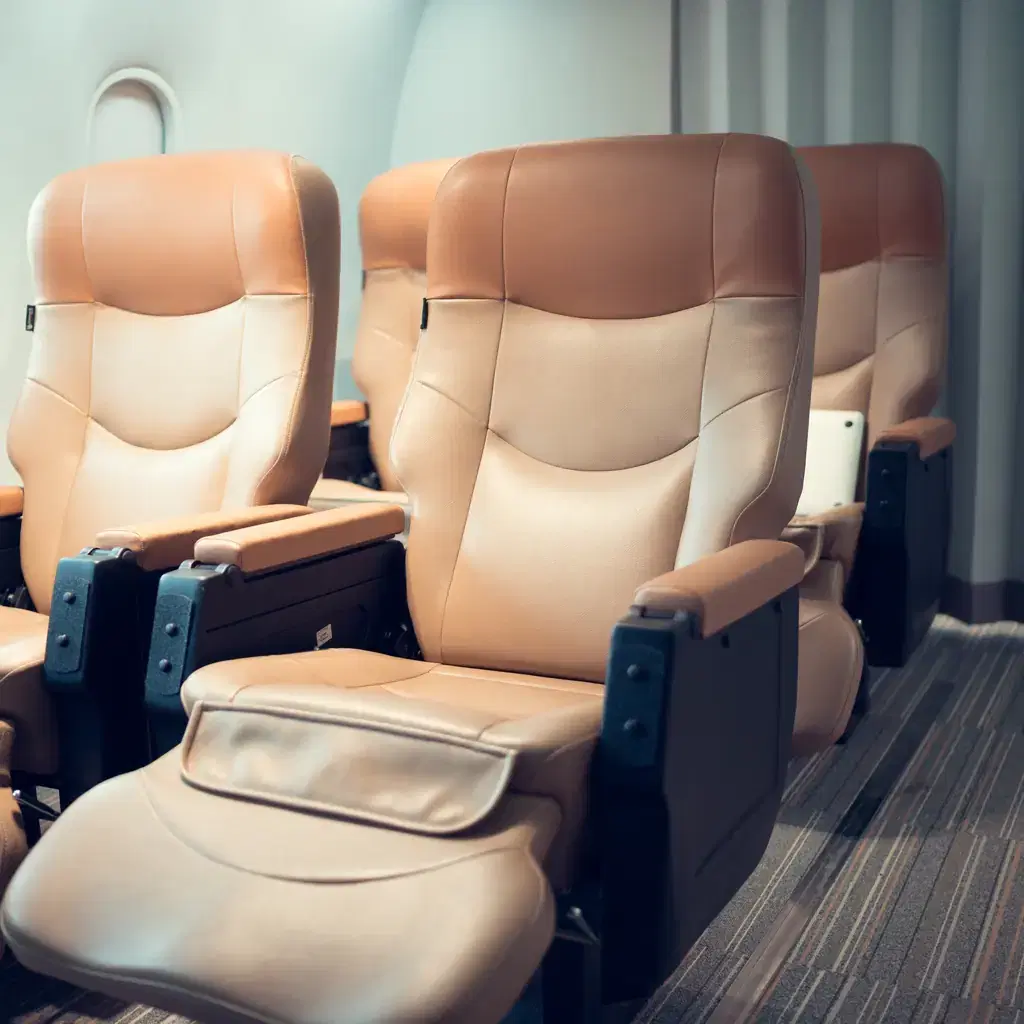
Pitch is the distance from one seat row to the next. Delta lists Premium Select at up to 38 inches of pitch and 19 inches of width; Virgin Atlantic’s Premium cabin offers up to 38 inches of pitch, with seats 18.5 inches wide on the A330neo and A350 and up to 21 inches on the 787-9. Business class rarely advertises pitch; bed length matters more there.
What 38 inches feels like: you can cross your legs, and the seat in front no longer lands in your lap when it reclines. You still cannot lie down.
Premium economy fixes the squeeze and business class fixes the sleep, so decide which problem you have before you look at prices.
3. The leg rest is the quiet upgrade in premium economy
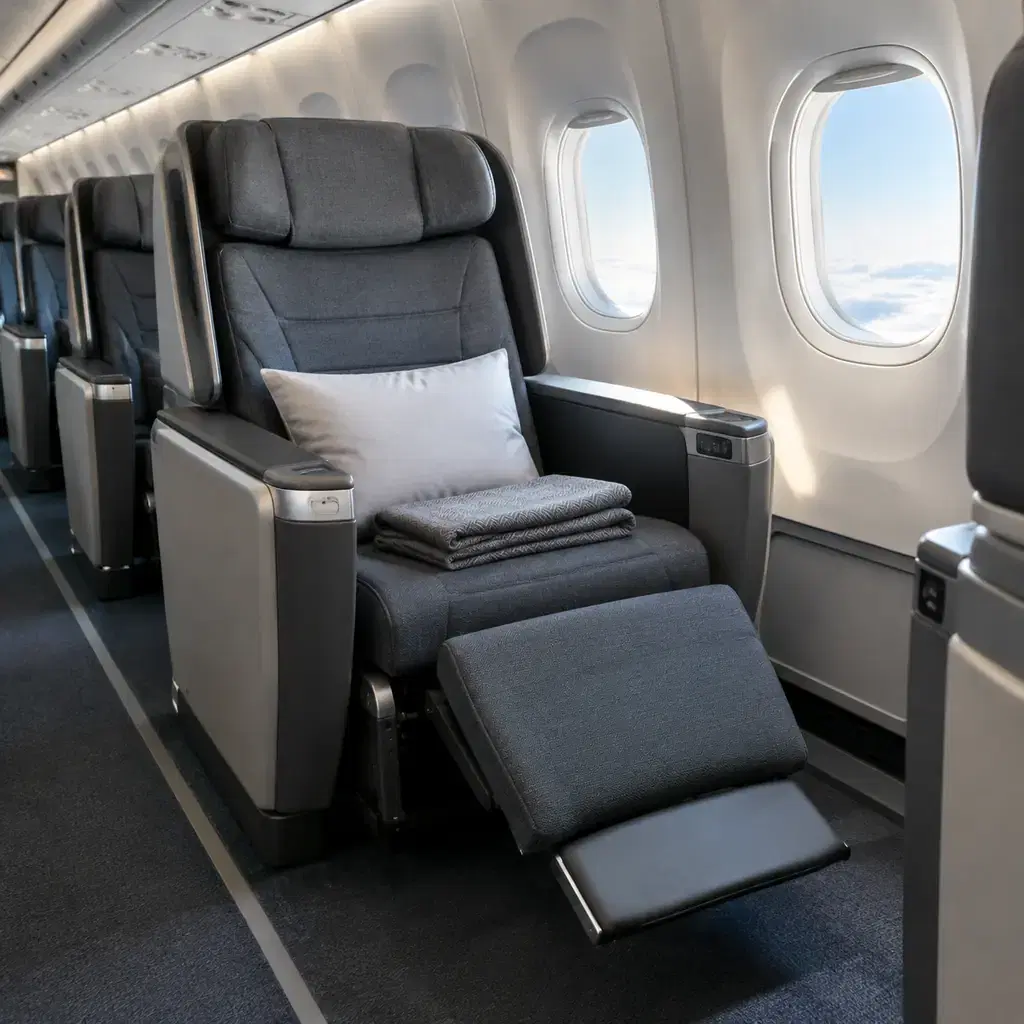
American describes its Premium Economy seats as “wider, adjustable leather seats with extendable foot and head rests” on its 777 and 787 fleet. Lufthansa’s premium economy page leads with an adjustable footrest and a cocktail table in the armrest rather than with measurements.
Check the aircraft: Delta notes that the Premium Select leg rest is not fitted on its 757-200, a narrow-body still used on some shorter transatlantic routes. The same cabin name can mean a different seat on a different plane.
On a daytime flight, a raised leg rest takes most of the pressure off the backs of your knees, and travelers moving up from economy tend to mention it first.
4. Direct aisle access decides who you climb over in the night
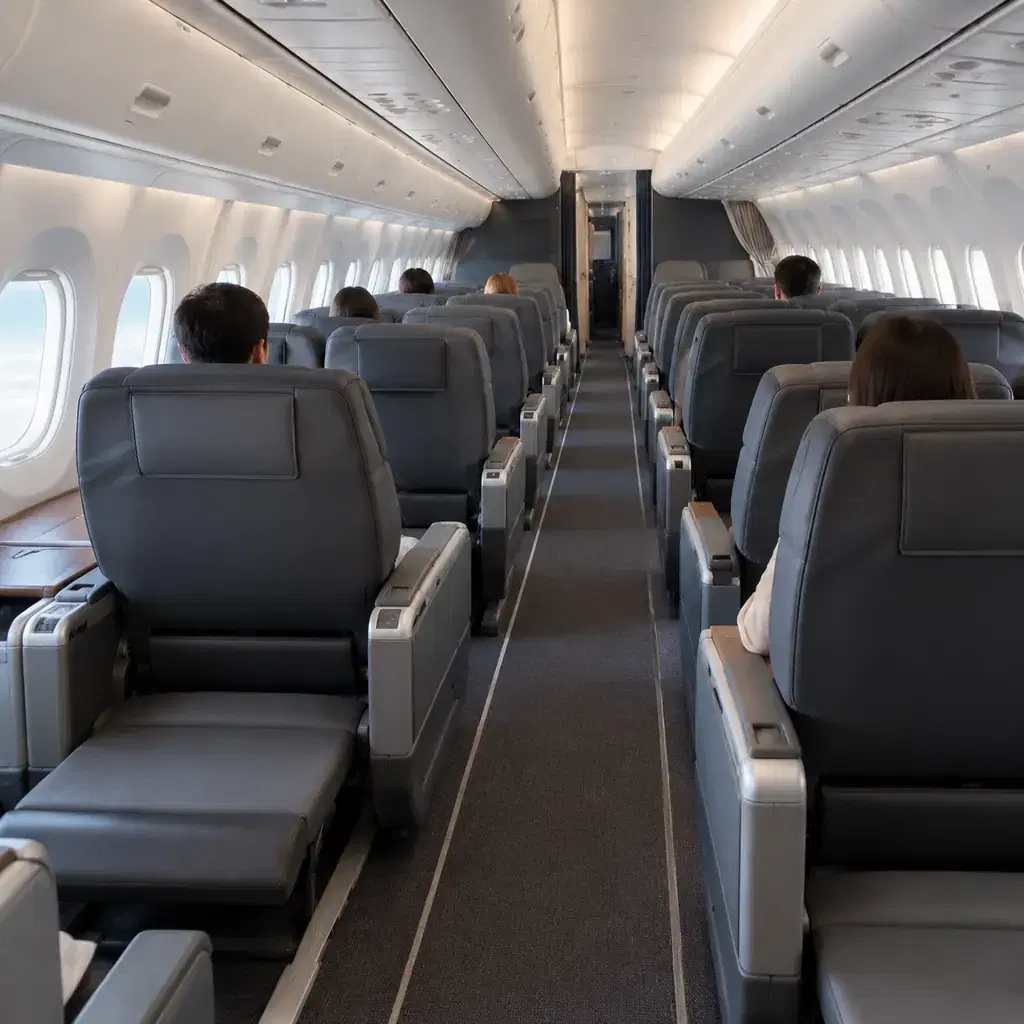
Premium economy is laid out like a roomier economy row, commonly two seats at each window and three or four in the middle. A window passenger still steps over a neighbor, and an aisle passenger still gets woken.
Business class on most current long-haul aircraft gives each seat its own path to the aisle. Virgin Atlantic states that every Upper Class seat on every aircraft has direct aisle access, and Lufthansa says every seat in its new A380 Business Class has aisle access.
Why older travelers weight this heavily: you can stand up every couple of hours without disturbing anyone. For a couple, the trade is that some business layouts seat you farther apart than a premium economy pair.
5. A suite door is a privacy upgrade, not a sleep guarantee
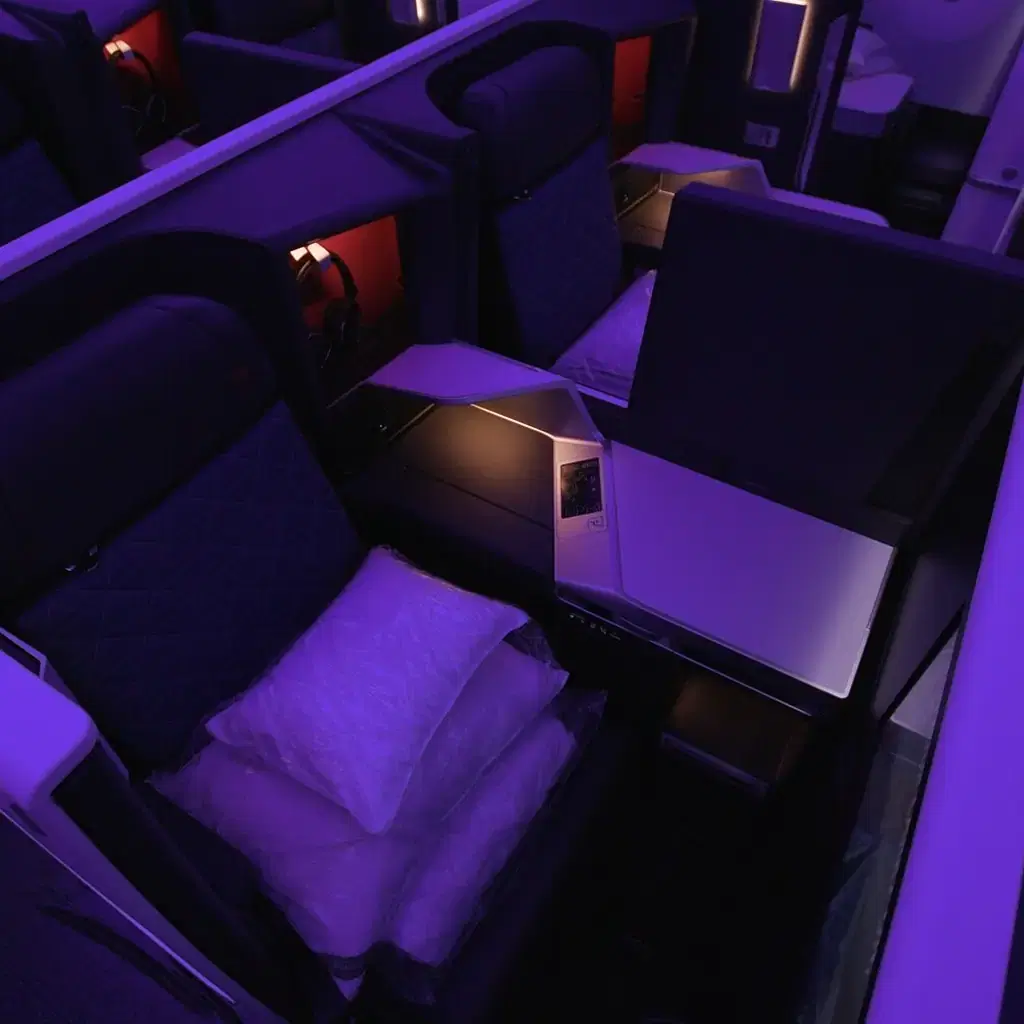
The newest business cabins add a sliding door. Delta One suites have full-height doors and privacy dividers on most A350 and A330-900 flights, Cathay Pacific’s Aria Suite on selected 777-300ERs has a suite door and sliding partition, and Air France’s newest 777-300ER Business seats have a sliding door and direct aisle access.
What the door does: it blocks the aisle light, the galley traffic and the glow of a neighbor’s screen. It does not change the bed or the engine noise, and older business seats without doors are still flat beds.
The door is a fair reason to pick one business-class flight over another. On its own, it is not a reason to pay the premium over premium economy.
6. Realistic sleep on an eastbound overnight to Europe
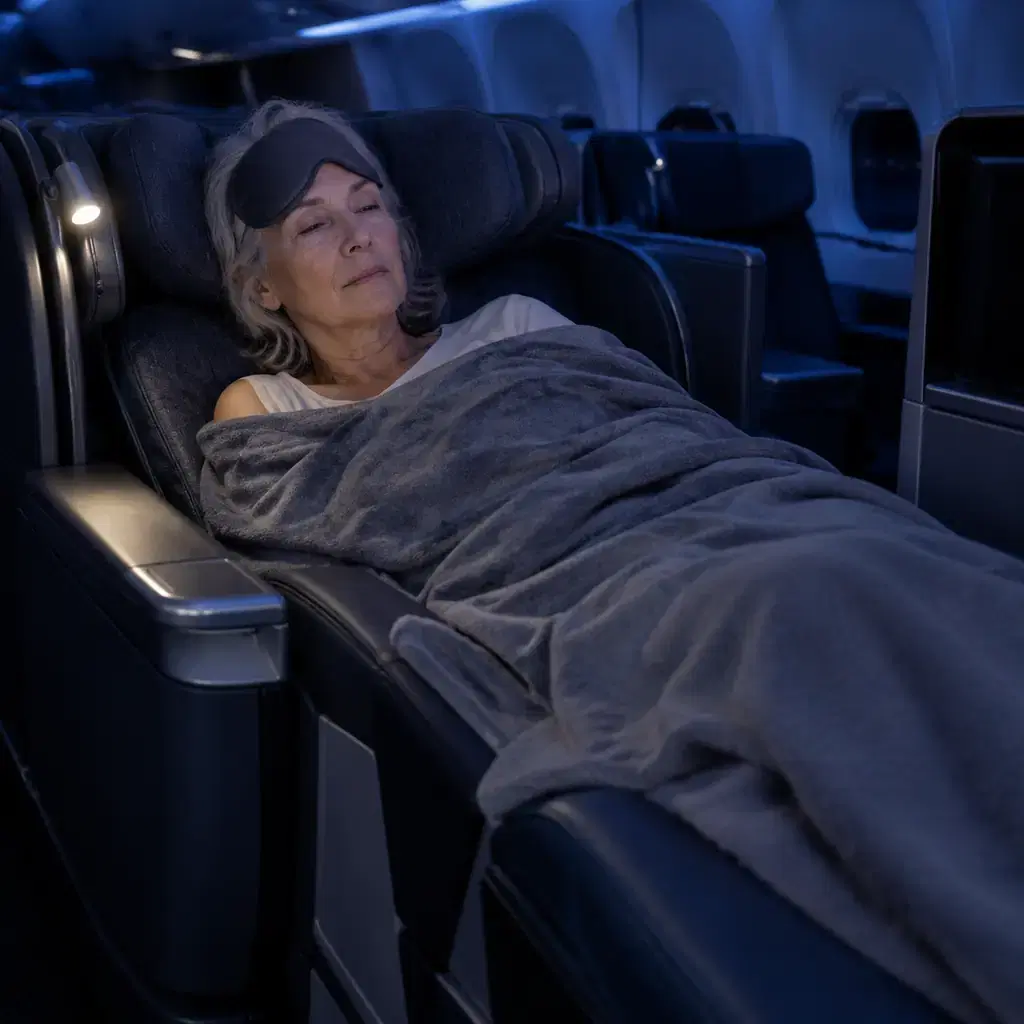
An East Coast departure around 7 p.m. lands in London or Paris at breakfast, leaving six to seven hours of darkness. Once the meal and the descent are taken out, perhaps four to five hours are usable for sleep.
In premium economy, many travelers describe dozing for an hour or two at a time and waking when their head slides off the headrest. In a flat bed, several continuous hours are realistic for people who sleep reasonably well at home.
The CDC’s jet lag guidance says the body adjusts about one hour per day after eastward travel, against an hour and a half westward, and advises limiting alcohol and caffeine on the flight. Flying east is where the bed earns its price.
7. Bedding: a blanket and lumbar pillow against a duvet and mattress pad
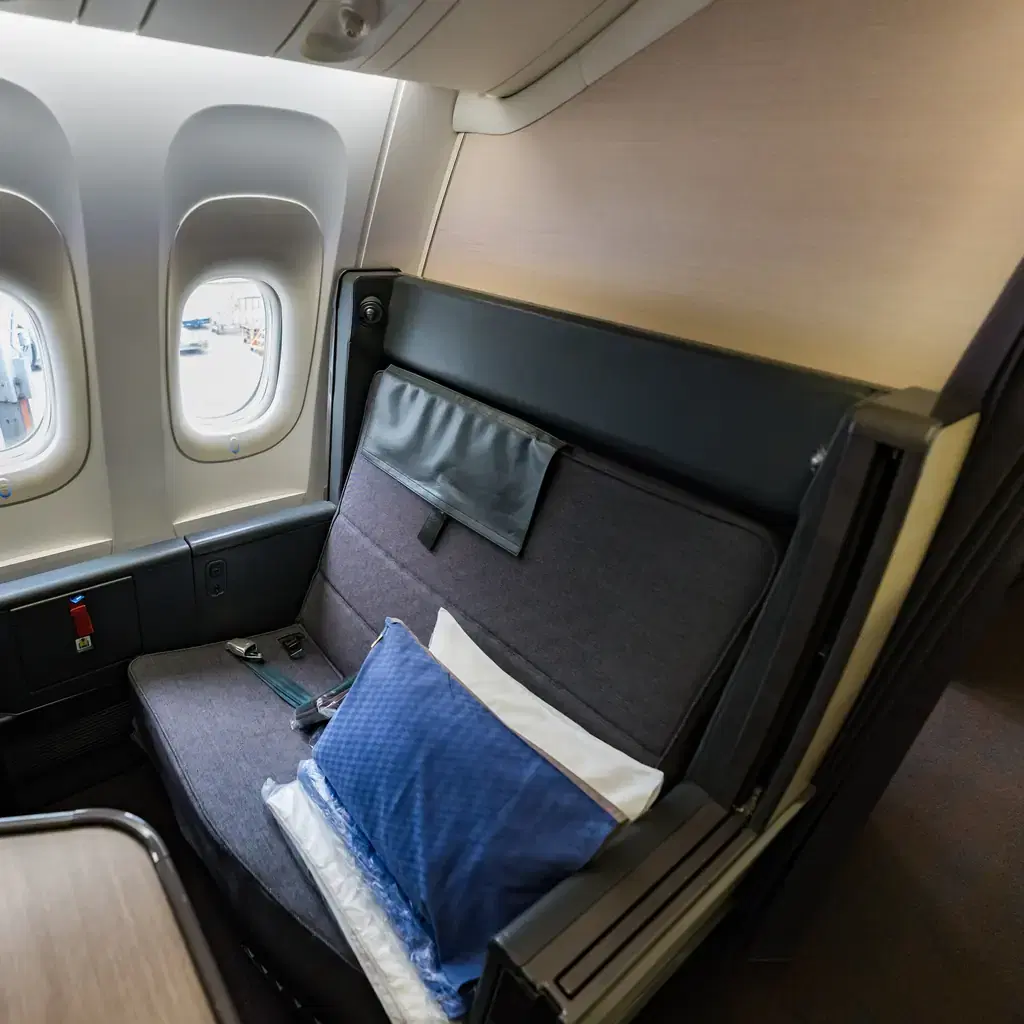
Premium economy bedding has improved. American lists an Ostrichpillow lumbar pillow and a crepe weave blanket for Premium Economy, and most carriers add an amenity kit with socks and an eye mask on international flights.
Business class bedding is designed for lying down. Delta One pairs its seat with Missoni bedding, including a lumbar pillow that doubles as a mattress pad, and United Polaris uses Saks Fifth Avenue bedding with a pillow, duvet and optional mattress cushion.
The practical test: a mattress pad only matters if the seat lies flat, and a duvet only matters if the cabin runs cold. In premium economy, your own neck pillow usually does more than the airline’s blanket.
8. Meal service: one tray against a dinner served in courses
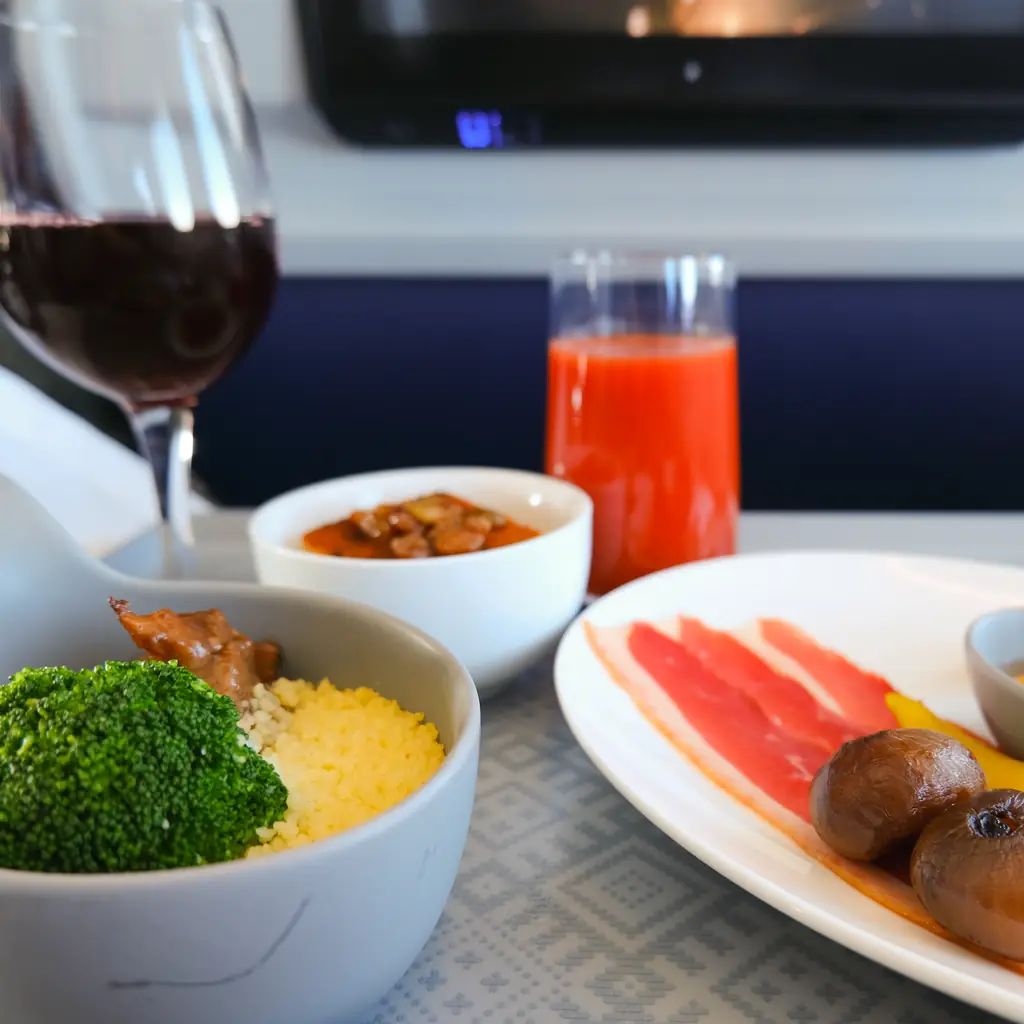
Premium economy food is a clear step up from economy, delivered on one tray. Lufthansa promises an appetizer and three premium main courses, and Virgin Atlantic serves three main-course choices on china with a welcome drink on boarding.
Business class serves dinner in courses on a tablecloth. United lists an appetizer, salad, entree, bread and mixed nuts, then dessert for Polaris, with a separate arrival meal before landing.
The overnight catch: a long dinner service can eat an hour of a short sleep window. Frequent flyers who book business for the bed often eat in the lounge and ask the crew to skip the meal.
9. Lounge access is a business-class perk, with a few exceptions
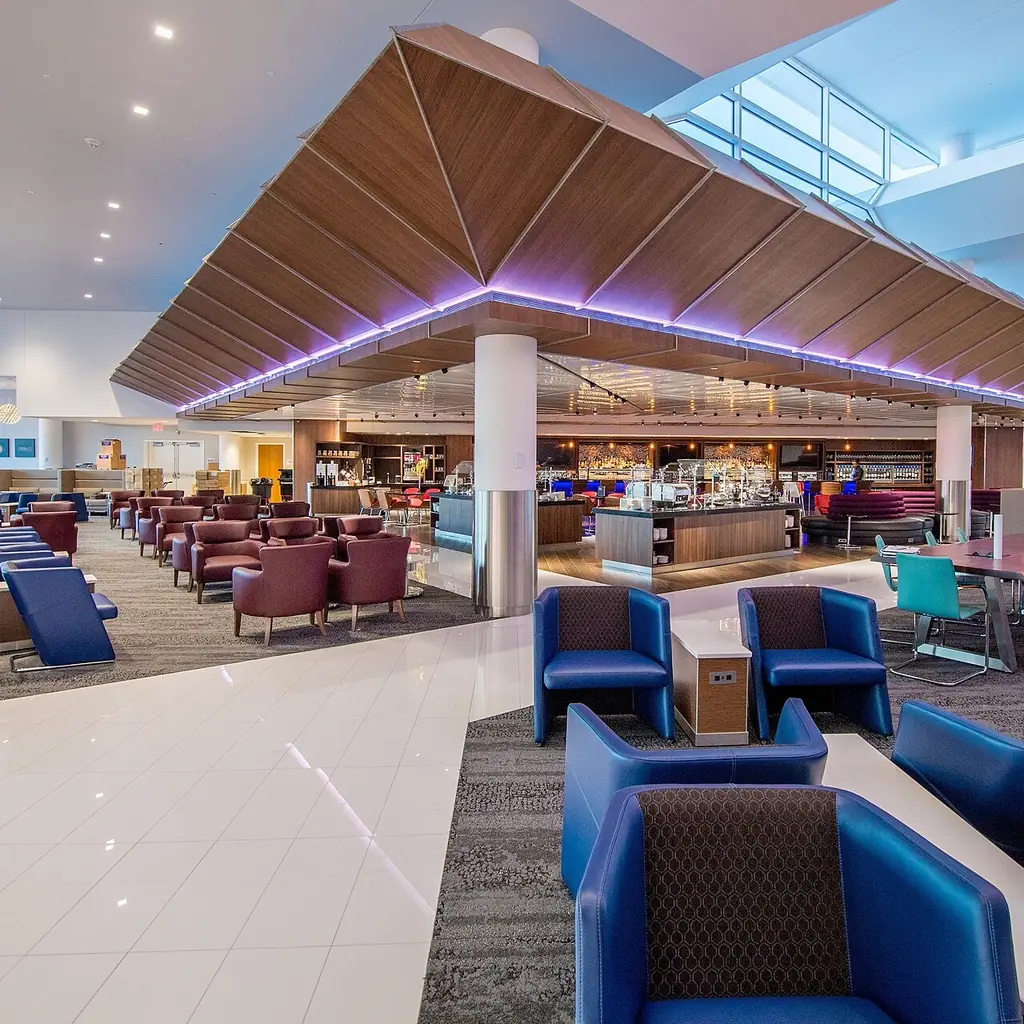
On most airlines, premium economy does not open the lounge door. Virgin Atlantic states that lounge access is not included with Premium, and Delta’s Premium Select benefits list Sky Priority check-in and security but not Sky Club entry.
Business class does. Delta One includes the Delta One Lounge at JFK, Boston, Los Angeles and Seattle and Sky Clubs elsewhere, and United Polaris includes Polaris lounges at six hubs, from Newark to San Francisco.
The exception worth knowing: ANA gives Premium Economy passengers access to ANA lounges at Haneda, Narita, Kansai and Honolulu. On a transpacific trip, that one policy closes part of the gap before you board.
10. Priority boarding is close to a wash between the two cabins
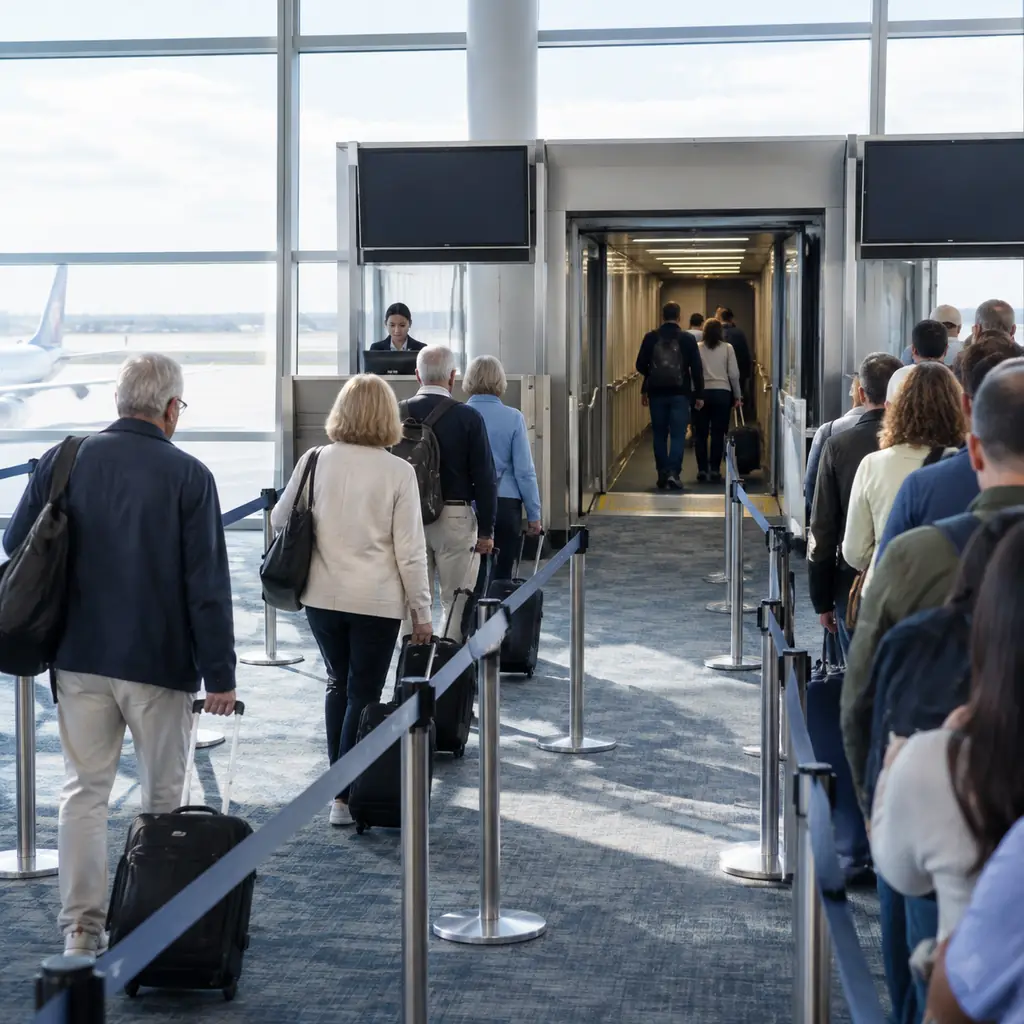
Both cabins board early. Delta boards Delta One in Zone 1 and Premium Select in Zone 2, and an October 2025 master list of boarding groups puts United Polaris in Group 1, Premium Plus in Group 2 and American’s Premium Economy in Group 4, behind Flagship Business.
In practice: in premium economy you board before the main cabin, and the bin above your seat is usually empty. Business class boards a few minutes earlier through a separate lane, which is pleasant but rarely matters.
If boarding order is part of your case for business class, spend the money elsewhere: pack the way frequent international flyers pack, with what you need in a bag under the seat.
11. Checked bags: the weight limit moves more than the bag count
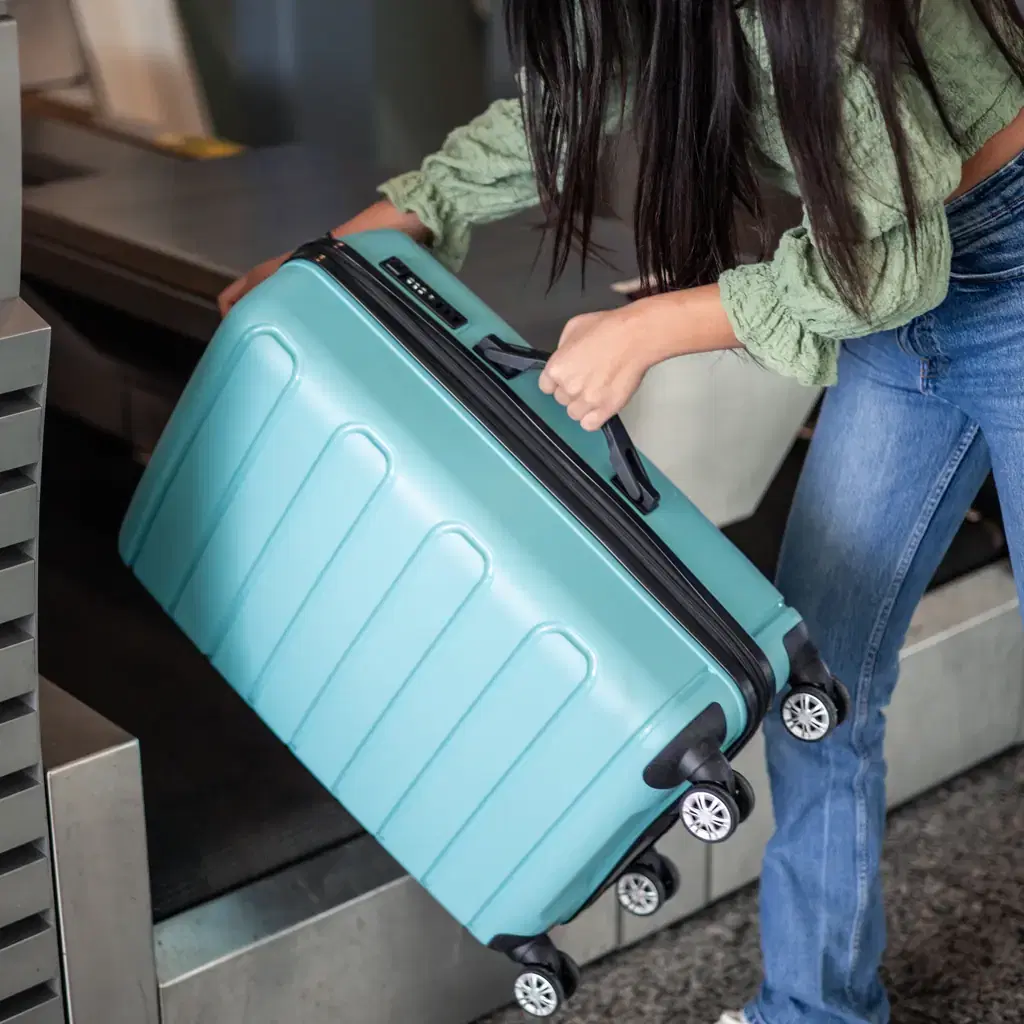
Both cabins commonly include the same number of checked bags on international routes, so the extra money rarely buys an extra suitcase; the weight limit is what moves. Delta applies a 50-pound limit per bag for Premium Select and 70 pounds for Delta One, and Virgin Atlantic gives Premium two bags at 23 kilograms against two bags at 32 kilograms in Upper Class.
Who this helps: travelers carrying mobility equipment, wintering in the southern hemisphere, or bringing gifts for family abroad.
If you already pack two weeks into one carry-on, ignore this column; the carry-on checklist for an international flight covers what stays with you in either cabin.
12. Delta's Basic Business fare strips the ground perks from January 2027
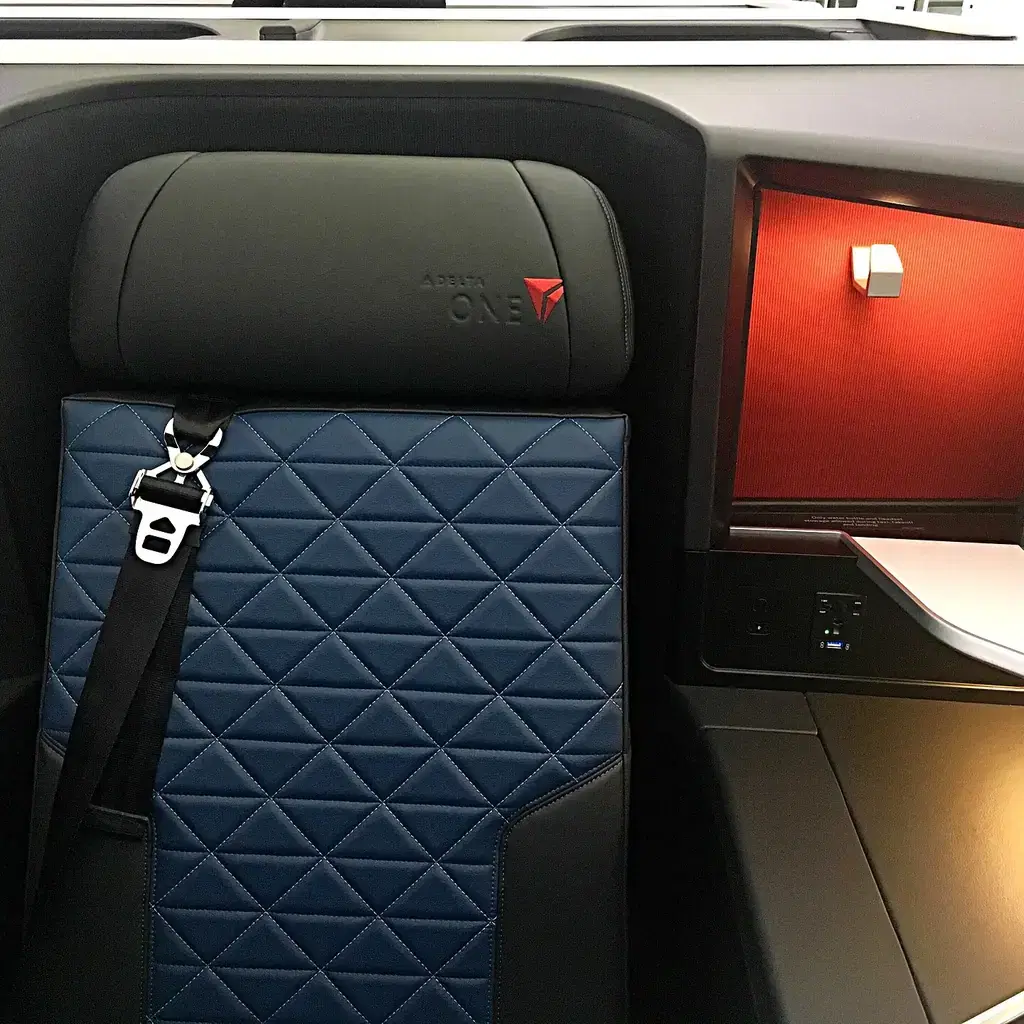
The two-cabin comparison is growing a third column. Delta’s Delta One page now describes Basic, Classic and Extra travel experiences, and it states that for travel on or after January 19, 2027, Basic Business does not include Delta One check-in, the Delta One Lounge or Sky Club access.
What you still get: the lie-flat seat, the Missoni bedding, the chef-curated meal and Zone 1 boarding, which is the part of business class most people pay for on an overnight flight.
If the bed is the point, compare Basic Business with premium economy. If the lounge and dedicated check-in are part of why you fly business, price the Classic fare, and watch whether other US carriers follow.
13. Premium economy varies more between airlines than business class does
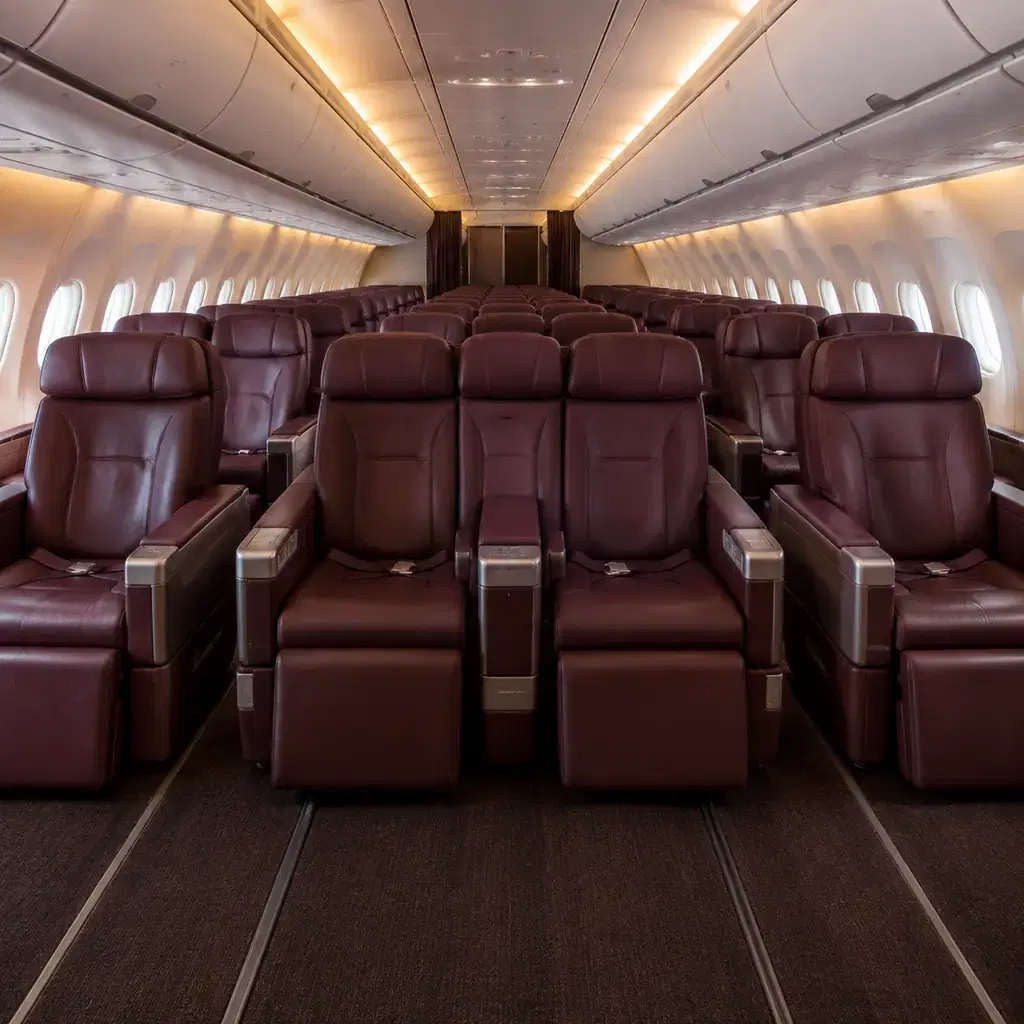
The label hides a wide range of seats. Virgin’s own figures show its Premium seat is 18.5 inches wide on the A350 and up to 21 inches on the 787-9, a difference you feel in the shoulders for nine hours.
The US carriers sit in a narrower band: Simple Flying’s August 2026 comparison describes their premium economy as domestic first-class recliners with little to separate them.
The rule many frequent flyers follow: choose the airline’s premium economy before you choose the route. If the seat lacks a footrest or a decent pillow, a few of the items experienced international travelers pack narrow the gap cheaply.
14. Business class beds vary too, in length, layout and privacy
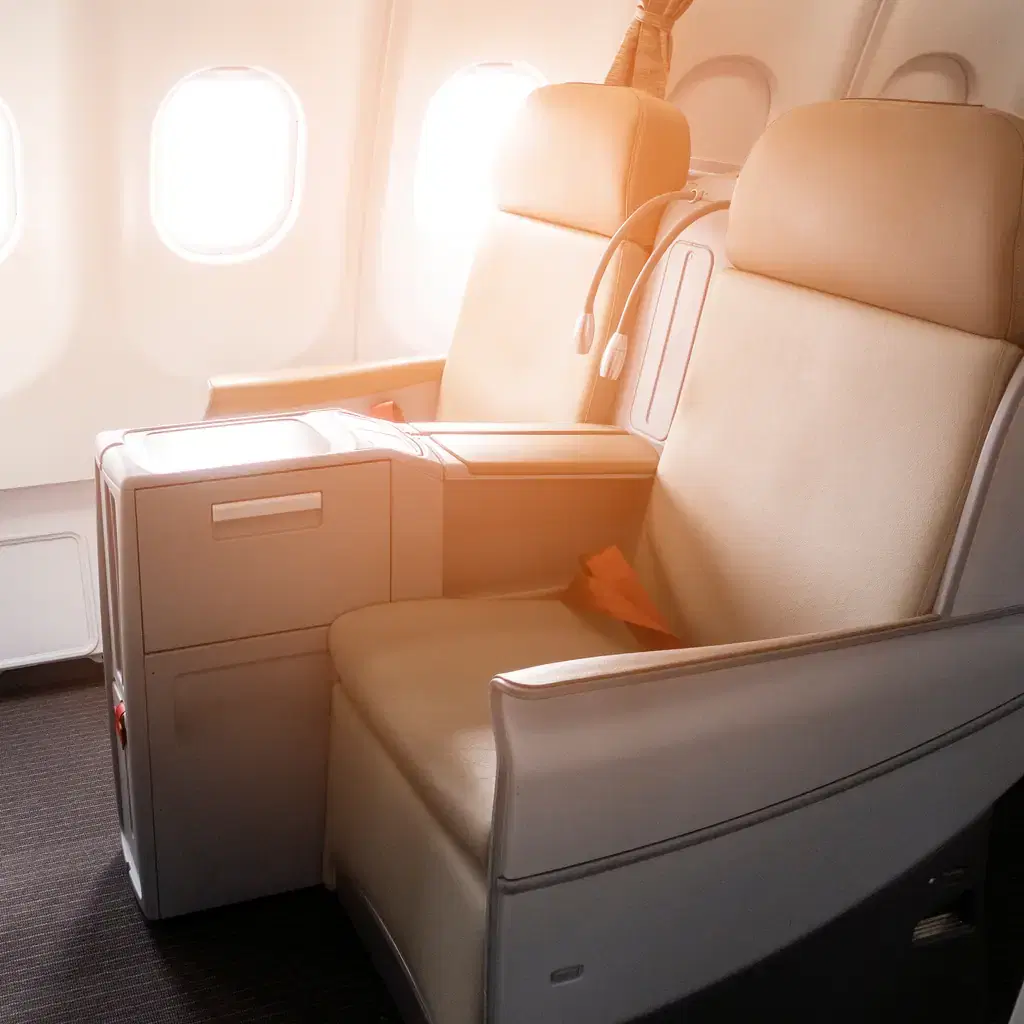
A flat bed is not one product. Lufthansa’s Allegris cabin offers several seat types, including a Classic Seat, a Privacy Seat and an Extra Long Bed. Virgin Atlantic’s Upper Class bed measures up to 6 feet 7 inches, and Air France quotes beds almost two meters long.
For tall travelers: bed length and footwell shape matter more than the seat photograph. Staggered layouts often alternate wide and narrow footwells, and you notice at your ankles at two in the morning.
For couples: some layouts pair two center seats with a divider that lowers, while others angle every passenger toward the window. Read the seat map before assuming you will sit together.
15. Check the seat map for the actual aircraft, not the brochure
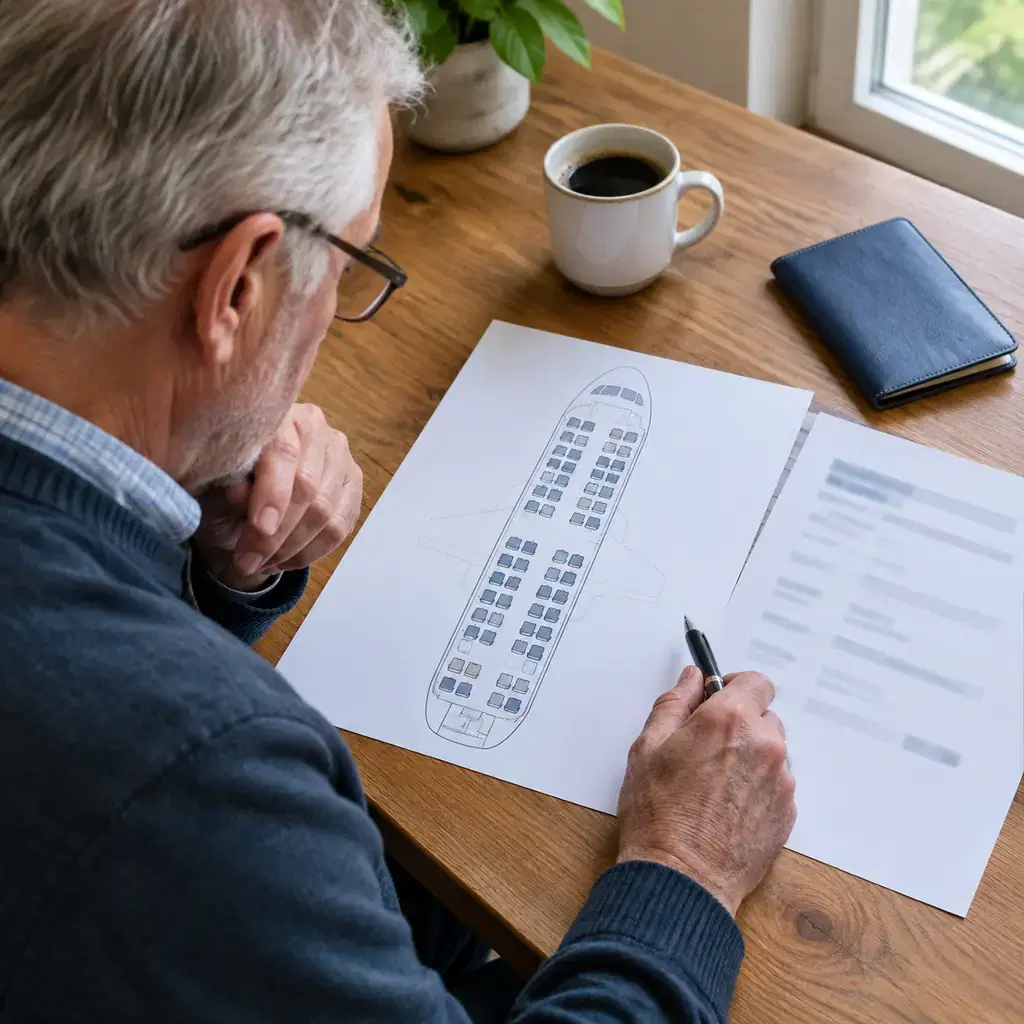
Airlines fly the same route with different aircraft, and older business seats without doors or aisle access remain in service beside new ones. Cathay states that the Aria Suite is on selected 777-300ERs, and Delta’s suite doors are on most, not all, A350 and A330-900 flights.
Before you pay: look up your flight number on aeroLOPA, which publishes seating plans by airline and aircraft type, then check again a week before departure, because equipment swaps happen.
Seat choice is not the only booking detail that can go wrong; the long-haul flight mistakes you feel for hours cover the connections and airport changes that undo a good cabin choice.
16. The route-length rule frequent flyers use to pick a cabin
Many experienced long-haul flyers use a simple threshold, and the version that comes up most often in frequent-flyer forums runs like this.
Under about eight hours in daylight: premium economy. A recliner is enough for reading, eating and a film; business mostly adds a lounge.
Eight to eleven hours overnight: business class if the first day matters, premium economy if you will sleep on arrival anyway.
Twelve hours and up: business class in at least one direction, usually the leg that lands in the morning. Simple Flying’s August 2026 comparison found business fares at three to four times premium economy on the main long-haul corridors, so the threshold rises as the gap widens.
17. Splitting the cabins: a bed going out, a recliner coming home
The route-length rule leads to a common compromise: business class on the overnight eastbound leg and premium economy on the daytime return. The flight home from Europe is usually a daytime flight, so staying awake is easy.
Why this works: the CDC’s one-hour-per-day eastward adjustment rate means the outbound night is where lost sleep costs most, and most airline sites let you pick the cabin per direction.
For a winter trip south of the equator, both long flights are overnight and the compromise works less well. If you are planning that trip in your seventies, the habits in snowbird travel after 70 apply to the flight too: book the version you can recover from.
18. The frequent-flyer debate: three times the fare, or the first day

Experienced long-haul flyers split into two camps, and neither is wrong.
The value camp points at the fare. Simple Flying’s April 2026 pricing overview put transatlantic premium economy at roughly $1,200 to $2,000 and business at $3,500 to $5,000, and a May 2026 fare check found premium economy near $1,850 New York to London while business rose faster. That difference, they say, pays for several nights in a hotel worth every extra dollar.
The first-day camp points at the calendar. A two-week trip has fourteen days, and arriving unable to function costs one of them. For travelers over 60 who sleep lightly, the bed is the only upgrade that changes the trip rather than the flight.
19. Upgrade bids: book premium economy and bid for the bed

Several airlines auction unsold business seats before departure, and The Points Guy’s February 2025 guide to upgrade bidding lists Lufthansa, Virgin Atlantic, Air Canada, Air New Zealand, Singapore Airlines, Etihad and Aer Lingus among carriers that accept bids, with bidding usually closing one to three days out. Delta, United, American, British Airways and Air France sell fixed-price upgrades instead.
How it works: you hold a confirmed premium economy ticket, get an invitation or enter your booking on the bid page, and name a price inside the suggested range; if it clears, your card is charged and you move cabins.
Treat a bid as a bonus, not a plan; a popular July flight to Europe may have nothing to auction.
20. Post-booking upgrade offers and miles on the US carriers

The US carriers handle it differently: Delta states that post-purchase upgrades can be bought on delta.com with a credit card, cash or miles, and travelers often see these offers in the app before departure, sometimes well below the published fare gap.
With miles: cash for premium economy plus miles for the step up can cost less than an outright business award, though award space is the limit; Delta’s page adds that Diamond Medallion members can use a Global Upgrade Certificate from Premium Select to Delta One.
Buy the cabin you can live with, then watch for the offer, and do not let hope of an upgrade talk you into a seat you would resent for eleven hours.
21. The first day of the trip is what you are really buying

Strip away the lounge and the amenity kit, and it comes down to one morning. Four hours of upright dozing can make the first day in Rome a blur of coffee and a nap; six hours flat and you can walk to dinner.
For travelers over 60, who often say a short night takes longer to shake off, the stakes are higher. The CDC’s advice to seek morning daylight after eastward travel helps in either cabin and works better after sleep.
Plan the first day as if you will arrive tired, save the scenic train ride worth booking for the view for day two, and if the flight ends at a cruise terminal, arrive a day early.
Premium economy buys room and business class buys sleep; everything else on this list is a smaller version of that trade. Match the cabin to the length and direction of the flight, check the exact aircraft, and let the first morning of the trip, rather than the fare screen, make the final call.
Comments
The opinions and views expressed in the comments section are solely those of the individual users and do not represent or reflect the opinions, views, or positions of HumbleTrail. HumbleTrail does not endorse, support, or verify the accuracy of any user-generated content.
By posting a comment you agree to receive related emails from HumbleTrail in accordance with our Terms and Privacy Policy. You can unsubscribe at any time.