


Editor's note: This article is an opinion piece based on publicly available traveler reviews, official policies and industry reporting we found online.
Cold-weather trips are hard on an outfit. The same coat has to survive a warm plane cabin, a salted sidewalk, an overheated department store and an evening photo in front of a Christmas market, and most pieces fail at least one of those jobs.
This is an opinion list about garments and habits, not about bodies or birthdays. Each entry names a piece that tends to wear badly or photograph badly in winter travel conditions, explains why, and offers the swap that well-traveled women often make instead.
1. Wearing the heaviest coat onto the plane instead of carrying it
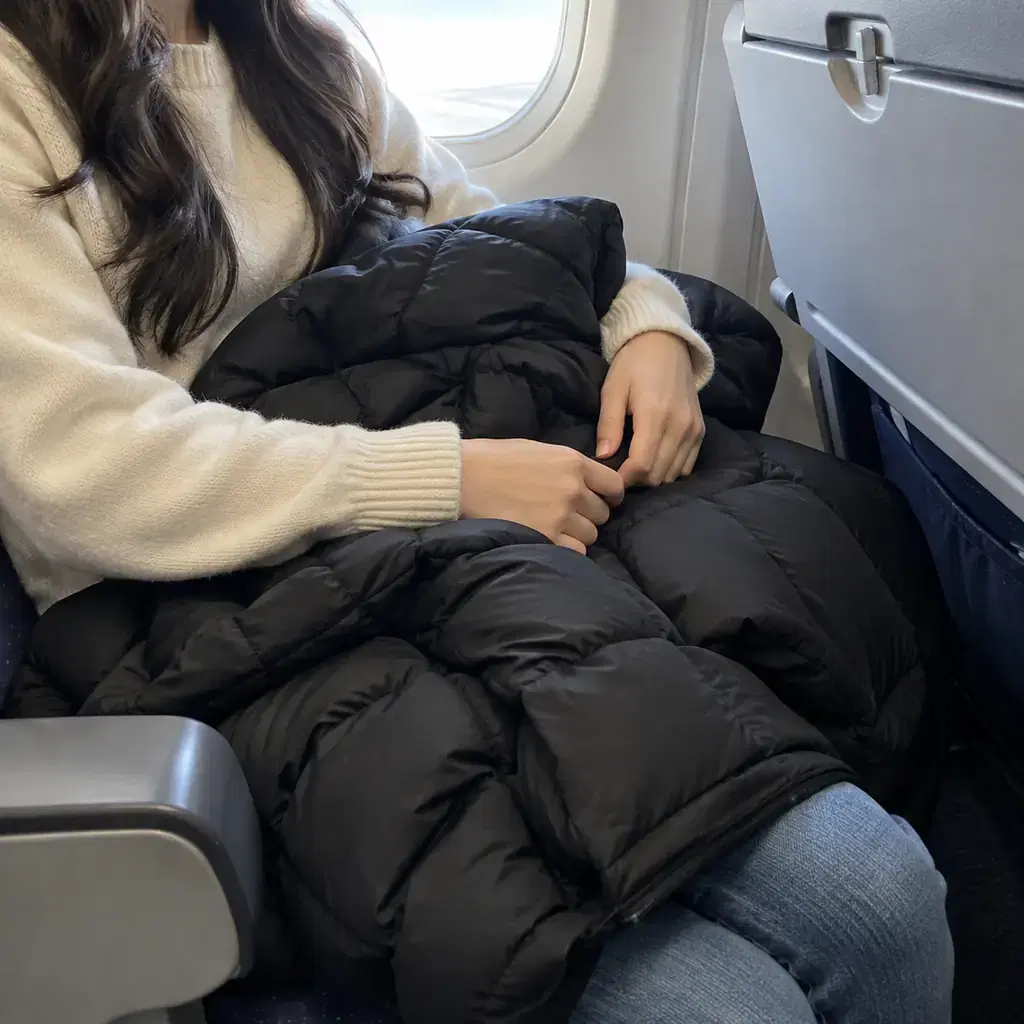
The full-length puffer looks sensible at a 6 a.m. curb in Minneapolis. Forty minutes later it is the warmest thing in a cabin kept near room temperature, with nowhere to go but your lap.
What the arrival photos show: a flushed face, flattened hair and a coat creased diagonally from five hours of being sat on.
In standard screening, TSA asks travelers to remove light outerwear and bulky clothing before the body scanner; TSA PreCheck members can keep light jackets, belts and shoes on. Wear a fine knit and a light jacket, drape the heavy coat over the carry-on handle, and put it on at the curb.
2. Travel-day boots with laces that stall the security line
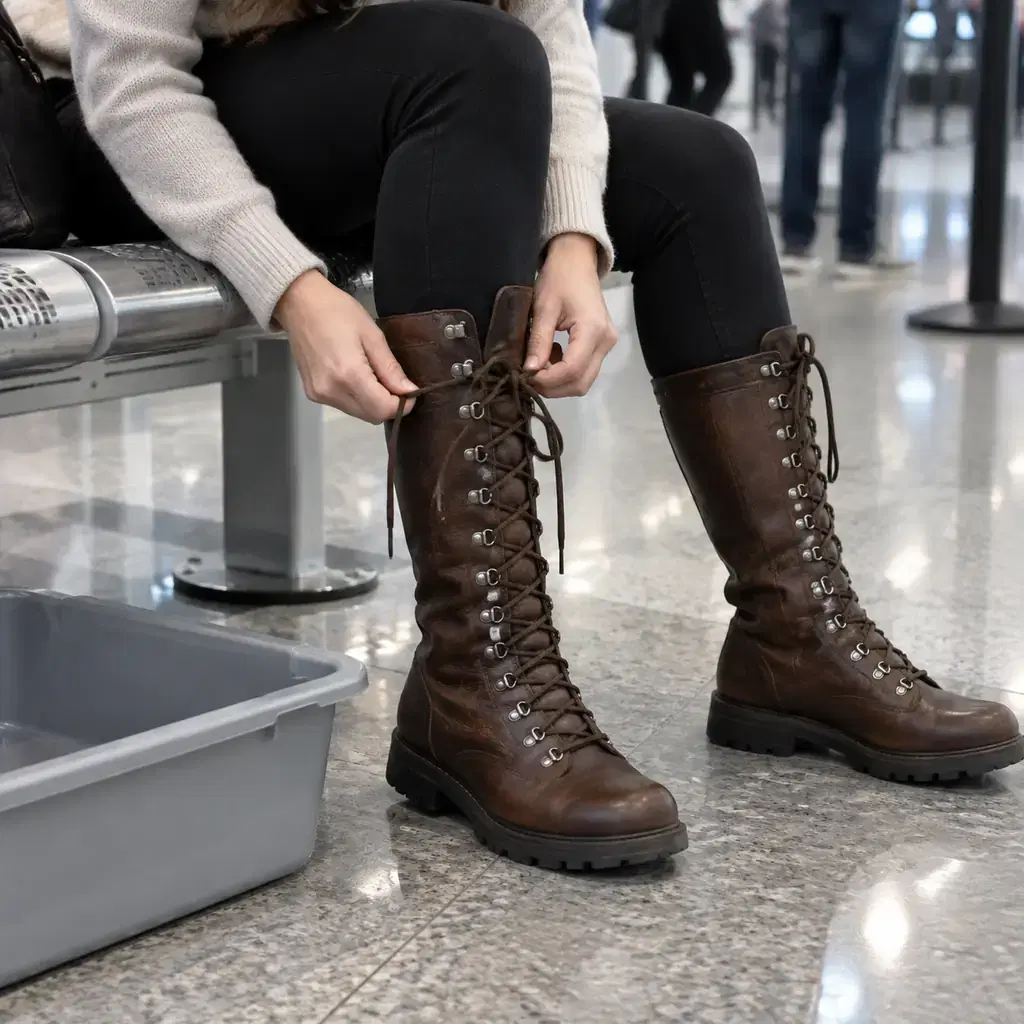
Tall lace-up boots with a dozen hooks look ready for a mountain. In the standard screening lane they become a seated wrestling match, with a plastic bin, a line of people behind you and socks on a public floor.
The honest cost: the delay itself is small. The flustered rebuild of the whole outfit on the bench afterward is what reads as tired in the gate photos.
Pick a slip-on ankle boot with a sturdy rubber sole and a clean shaft. Save the laced hikers for the trail they were built for, or pack them and wear them from the hotel.
3. A matching sweatsuit as the airport outfit
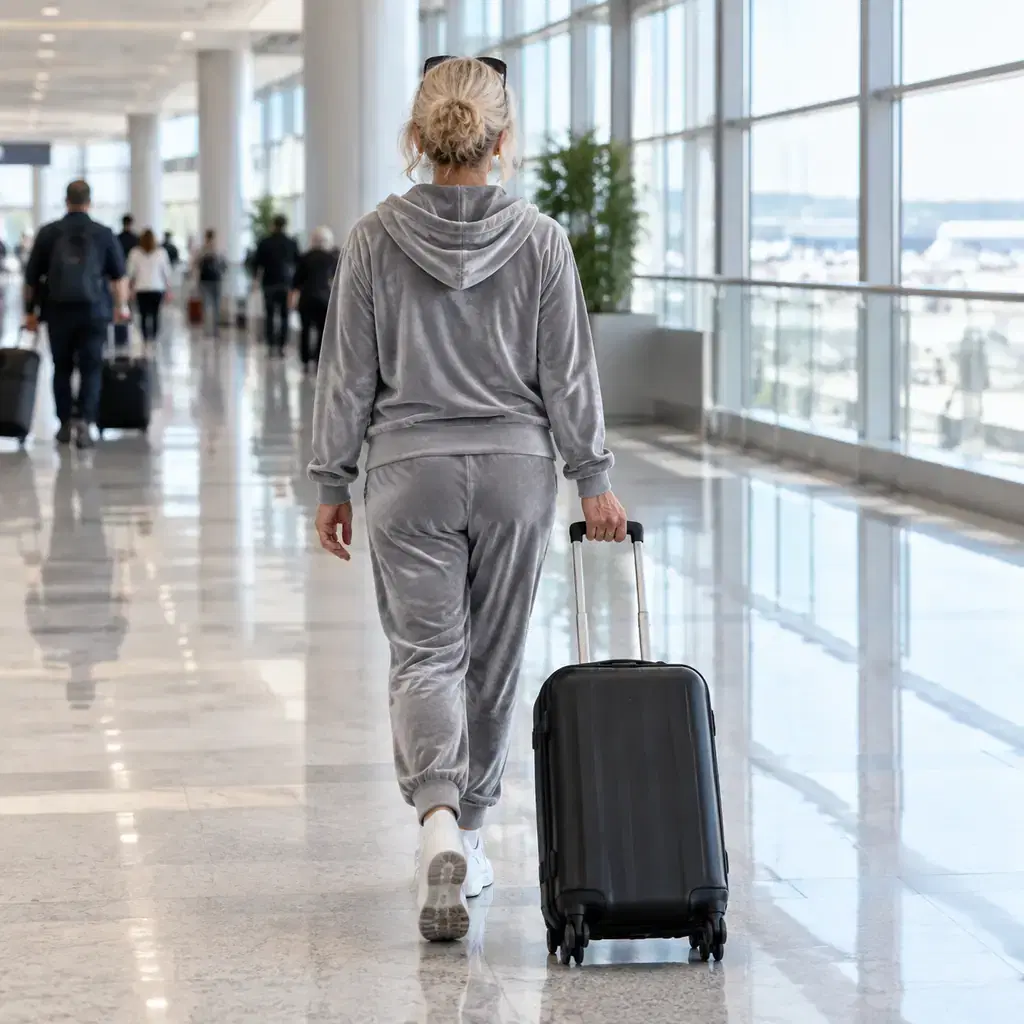
The head-to-toe velour or fleece set promises comfort and delivers it, right up until the arrival photo at your daughter’s front door, where it reads as pajamas that left the house.
Soft fabrics do not have to look like bedding. Dark ponte-knit pants hold a crease and stretch like a legging. A fine merino crewneck under an unlined blazer or a long cardigan with some structure gives the same ease with a visible waist and shoulder.
A simple test: could you walk from the gate into a hotel lobby bar without changing? If the answer is no, the outfit is doing only half its job.
4. The long, shiny puffer that adds a size in photos
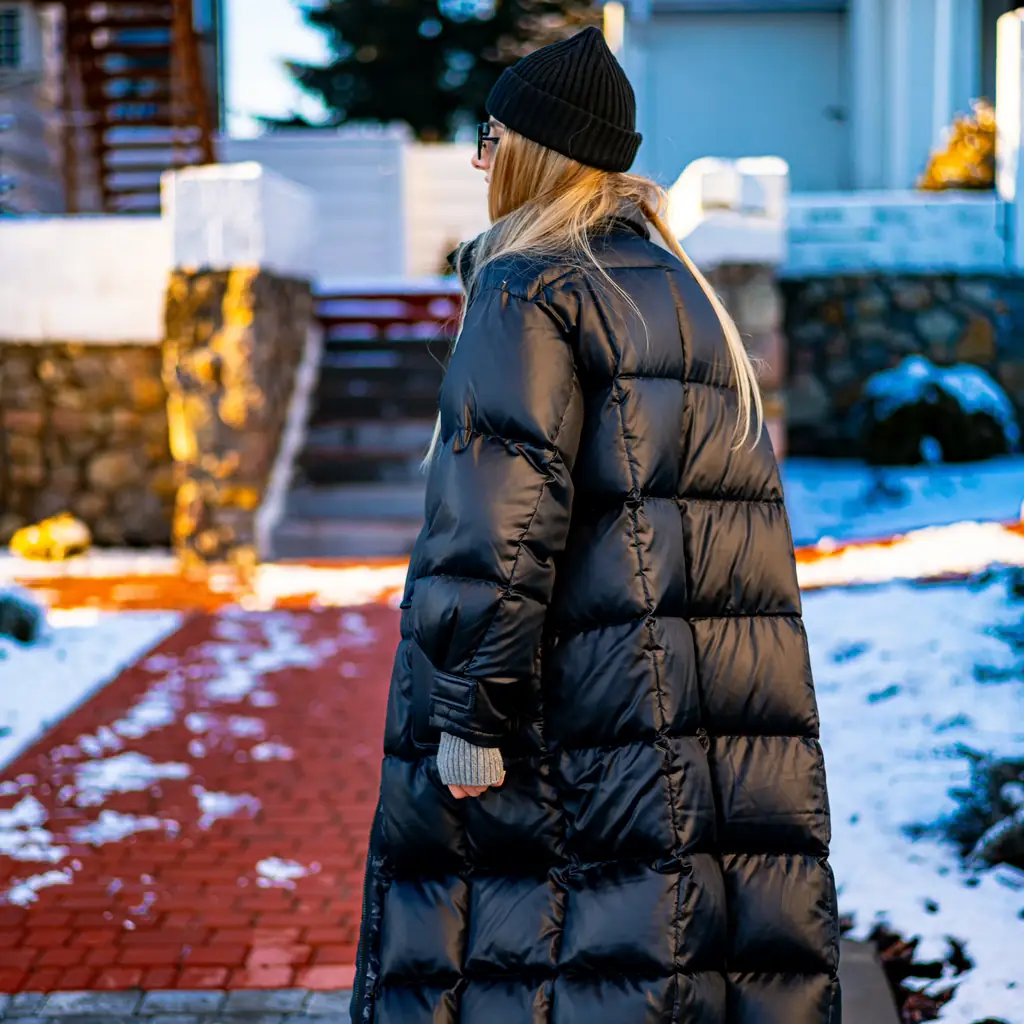
High-shine quilted nylon reflects every market light and camera flash, and wide horizontal baffles stack like tires from collar to shin. The coat is warm. It is also why so many December photos show a face floating above a column.
Down still wins on warmth for weight. A matte fabric, narrower baffles and a defined waist or belt keep the warmth and lose the balloon. Wool-blend coats photograph beautifully but weigh more and dry slowly.
One caveat for slushy cities: outdoor maker Rab notes that synthetic insulation keeps roughly 80 to 95 percent of its dry warmth when wet, a fair argument for synthetic fill on a wet, slushy trip.
5. A hip-length coat worn over a longer sweater
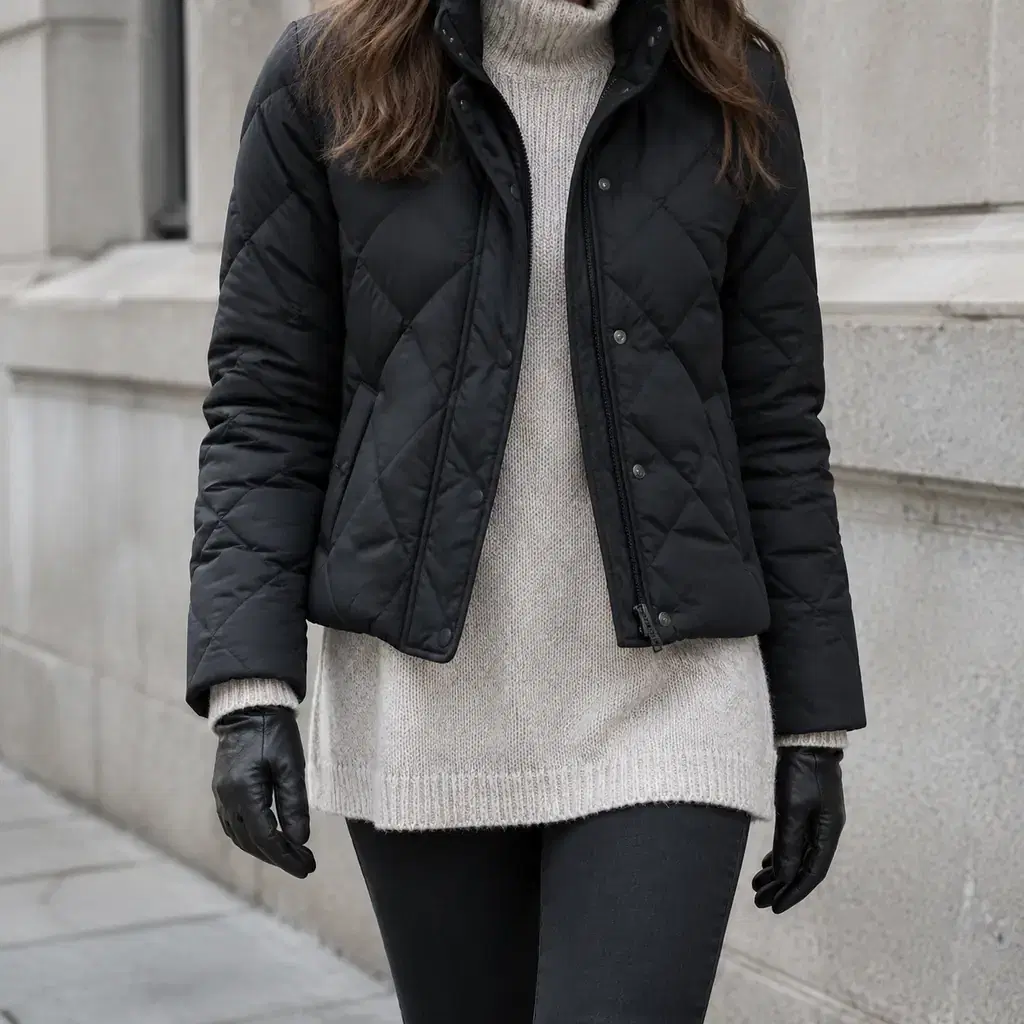
The cropped puffer or short wool jacket is easy to pack and easy to walk in. The trouble starts when a tunic or long cardigan hangs four inches below the hem, splitting the body into two blocks at the widest point.
Why it matters: the eye reads the lowest hem as the waistline. A sweater ending at mid-thigh under a coat ending at the hip pushes everything downward in a photo.
Either the coat covers the sweater or the sweater ends above the coat hem. A knee-length coat solves it for every layer underneath, which is why many frequent winter travelers pack one coat at that length and nothing shorter.
6. An ankle-length wool coat that drags through salted slush
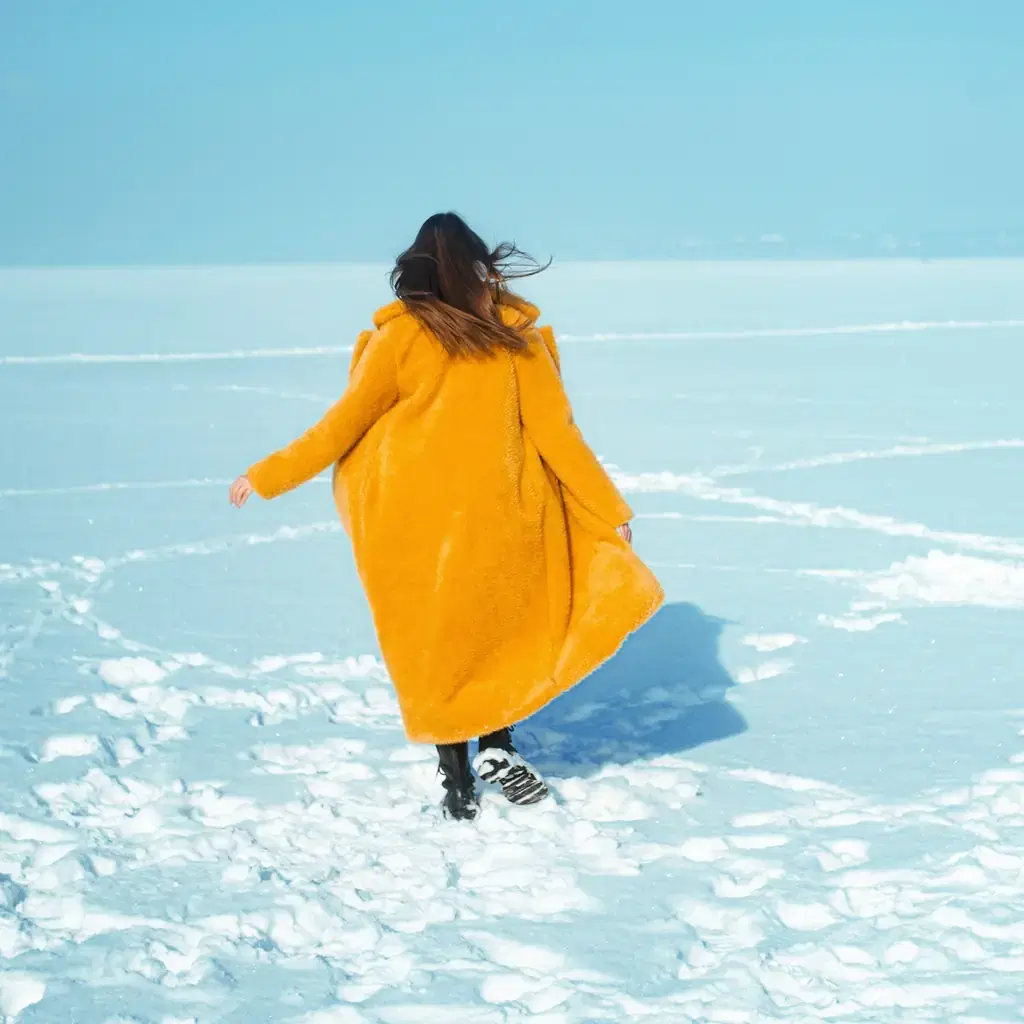
The sweeping maxi coat looks wonderful stepping out of a taxi. By day three the hem has a white tide line of road salt, the wool has soaked up a pound of melted snow, and the coat smells faintly of wet dog on the hotel radiator.
Long hems also catch on escalator teeth, bus steps and your own boot heel. The slow, careful shuffle that follows is the posture that ages a person in a crowd.
Better length: a hem at the knee or just below. It clears the slush, sits cleanly on a train seat and still covers the top of a tall boot.
7. Mountain-grade snow boots worn around a city
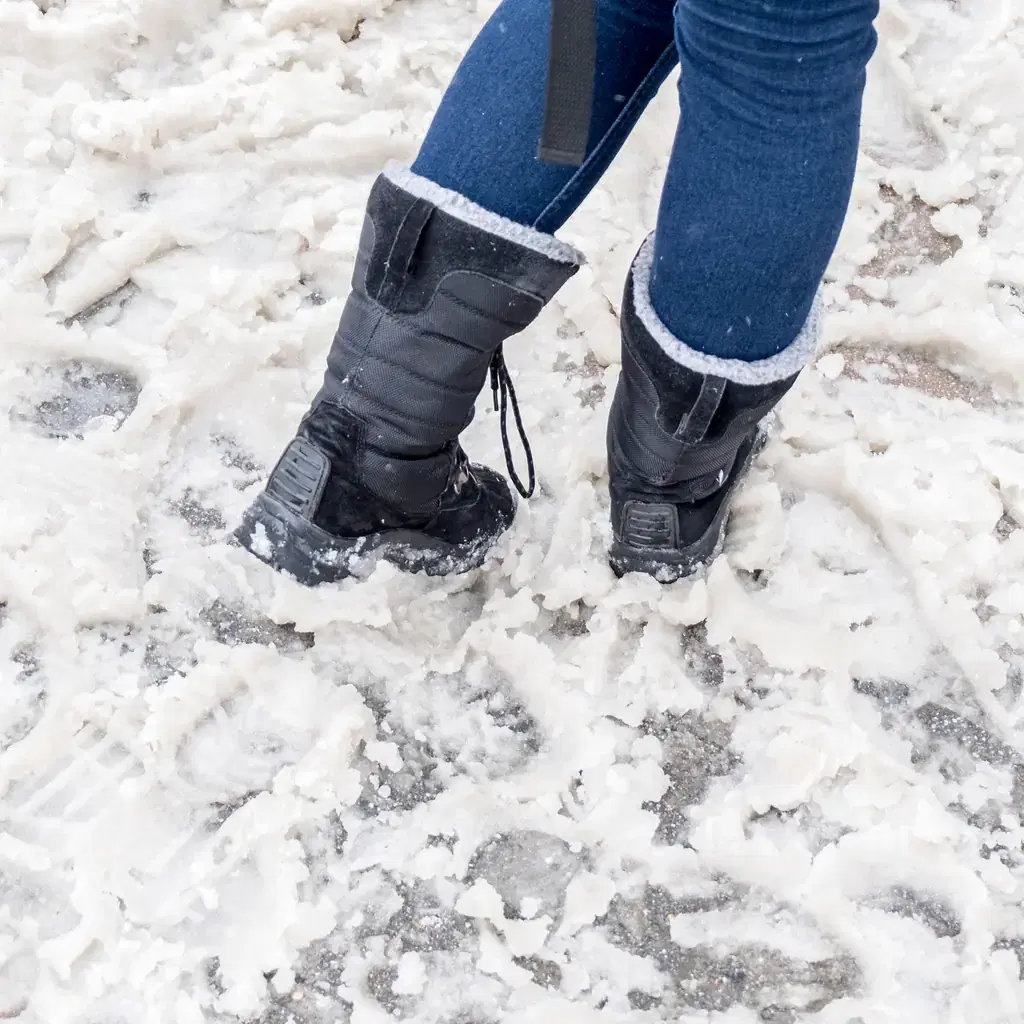
The thick-soled, lace-to-the-shin snow boot with the felt liner was built for a trailhead at 20 below. On a plowed sidewalk in Chicago or along the Seine it gives the gait of an astronaut and a silhouette that ends in two enormous feet.
The real need in a city: waterproof uppers, a grippy rubber sole and enough insulation for a few hours outside between warm interiors. That describes a slim, lined, weatherproof leather boot, not an expedition boot.
Choose the slimmer boot so it fits with a single merino sock, test it on wet pavement at home, and leave the moon-boot look to the people actually going up the mountain.
8. Smooth-soled fashion boots on cobblestones and ice
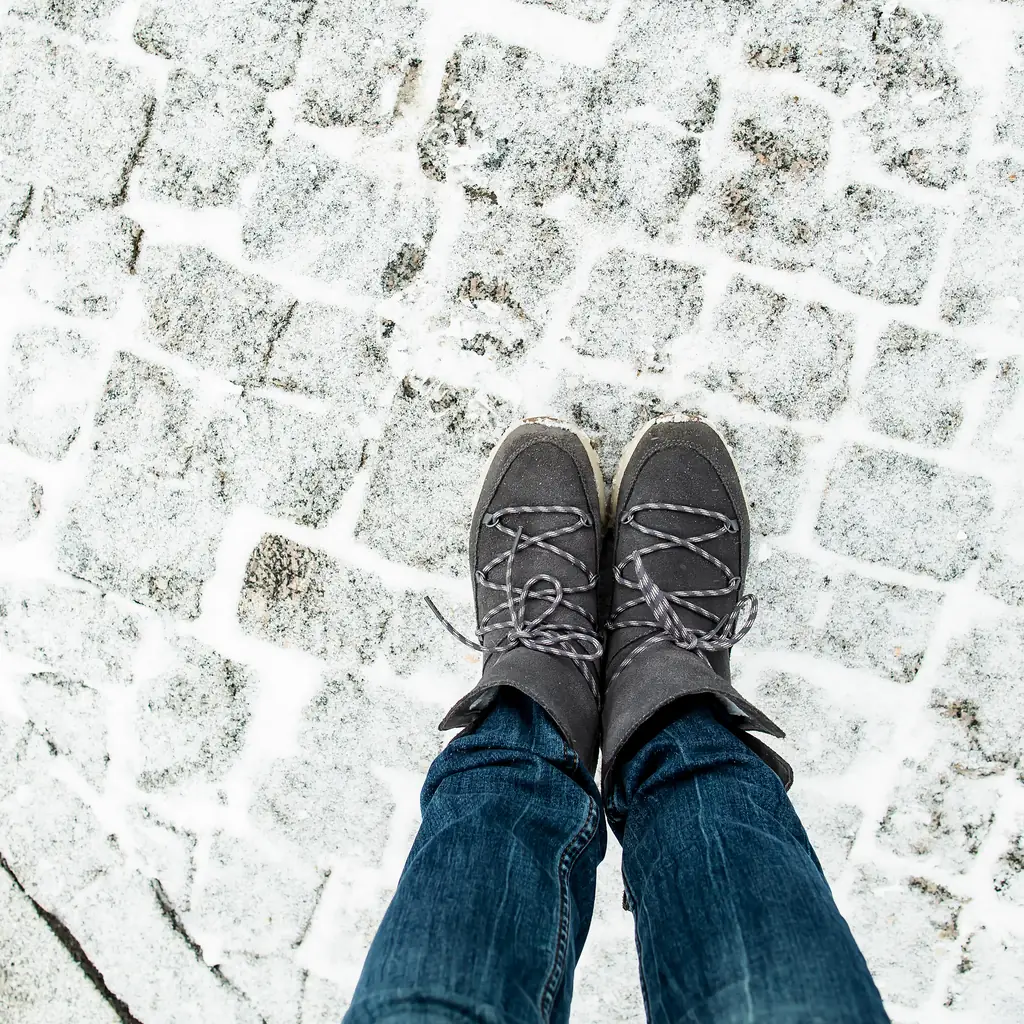
Leather-soled riding boots and dress boots with a slick, flat bottom behave like skates on wet cobblestones in Prague or a glazed crosswalk in Boston. Each step gets shorter and more cautious, the arms drift out for balance, and the whole body reads as frail.
Check the sole before the shaft. A soft rubber sole with real tread, even a modest one, changes how you walk. A heel under an inch and a half stays out of the cracks between stones.
For real ice, removable traction cleats weigh a few ounces and slip over almost any boot. They disappear under a long pant hem, and you walk like yourself again.
9. Two pairs of thick cotton socks crammed into boots that already fit
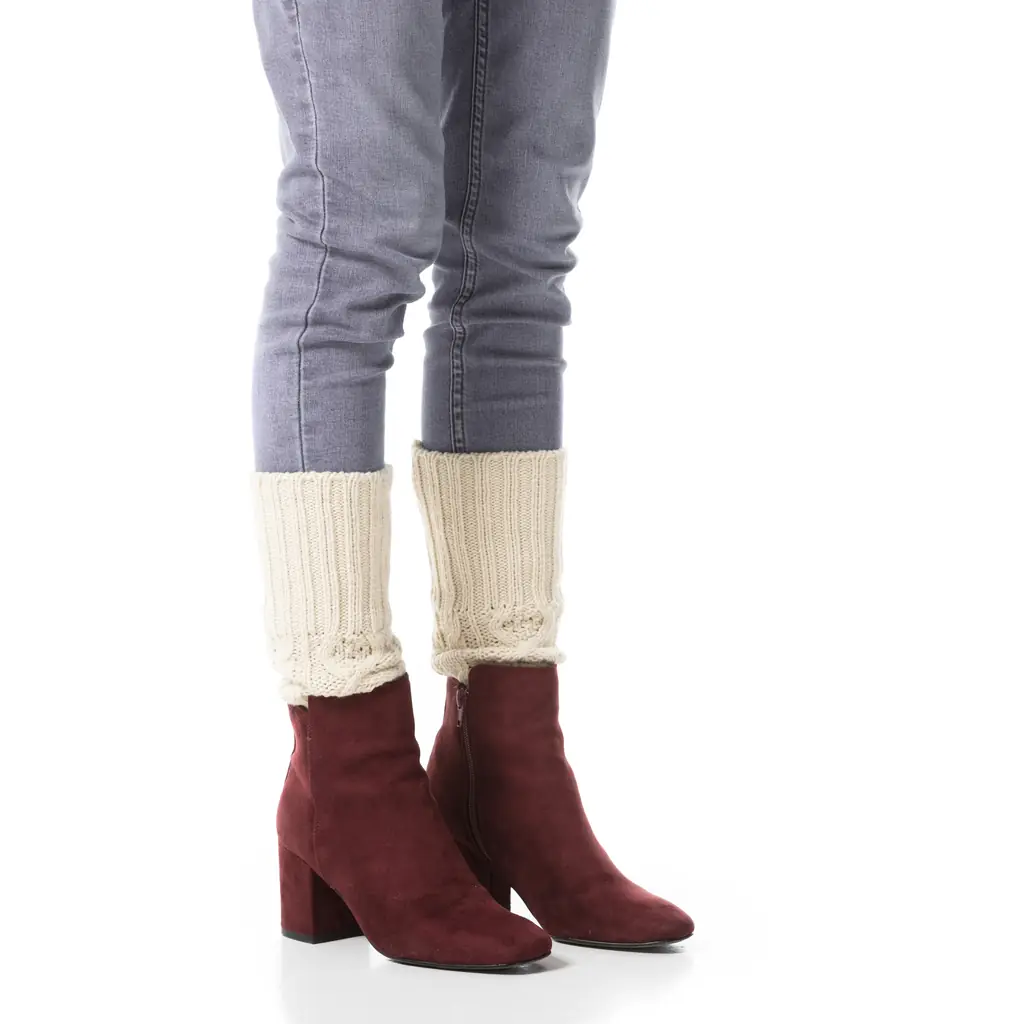
Doubling socks to fight cold feet usually makes feet colder. Cotton holds sweat, the bulk squeezes the toes and slows circulation, and the extra fabric bunches at the ankle so the boot gapes and the calf looks swollen in photos.
One good pair beats two bad ones. A midweight merino sock wicks moisture, keeps its loft all day and fits inside the boot you already own. Pack a spare pair for a mid-afternoon change if your feet run damp.
On a long flight, the compression socks that frequent international flyers rank among their essentials are worth wearing in the air, then swapping for merino on landing.
10. Skinny jeans tucked into knee-high riding boots
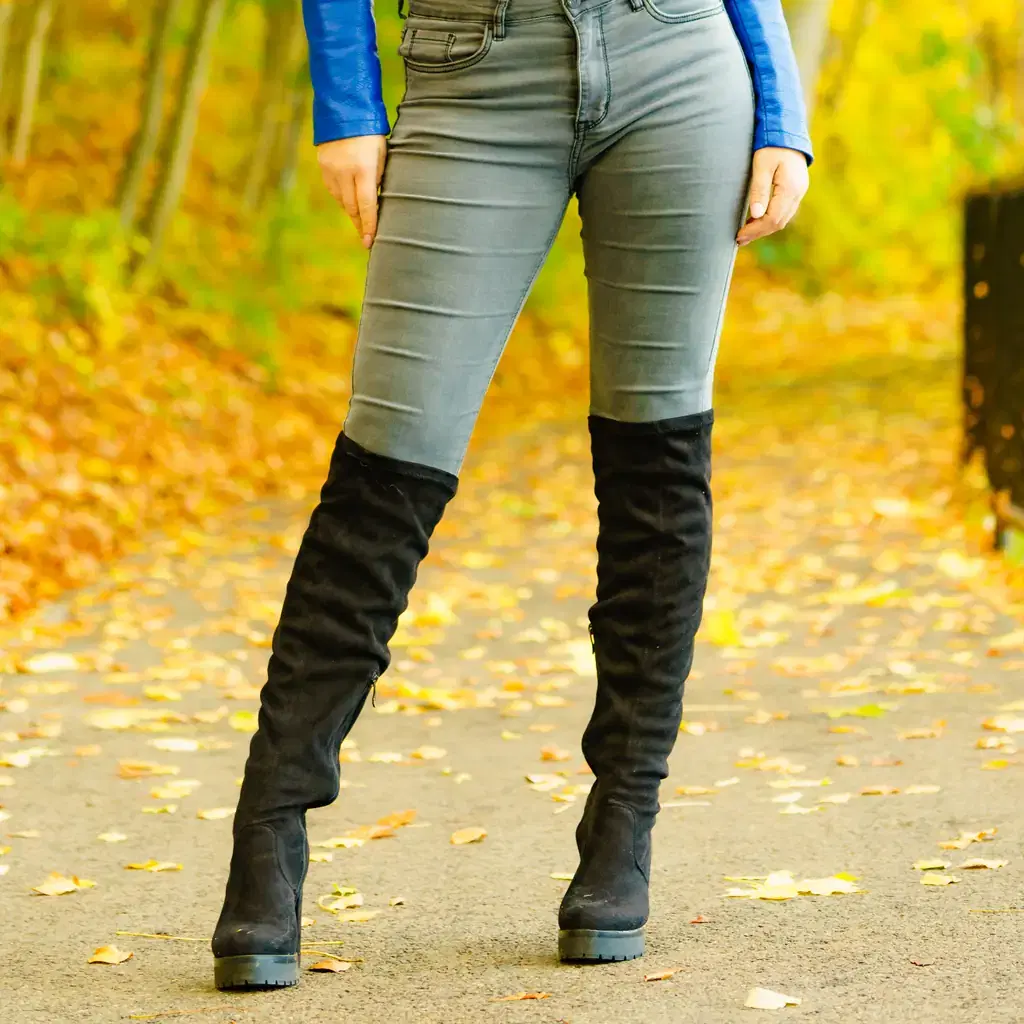
A decade ago this was the default outfit for a fall weekend in Vermont. It stays in closets because it is warm and practical, and that is exactly why it dates a photo: the tight leg, tall boot and long cardigan read as a specific era.
A current proportion: a straight or slightly wide dark jean with a cuff that breaks above an ankle boot, or a slim pant tucked into a sleek, low-shaft boot. Both keep the warmth and lose the time stamp.
HumbleTrail’s guide to the outfit mistakes that make women over 50 look older covers the jean cuts and washes that keep a wardrobe current.
11. Waffle-knit cotton long underwear under slim pants
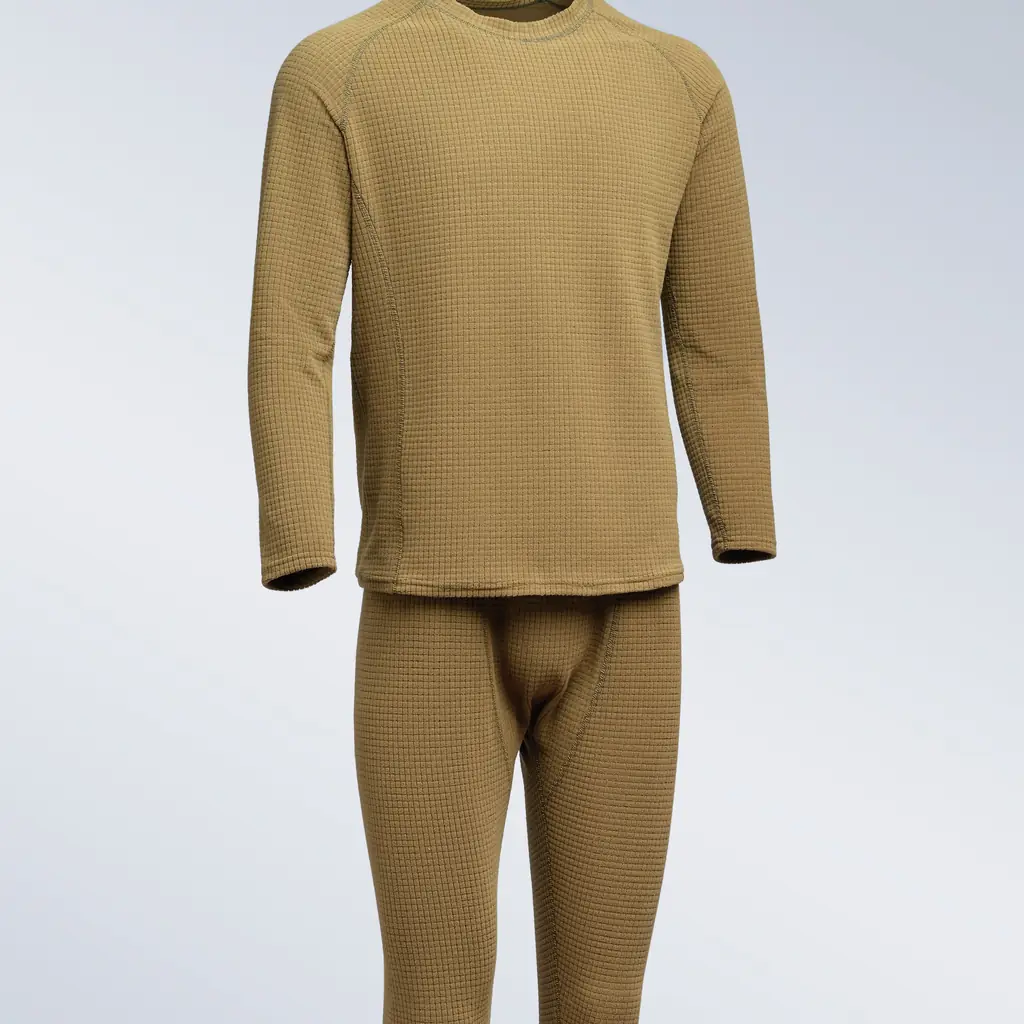
The waffle thermal from the hardware store aisle is cheap, familiar and wrong for a city trip. Cotton holds sweat, the texture prints through any fitted pant, and the top adds a ridge at the cuff and collar of a fine sweater.
Thin and warm is possible. A lightweight merino or silk base layer, roughly 150 to 200 grams per square meter, is barely thicker than a T-shirt and moves sweat away from the skin.
Wear it as the first layer rather than an extra. A thin top under one good sweater and one good coat is warmer and slimmer than a thermal, a flannel and a fleece.
12. Three sweaters stacked because the coat was not warm enough
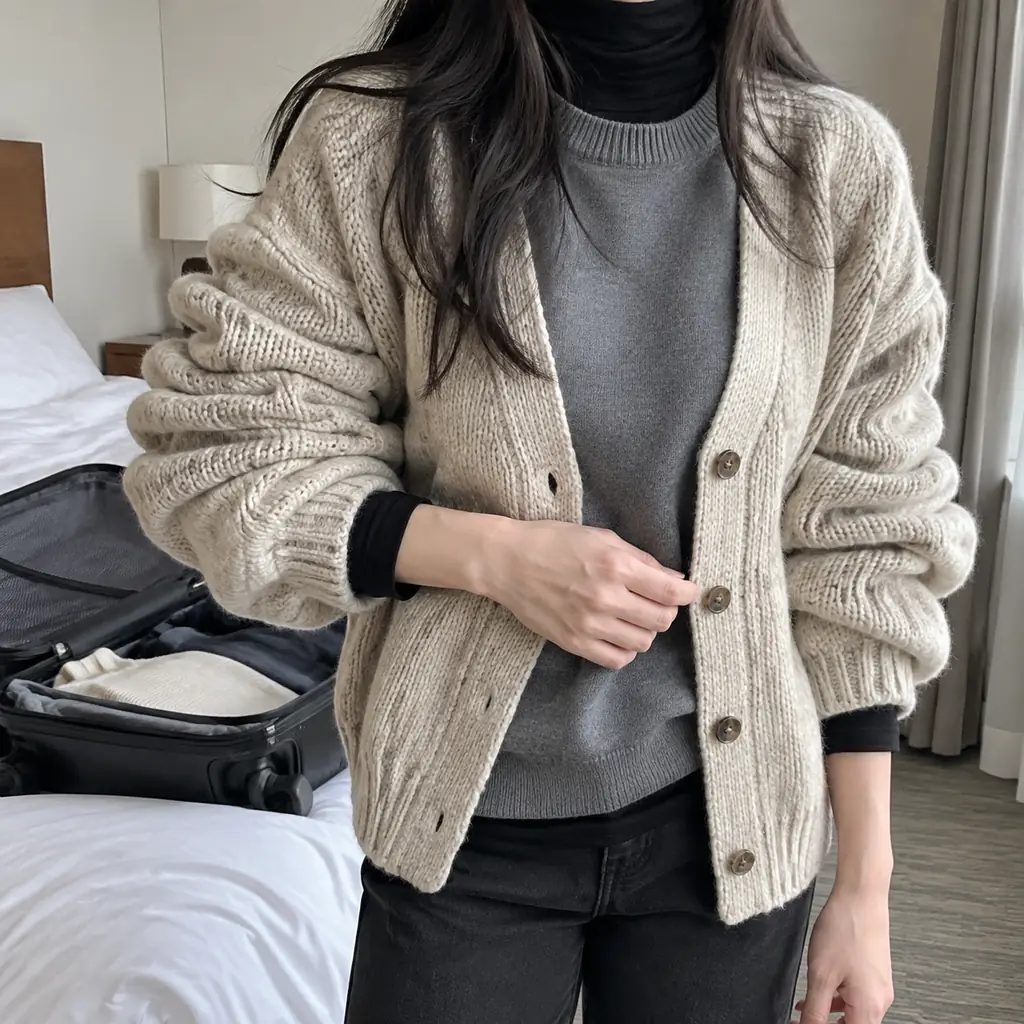
When the coat fails, the fix becomes a cardigan over a crewneck over a turtleneck. The arms stop bending at the elbow, the shoulders rise toward the ears, and the back develops lumps where each hem ends.
The fix is upstream. A coat that is warm enough on its own lets everything beneath it stay thin. If you are stuck with the coat you brought, add one midweight layer rather than three light ones, and pick a knit that ends at the hip.
Light, fast-drying layers are also what let travelers pack two weeks into one carry-on. Two fine merino sweaters take the space of one cable knit.
13. A bulky hoodie under the coat for warmth
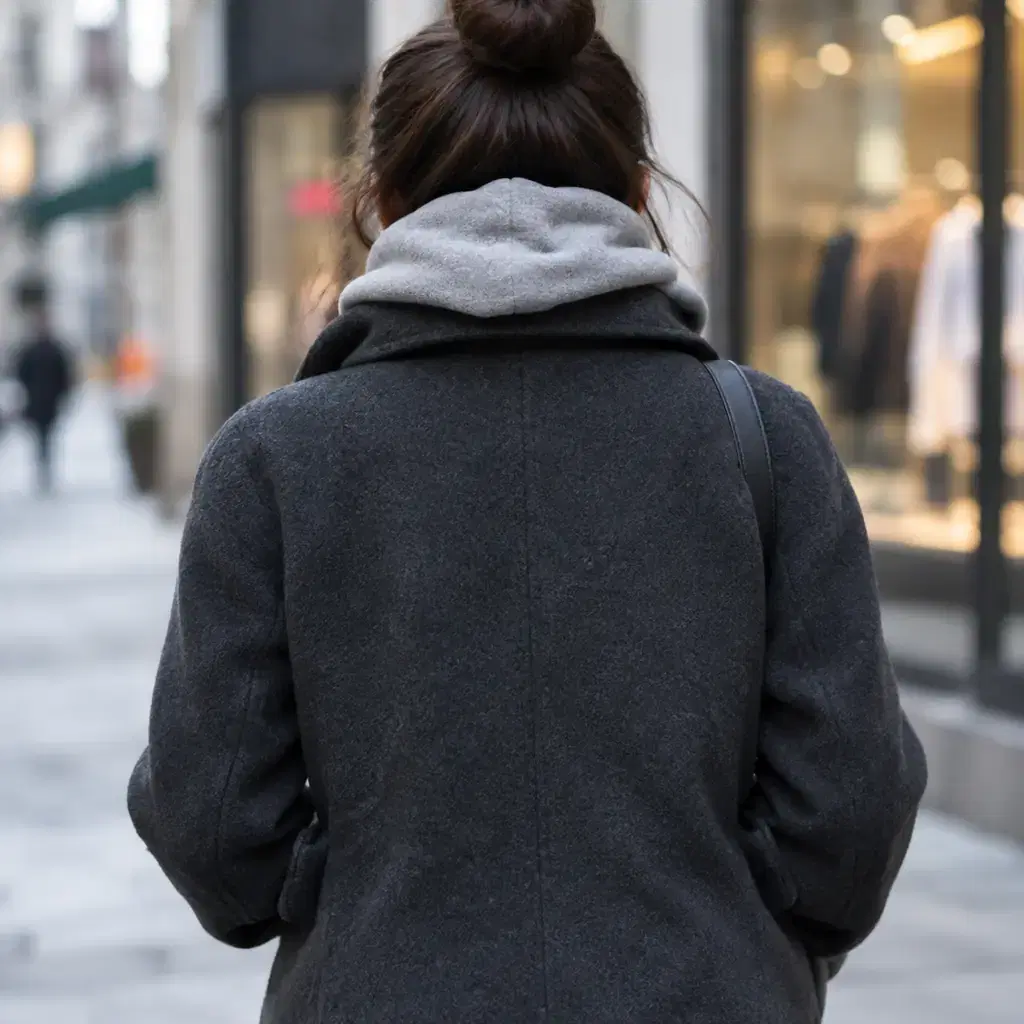
The cotton hoodie is comfortable on a couch and a problem under a coat. The hood bunches into a lump behind the neck that pushes the coat collar forward, and the kangaroo pocket adds a shelf exactly where the coat should skim.
Where the warmth should come from: a fine wool mock neck or a collared knit shirt under a scarf. The neck stays covered, the coat sits flat on the shoulders and the back is smooth in photos.
If you want a hood, let the coat supply it. A coat hood is cut to lie flat when down and clear the face when up; a sweatshirt hood is not.
14. A blanket scarf that eats the whole front of the coat
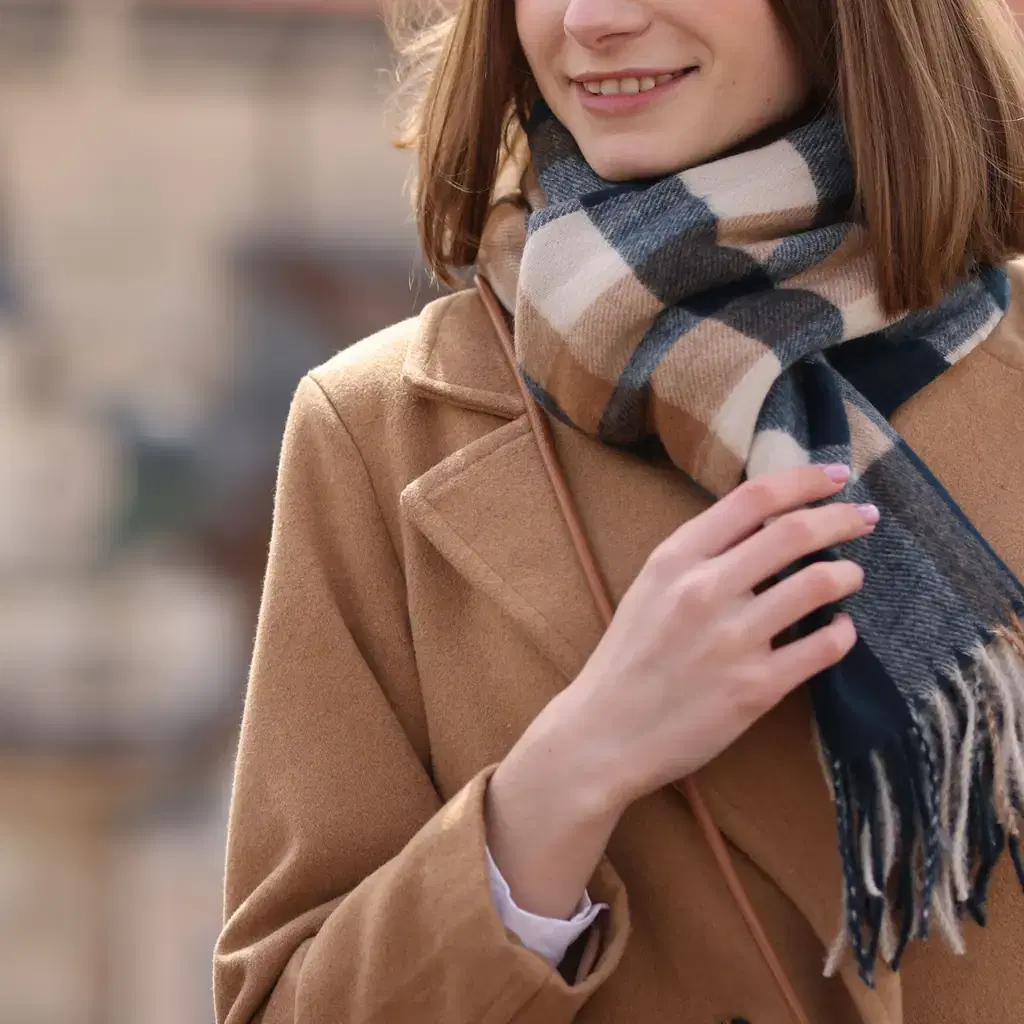
The oversized plaid blanket scarf had a long run and still has a job on a cold bleacher. Wrapped twice at a Christmas market it swallows the chin, collar and most of the chest, so the face sits on a mound of wool.
Scale the scarf to the coat rather than to the cold. A long, fine cashmere or wool scarf in one color, looped once, gives the same warmth with a vertical line that lengthens the figure.
Choose a color that flatters the face. The scarf sits closest to the skin in a winter photo, and soft camel, ivory or deep berry does more for a complexion than black.
15. The pom-pom beanie that flattens hair for the rest of the day
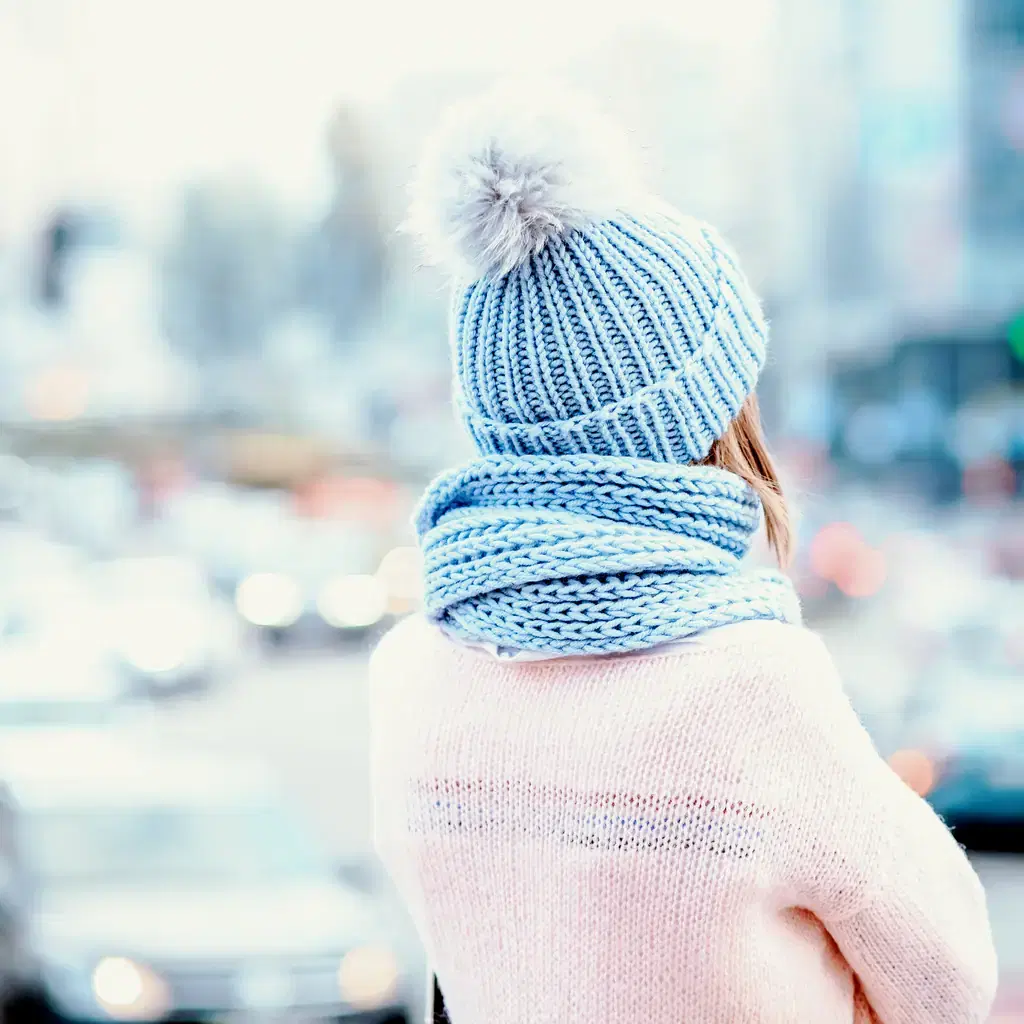
The knit beanie with the faux-fur pom is charming at 9 a.m. By lunch it has pressed the hair flat, pushed the bangs sideways and left a forehead crease that shows in indoor photos.
Hats that forgive: a soft wool beret, a wide cashmere headband that leaves the crown alone, or a brimmed wool fedora that sits rather than clamps. A small comb and travel-size dry shampoo finish the repair.
The cut matters too. HumbleTrail’s easy haircuts that look good without much styling recover from a hat with a shake, and the hairstyles that make thin hair look thicker after 50 keep their shape under a beret.
16. Ski gloves worn with a city coat
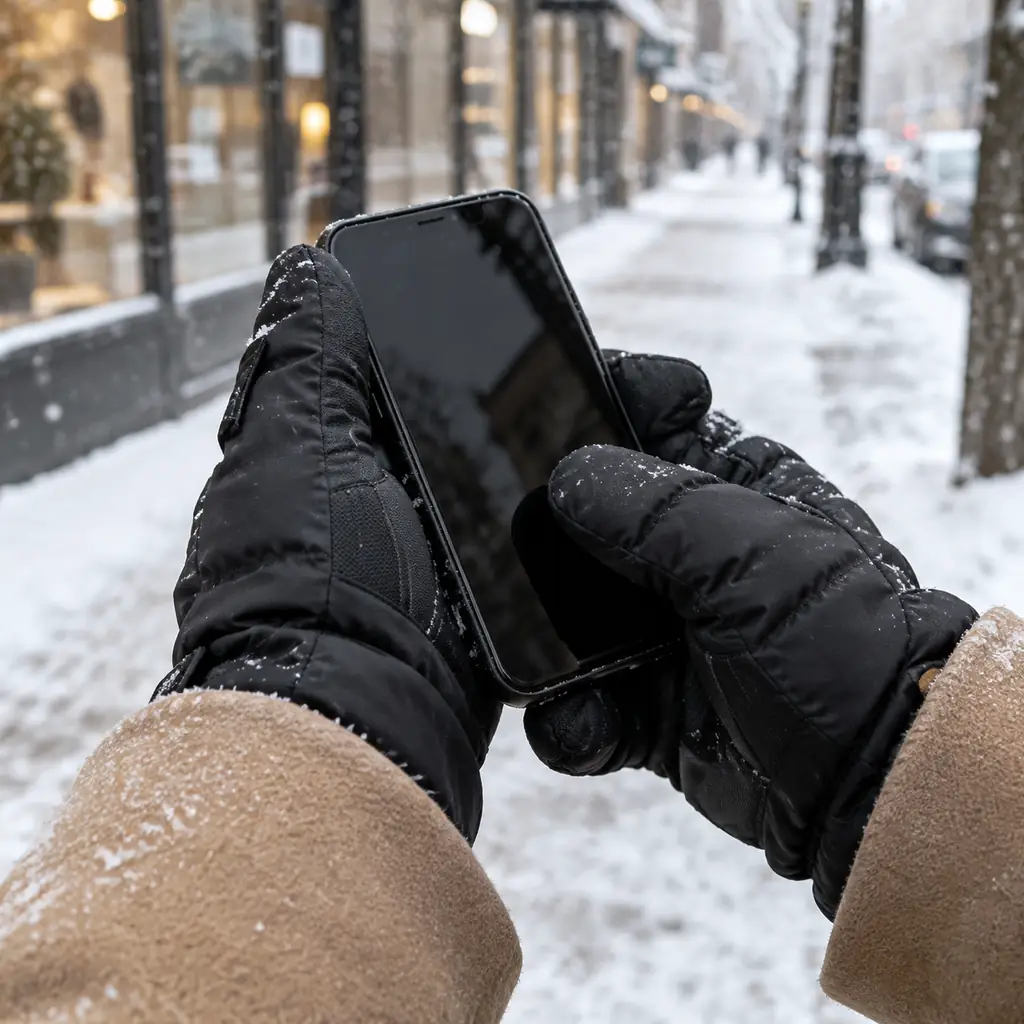
Insulated ski gauntlets with a wrist cinch keep hands warm on a chairlift. Paired with a wool coat on Fifth Avenue they look borrowed, and the fat fingers turn every phone map, card tap and museum ticket into a two-handed struggle.
What travelers reach for instead: leather gloves with a cashmere or wool lining and touchscreen fingertips. They fit under a coat cuff, hold a coffee cup and photograph as part of the outfit rather than as equipment.
For a real cold snap, slip thin merino liner gloves under the leather pair. The liners stay on while you check a map, and the leather goes back on for the walk.
17. Dressing for New York's December thermometer and forgetting the overheated stores

National Weather Service normals put a mid-December day in Central Park at a high near 44°F and a low near 34°F. Those numbers send people out in their warmest coat, then into six hours of stores, subway cars and a Broadway theater heated like August.
The overheating is what shows: a red face, damp hair at the temples and a coat bundled under one arm like laundry.
Dress for the indoor hours: a knee-length coat that unbuttons fast, a scarf that comes off in one motion and a thin layer beneath. The long-haul flight habit of dressing only for the arrival weather fails the same way.
18. An all-black outfit against a dark evening market
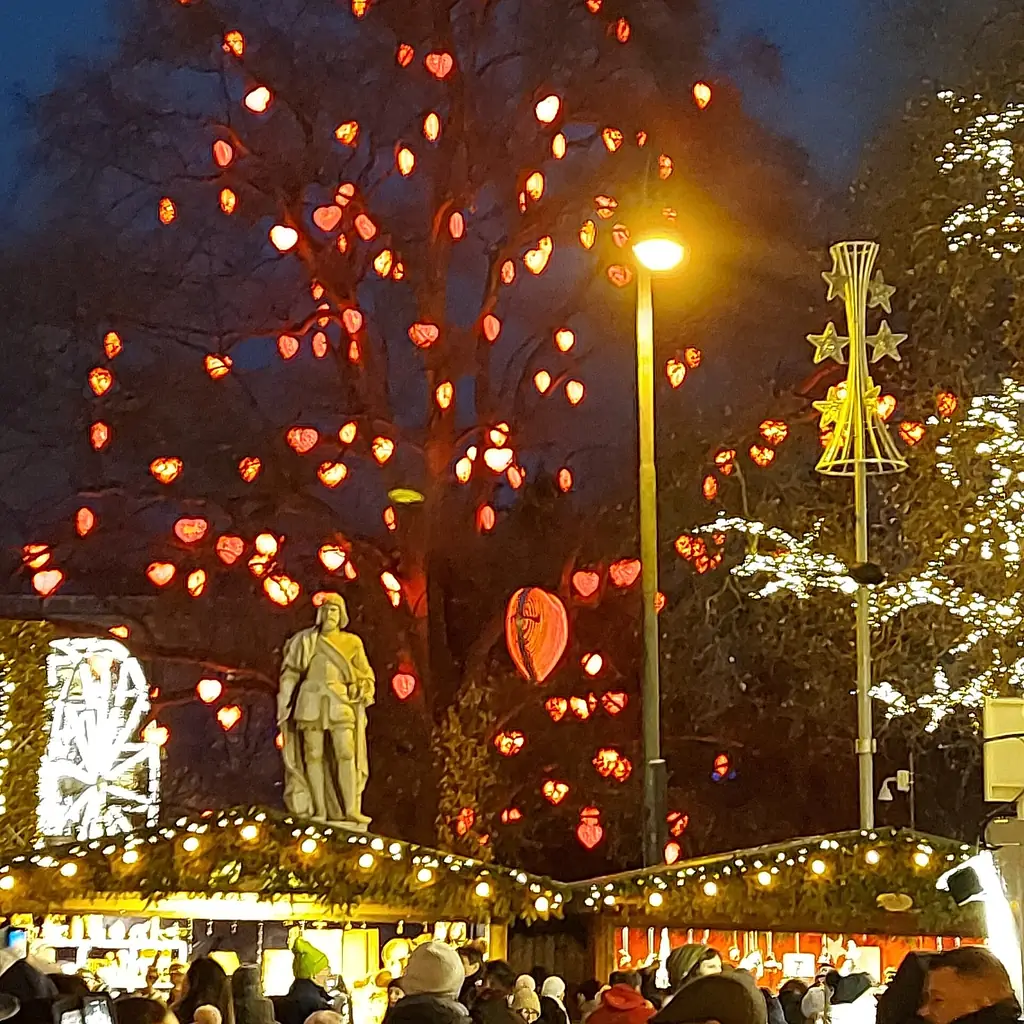
European Christmas markets run late. Vienna’s Christkindlmarkt on Rathausplatz is open November 13 to December 26, 2026, until 10 p.m. most nights, and by 4:30 p.m. the sky behind the stalls is black.
Head-to-toe black in that light turns a person into a silhouette with a face. The camera exposes for the lights, the coat disappears and every shadow under the eyes doubles.
Put one light or warm color near the face. A camel coat, an ivory beanie or a red scarf lifts the skin tone and anchors the photo. Keep black for the boots and pants, but let the top third of the outfit catch some light.
19. Pale suede boots at a Christmas market

Nuremberg’s Christkindlesmarkt runs November 27 to December 24, 2026, and Strasbourg’s market opens on November 27, 2026. Both are crowded, cobbled and wet underfoot by evening. Cream or taupe suede lasts about one glass of mulled wine before the first salt ring appears.
Look at the ground, then the boot. Dark, treated leather or a waterproof boot with a rubber sole wipes clean with a napkin. Stained suede makes a polished outfit look neglected for the rest of the trip.
Cobbles will tell on your feet by day two. Pack the blister plasters experienced international travelers carry and a second pair of boots so each pair dries overnight.
20. Head-to-toe ski wear when you are not skiing
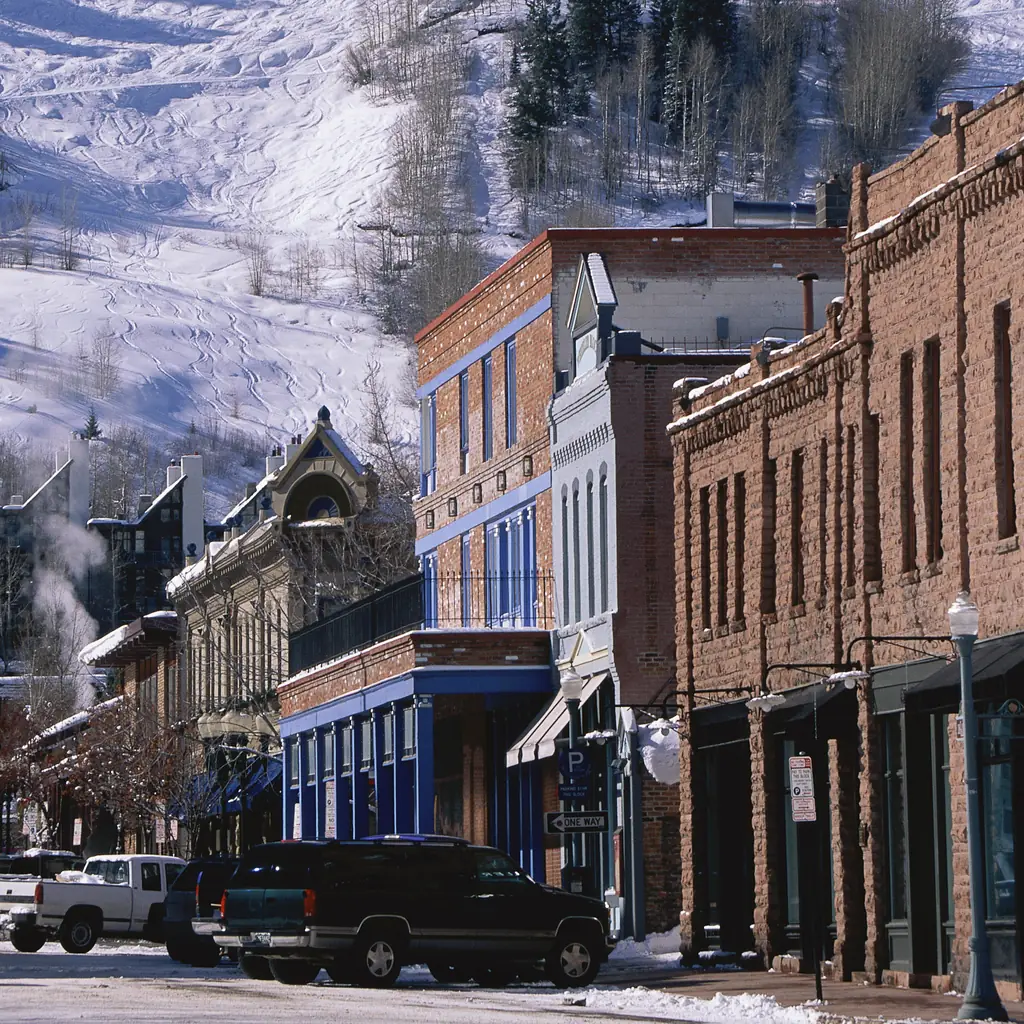
Visitors in Park City or Aspen for the shops, restaurants and a sleigh ride do not need bib pants and a shell jacket. At lunch on Main Street the full kit looks like a costume, and a color-blocked jacket from the 1990s reads as a specific vintage.
Dress for the village rather than the slope. A shearling or wool coat, a slim waterproof boot, a cashmere beanie and dark jeans handle a snowy sidewalk and a nice dinner.
Keep one technical piece if you like: a packable insulated vest under the coat for the gondola. A whole uniform announces that you dressed for a sport you are skipping.
21. Sheepskin slipper boots in village slush
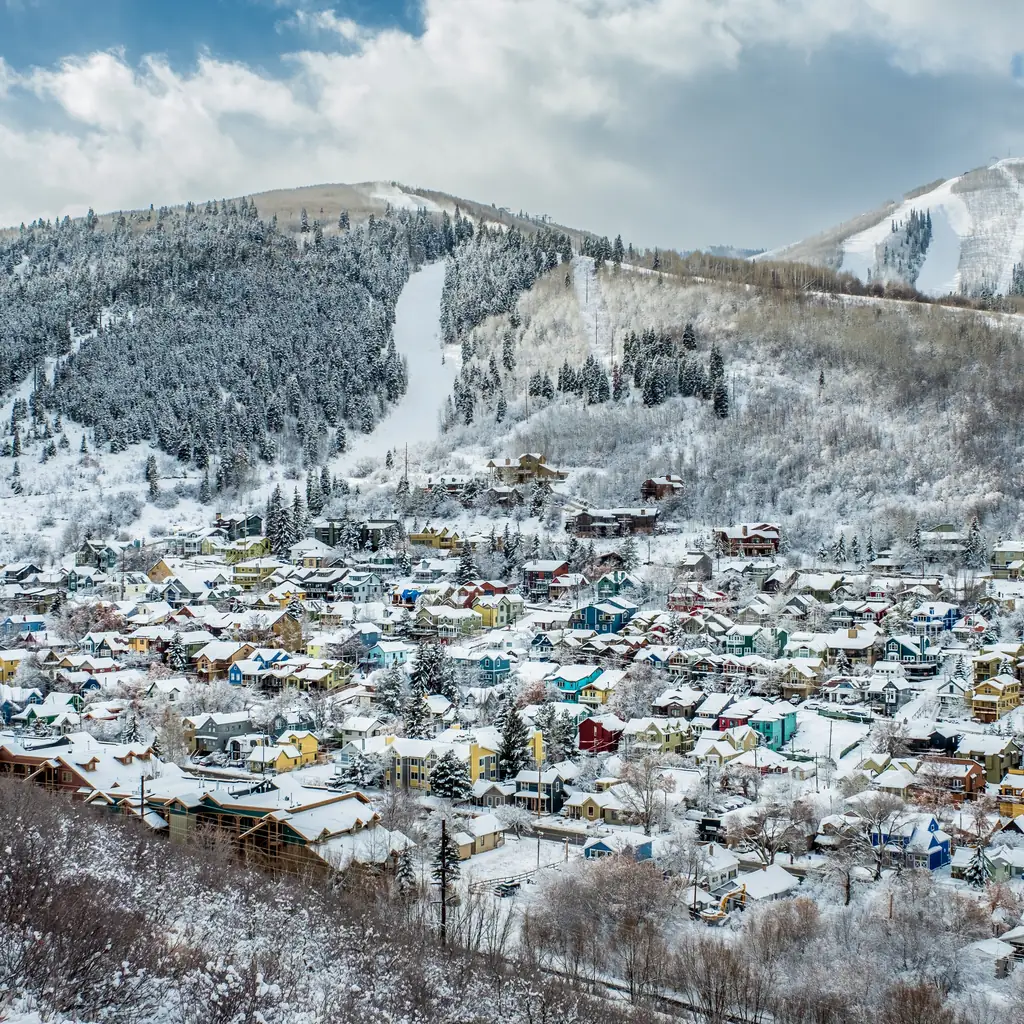
The soft sheepskin boot is warm and easy, which is why it travels so often. Its flat, smooth sole slides on packed snow, the suede upper soaks through in slush within a block, and the salt dries into a white map across the toe by dinner.
The posture problem: a wet, unstable boot shortens the stride and tips the walker forward. In a group photo on a snowy street, that stance is the one that reads oldest.
A lined, waterproof ankle boot with a lugged sole gives the same warmth with stable footing. If you love the sheepskin, pack it as the hotel-room slipper, where it is excellent.
22. The fleece quarter-zip that goes from the car to the holiday table

Thanksgiving falls on November 26 this year, and many families will eat it in a rental or a hotel restaurant. The quarter-zip fleece that suited the drive pills at the elbows, bags at the hem and reads as outdoor gear at a candlelit table.
The swap weighs nothing. A silk blouse or a fine merino sweater in a jewel color rolls to the size of a fist and turns the same dark pants into a dinner outfit.
If dinner is in a grand old hotel dining room, the room is in the photos too. HumbleTrail’s historic American hotels worth every extra dollar include several whose tables deserve better than fleece.
23. Satin flats for a dinner that starts across an icy parking lot
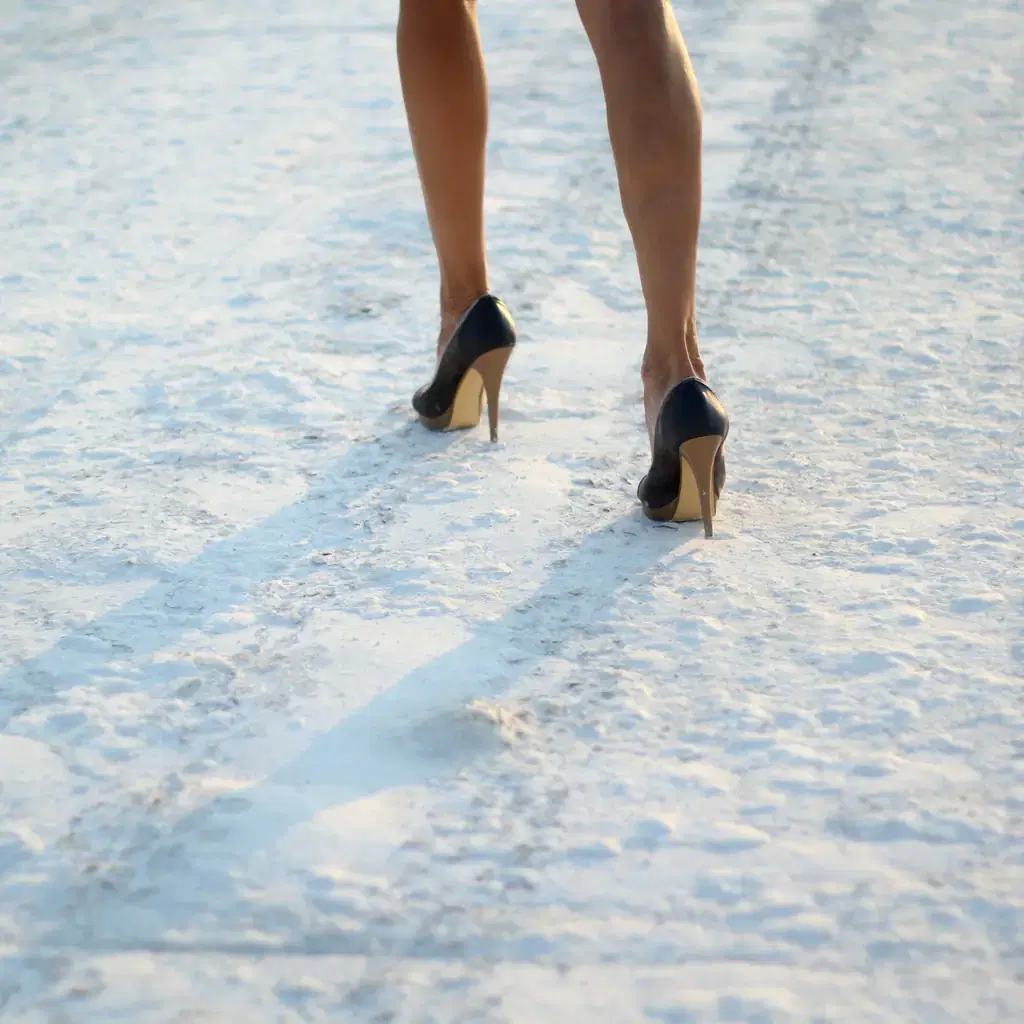
The dressy ballet flat or satin pump is the obvious pick for the one nice dinner. Between the car and the door lie a frozen lot, a salted ramp and an unshoveled sidewalk, and the mincing walk across them undoes the outfit before the coat comes off.
Dress shoes that can walk: a block-heeled leather boot or a sleek lined Chelsea boot in black or burgundy reads as evening under a dark pant and crosses ice at a normal stride.
If the pumps are non-negotiable, carry them in a shoe bag and change in the vestibule. Seasoned travelers cross the ice in boots and sit down in satin.
24. Checking a second suitcase just for coats
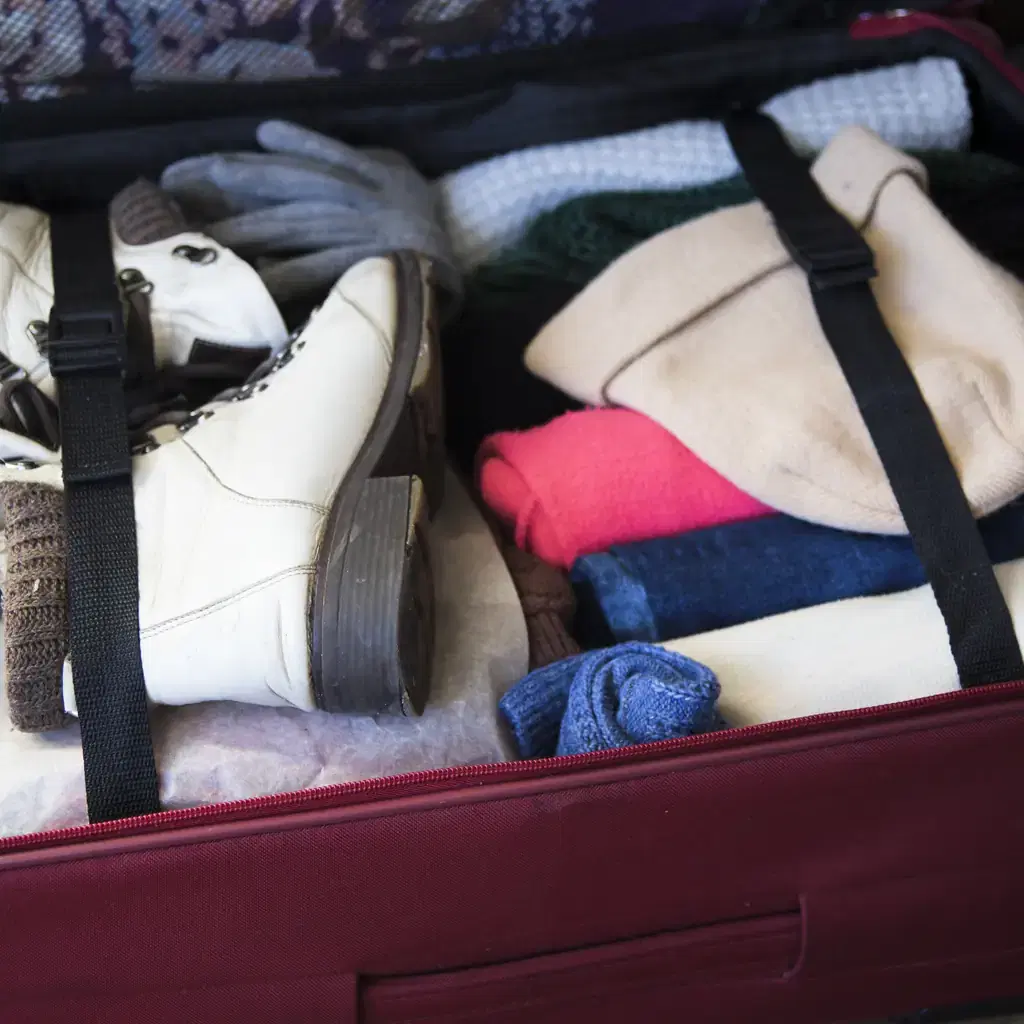
A wool coat for the city, a parka for the market, a dress coat for dinner and a ski jacket for the mountain fill a suitcase on their own, all worn over the same two pairs of pants. The extra bag costs a checked fee each way.
Choose one coat for the coldest hour. A knee-length, matte, belted coat in camel, charcoal or deep green works over jeans at a market and a silk blouse at dinner. A packable vest handles the mountain afternoon.
Experienced flyers also keep one full change of clothes in the carry-on, so a delayed bag does not mean a week in travel clothes.
25. An anti-theft crossbody strapped over the coat like a seatbelt
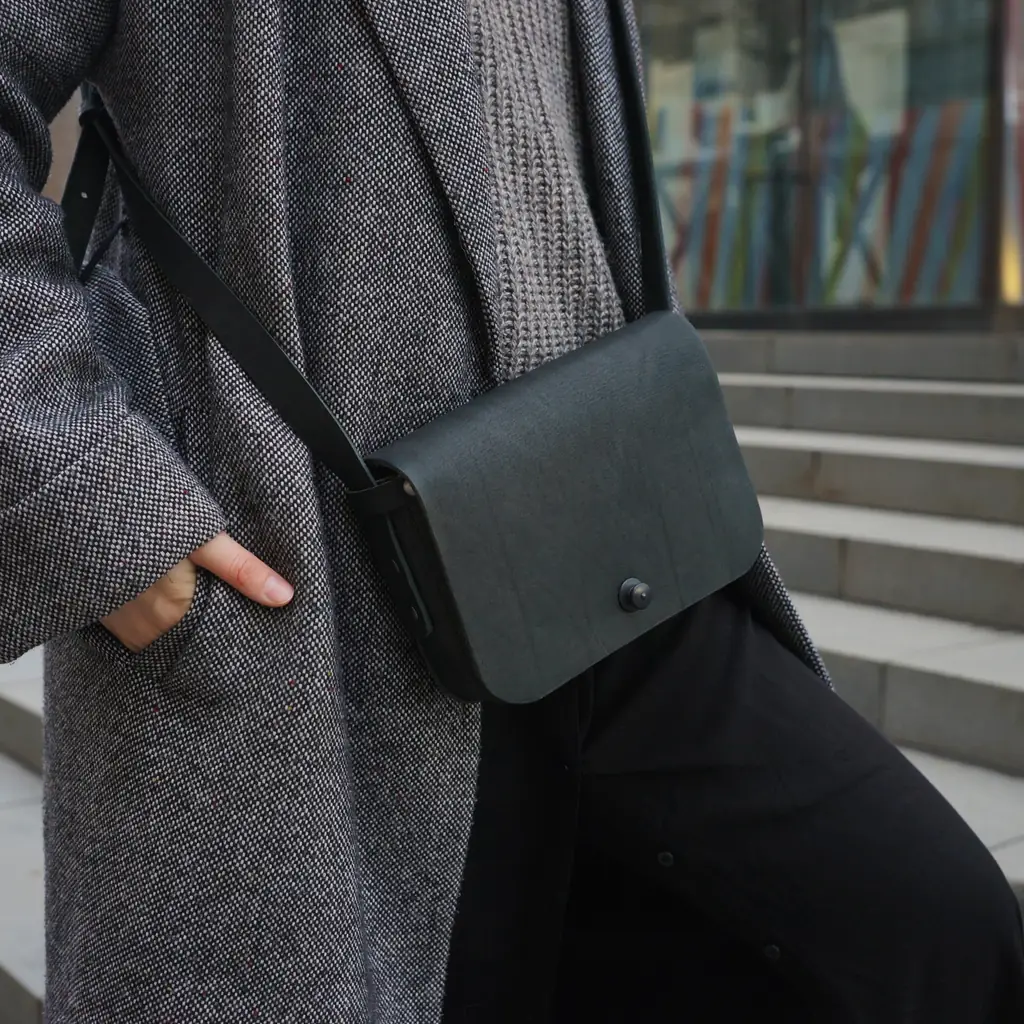
The slash-resistant nylon travel bag with locking zippers and a wide webbing strap is worn like a sash across a puffer. It may be the most recognizable tourist marker in a winter crowd, and it ages an outfit fast.
Security does not have to show. Wear a slim crossbody under the coat, zipper in, with a structured leather tote on top. A pickpocket has less to reach for, and the photo shows a woman dressed as she is at home.
Safety works best unseen, the way the hotel room checks women traveling alone make before unpacking protect a trip quietly. Ease photographs youngest, and armor gives it away.
None of this calls for a new wardrobe. One coat at the right length, one pair of boots with a real sole, thin layers that stay thin and a scarf in a color that suits your face will carry most women through a winter trip looking like themselves, rested and warm, in the photos that come home.
Comments
The opinions and views expressed in the comments section are solely those of the individual users and do not represent or reflect the opinions, views, or positions of HumbleTrail. HumbleTrail does not endorse, support, or verify the accuracy of any user-generated content.
By posting a comment you agree to receive related emails from HumbleTrail in accordance with our Terms and Privacy Policy. You can unsubscribe at any time.