

Editor’s note: This article offers general hotel-arrival safety and privacy checks.
Here’s a hotel security and safety checklist to help you check your room upon arrival.
19. The Room Is Not Cut Off From The Main Hall
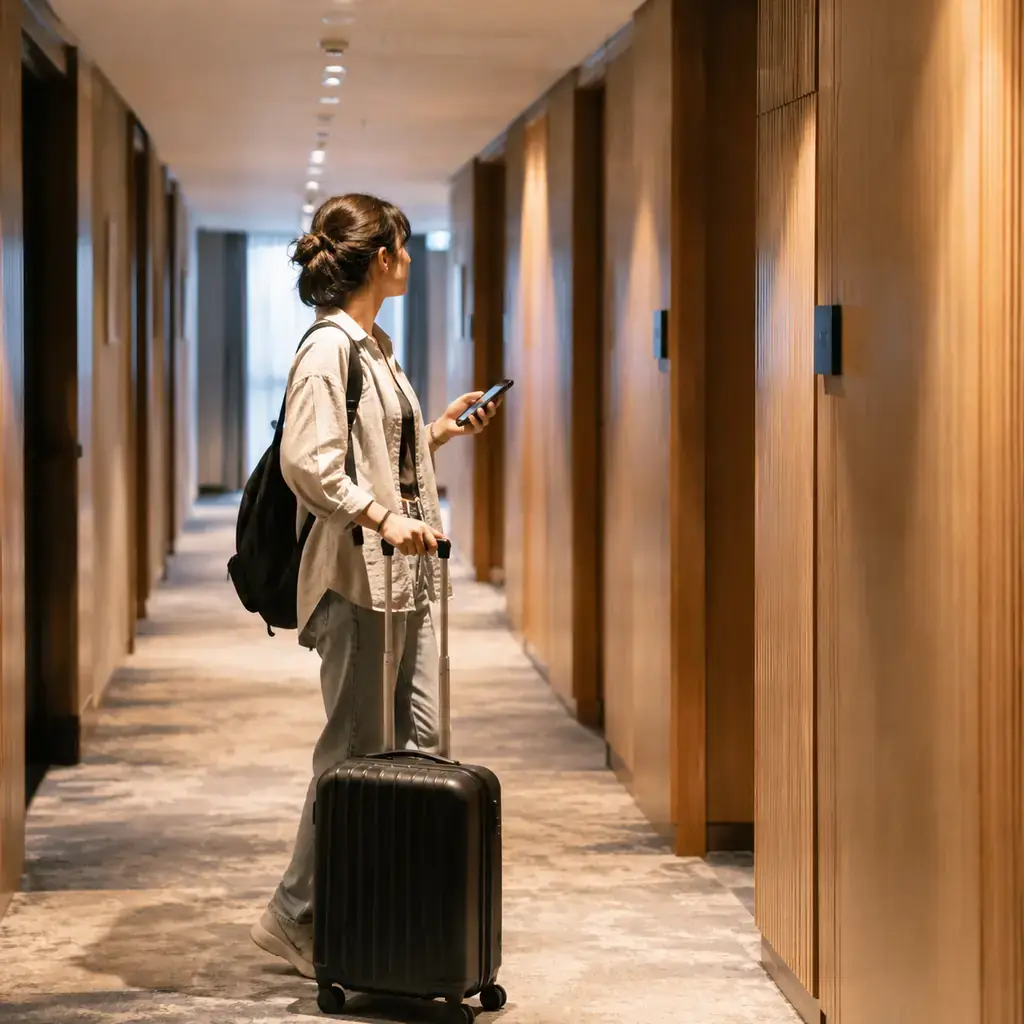
Before entering, look at your location within the hotel. If your door is located past some dark hallways or alcoves and away from occupied rooms, you may not like it as much at night when the lobby empties and housekeeping has gone home.
Try to get a room that isn’t isolated and is instead located closer to busy areas of the hotel, the elevators, or security. A quiet, secluded stairwell that seems quaint during daylight may make for a scary trek during nighttime.
It can feel uncomfortable asking for a different room, but it’s okay to do so. You don’t need to justify your request.
18. The Main Door Closes Without Help
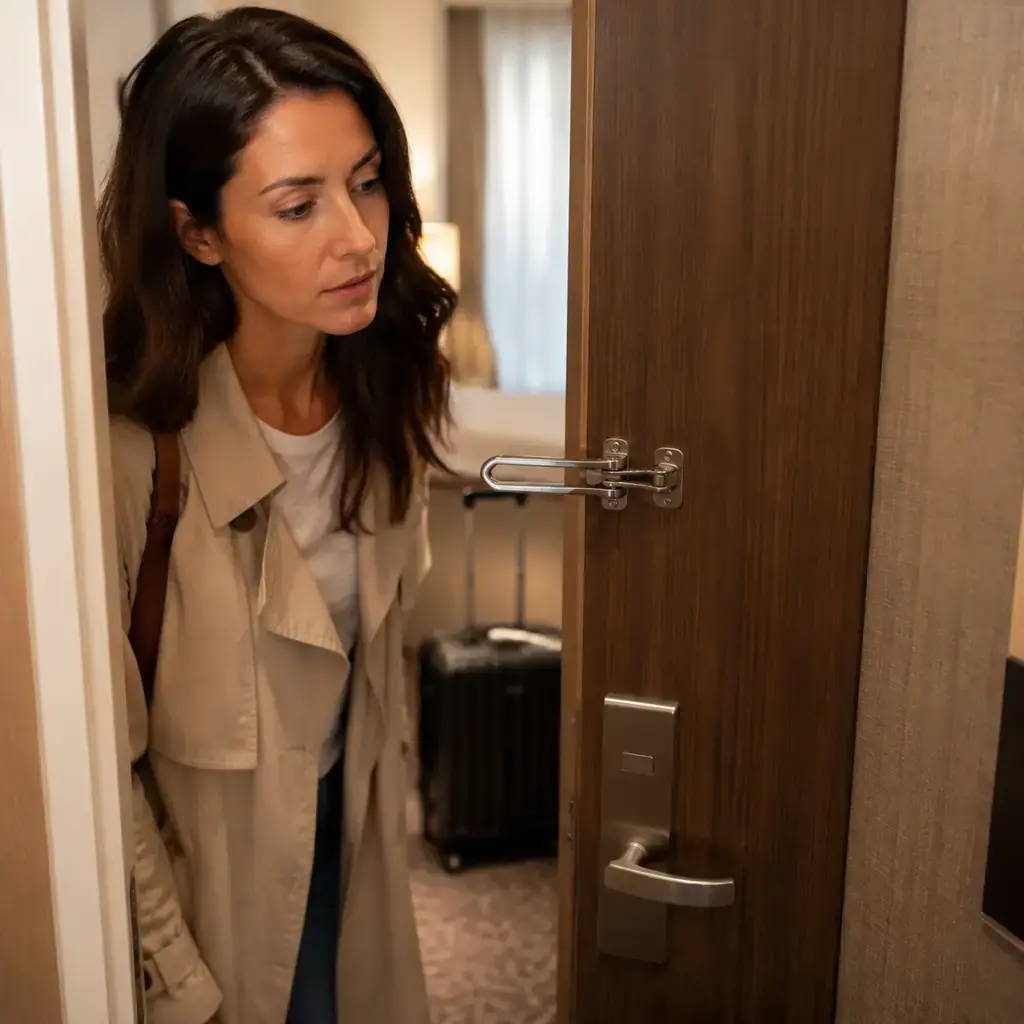
Does the door latch securely? The door should close and latch under its own power without having to push on it.
If it’s loose or won’t latch, ask for a different room.
Staff may offer to fix it in the morning, but why risk it?
17. The Deadbolt And Secondary Latch Line Up
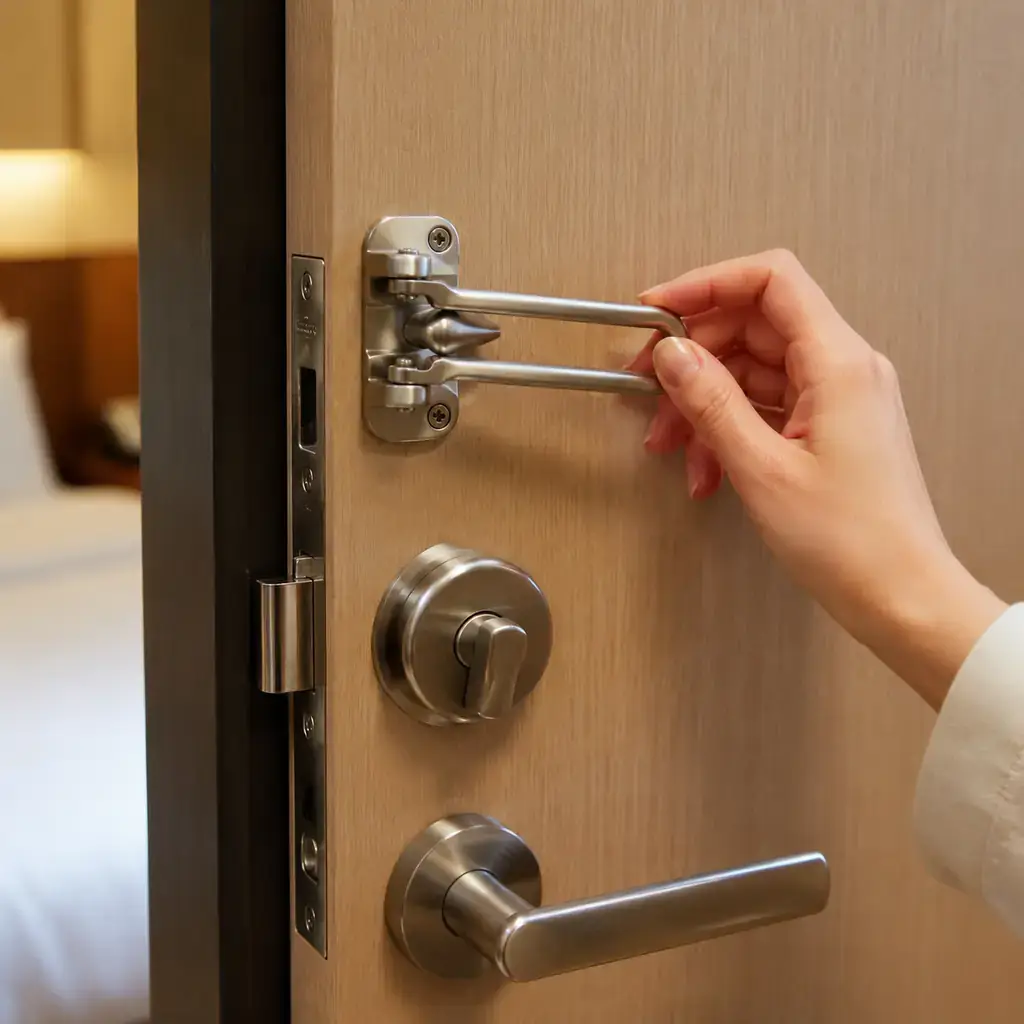
Does the door have a secondary locking system, such as a chain, deadbolt, or swing bar? Test it. If there is one, make sure it’s secure.
Give it a gentle tug to make sure it’s sturdy and that all strike plates and screws are tight.
If it’s not working correctly, report it and get another room if necessary. Don’t resort to blocking the door with your suitcase, using tape on the doorknob, or cobbling together makeshift solutions.
16. A Connecting Door Locks From Your Side
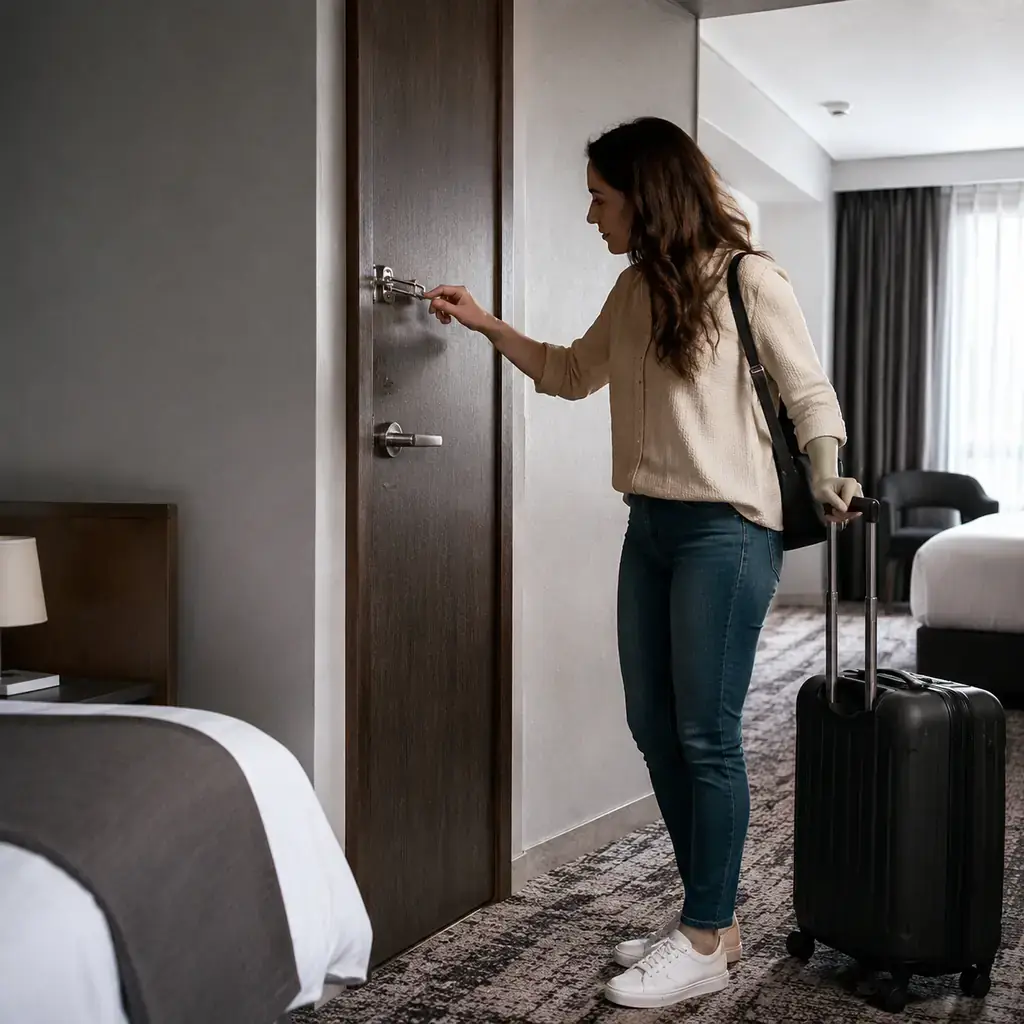
Is your room a connecting room? There’s usually a door controlled by each room, and they lock separately. Make sure yours is secure.
Try the handle on your side and make sure it’s locked. Don’t assume the adjoining room is empty because it’s silent.
If your connecting door won’t lock, stop there and call the front desk.
15. Every Window And Balcony Door Locks
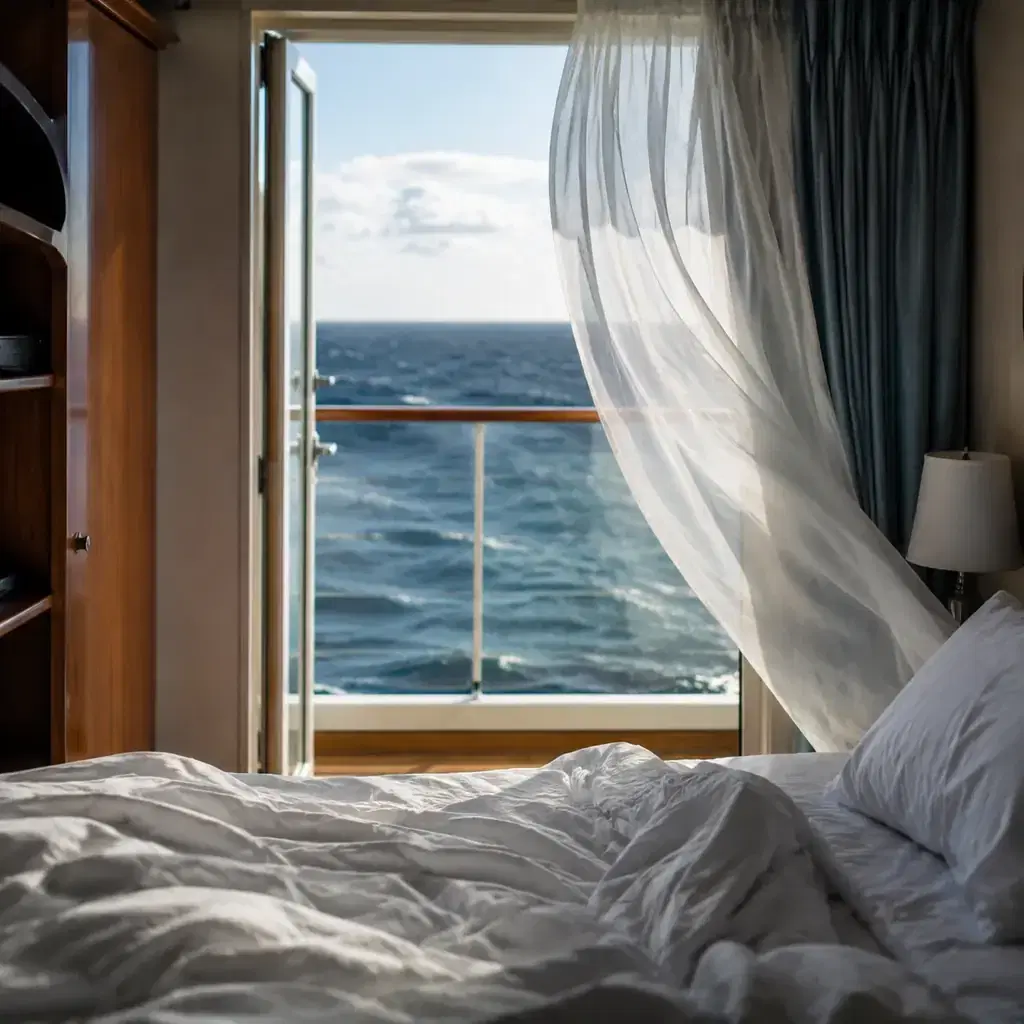
It’s not just first-floor accommodations that are at risk. Hotels can have external access through balconies, stairwells, roofs, and terraces.
Do all of your windows and balcony doors lock properly? Test them. Even if you’re on a higher floor, it’s worth testing all of the windows and doors.
The U.S. State Department recommends inspecting your hotel room upon arrival to ensure doors and windows lock properly. Ask for another room if they don’t.
14. The Curtains Close Without A Gap

Are there two sets of curtains? Test them. With the curtains closed, could someone outside see the bed or bathroom? Some hotels use sheer curtains as a fashion statement. Try closing them and checking from various areas in the room, such as by the bed or shower.
If there are small gaps, a binder clip can pinch the curtain closed.
But if there are large gaps or a needed curtain is missing, ask housekeeping to send someone up with replacements or get another room.
13. The Peephole Gives A Clear View
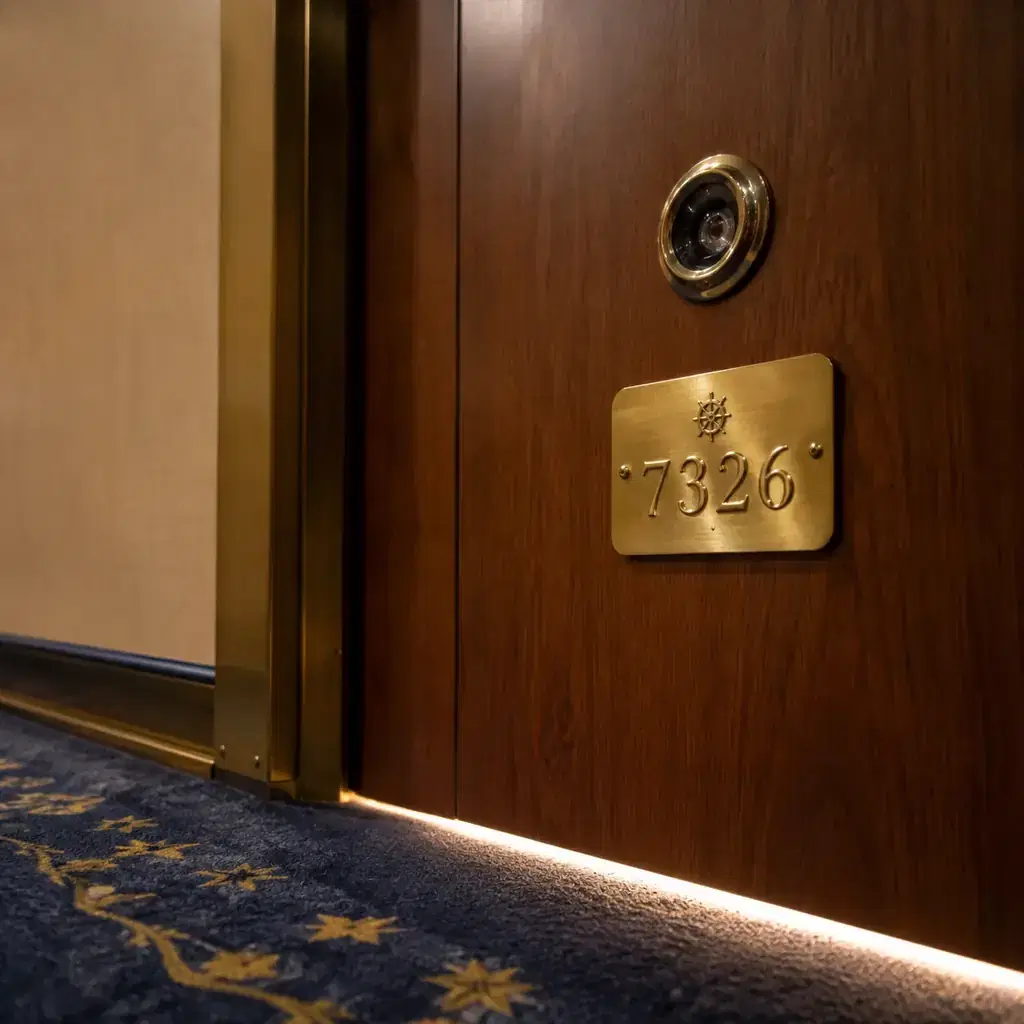
Does the door have a working viewer/peephole? Look into it to make sure you can actually see out of it. Make sure it’s not painted over or blocked.
Always look into the peephole before opening the door to see who’s there.
If there’s no viewer or you can’t confirm who’s outside, call down to the desk before opening. Read more: hotel check-in habits staff notice.
12. The Room Phone Reaches The Front Desk

Does the phone work? Pick up the receiver and listen for a dial tone. Test calling the front desk.
While most of us rely on our mobile phones these days, it’s important to make sure the room’s landline works in case of an emergency.
Keep emergency contacts in an international carry-on purse or daypack for quick access.
11. Your Mobile Phone Works From The Room
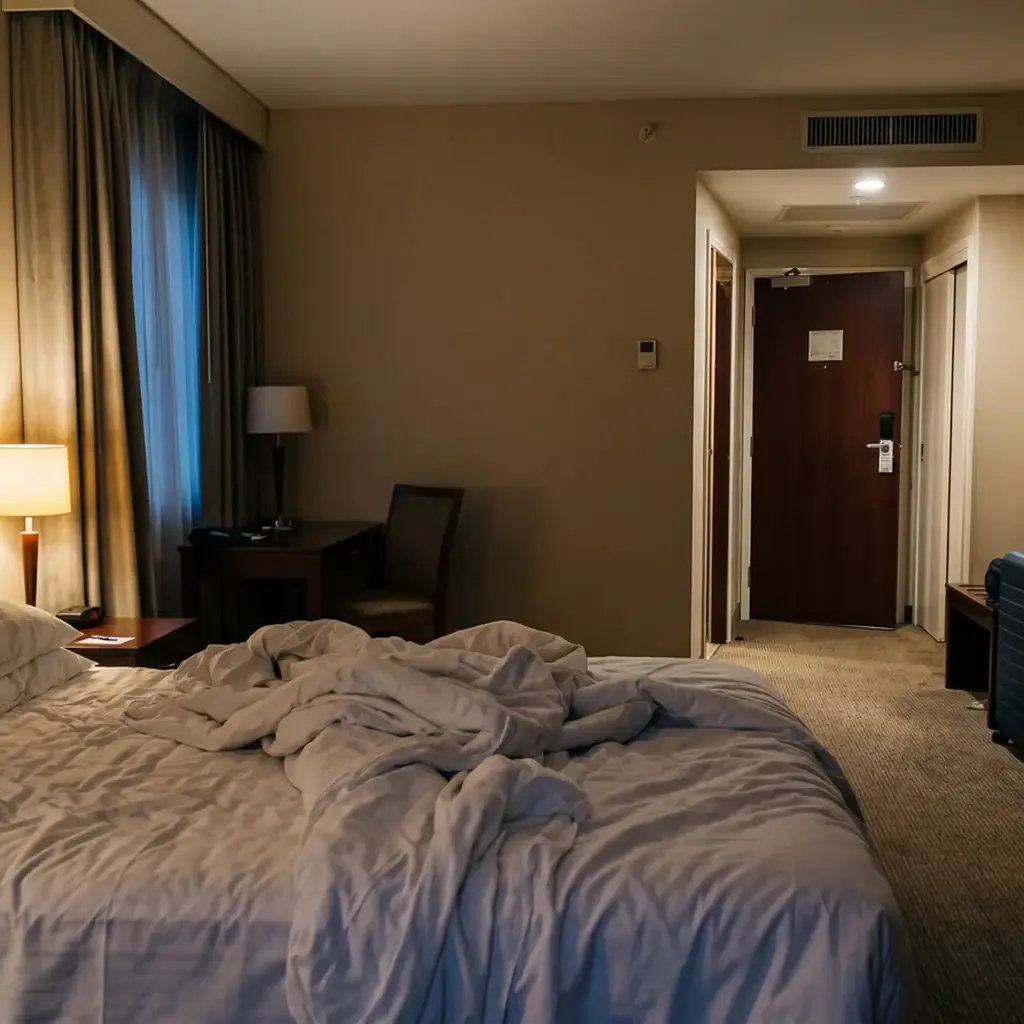
Also, test your cellphone signal in various places in the room. Some buildings have thick walls that interfere with service.
Save hotel staff’s contact information and the hotel’s address, along with the local emergency number, so you can find them offline.
Also save emergency contacts in your phone before traveling. Read more: airplane seat-selection problems.
10. The Room Number Stays Separate From The Key
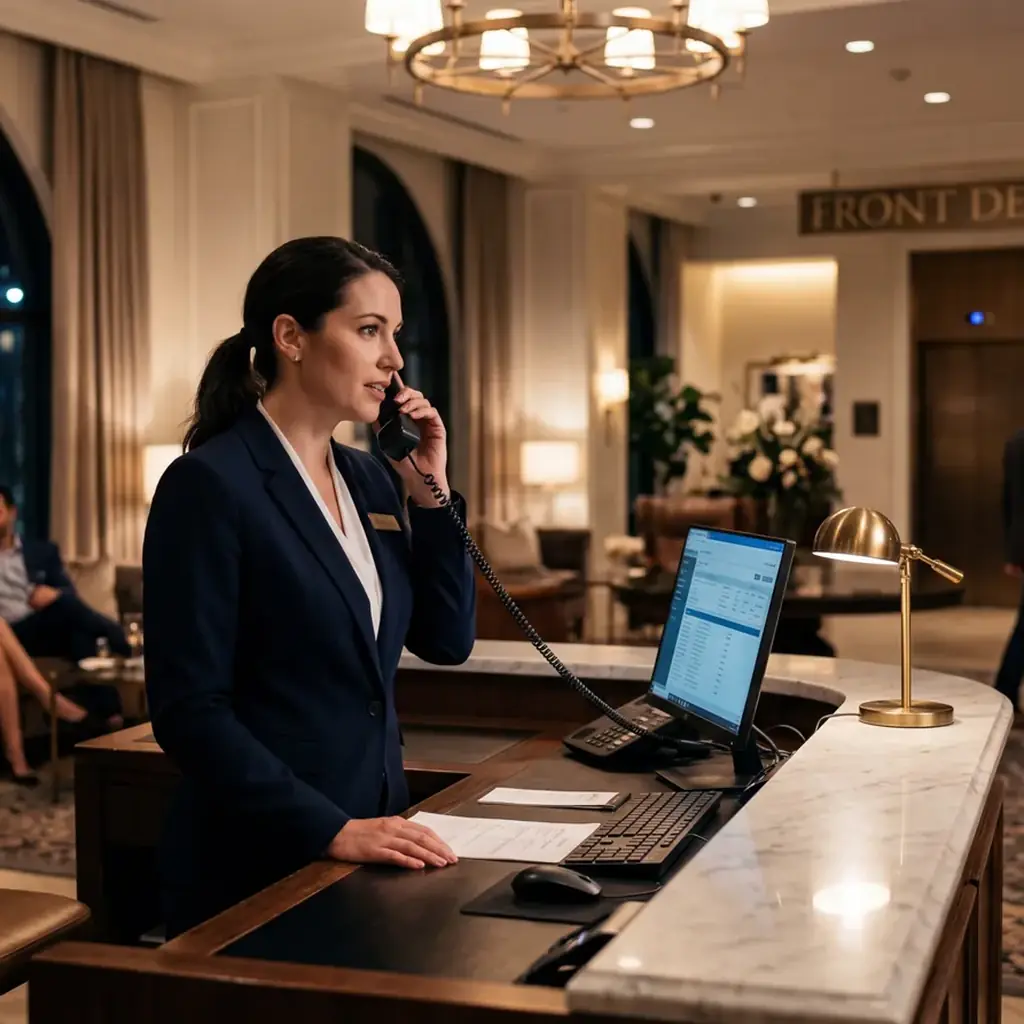
Do not leave your room key card in the protective plastic or paper holder with the name of the hotel and your room number printed on it.
The U.S. State Department recommends carrying your room key separately from such information.
If staff announce your room number over a busy front desk, consider requesting another. This helps keep other guests from learning where you’ll be staying.
9. The Evacuation Map Matches The Hallway

Upon entering, read your floor plan, usually on the back of the door. Find your room marker, locate the fire alarm and stairwell, then check out the nearest two exits.
If renovations have been done, the floor plan might not accurately represent the hotel’s layout. Different hotels also use different symbols to describe exits and other features, which can be confusing.
It’s best to walk down the hallway and make sure everything adds up. Read more: hotel perks that are no longer automatic.
8. You Can Find Two Routes To The Stairs
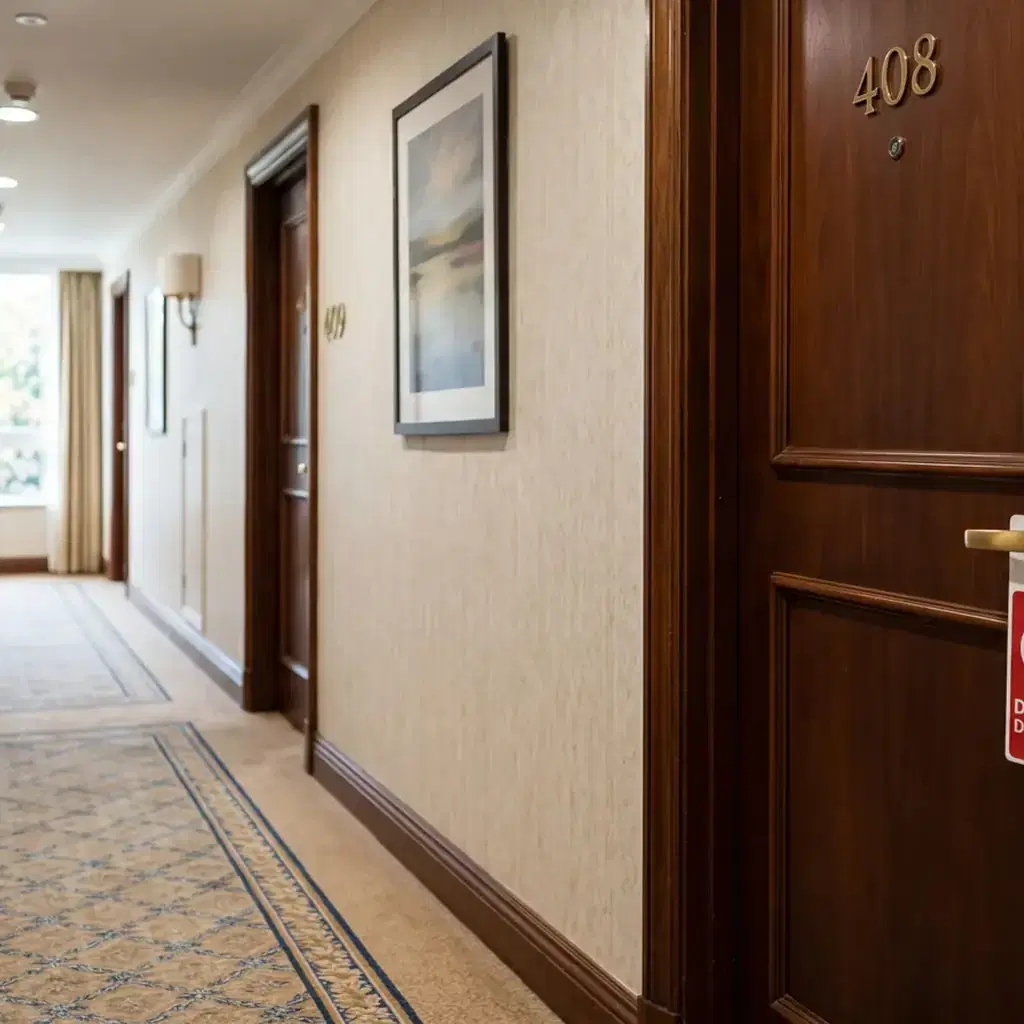
Use the stairs, not elevators, during a fire. Elevators may also be unavailable during a power failure.
The U.S. Fire Administration suggests counting the number of doors between your hotel room and each exit in case you have to evacuate in the dark.
Take a moment to check those routes before unpacking. Read more: changing hotel-chain experiences.
7. The Smoke Alarm And Sprinkler Look Intact
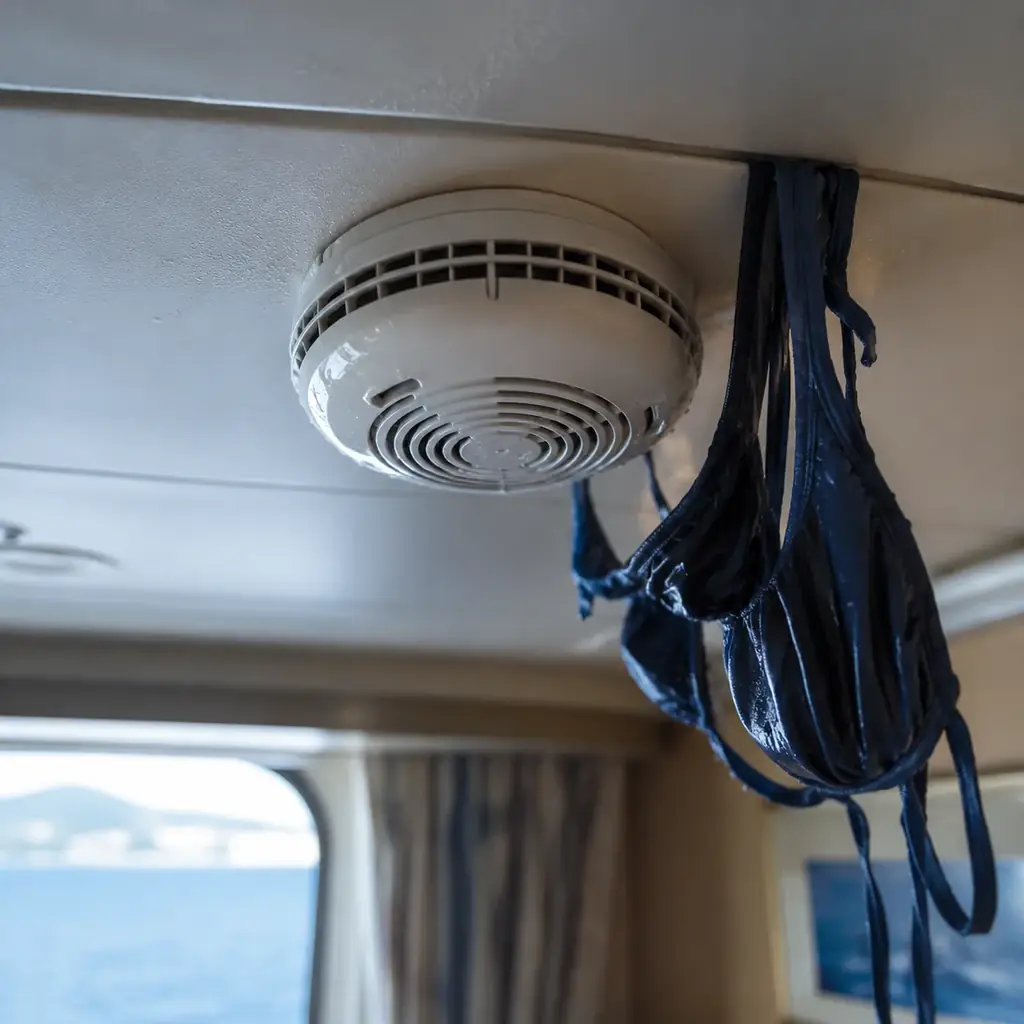
Check for a smoke alarm and, in larger hotels, sprinklers, and make sure nothing is blocking them. A visual check alone won’t tell you whether they work.
If there are no alarms or they appear to be defective (chirping, covered, etc.), let someone at the front desk know right away. In addition to requesting repairs, ask to be moved to another room.
For more on choosing lodging, check the Hotel-Motel National Master List, a compilation of U.S. lodging establishments registered with specified fire-safety equipment. It isn’t a complete safety review of a hotel.
6. A Carbon Monoxide Alarm Is Present When Needed
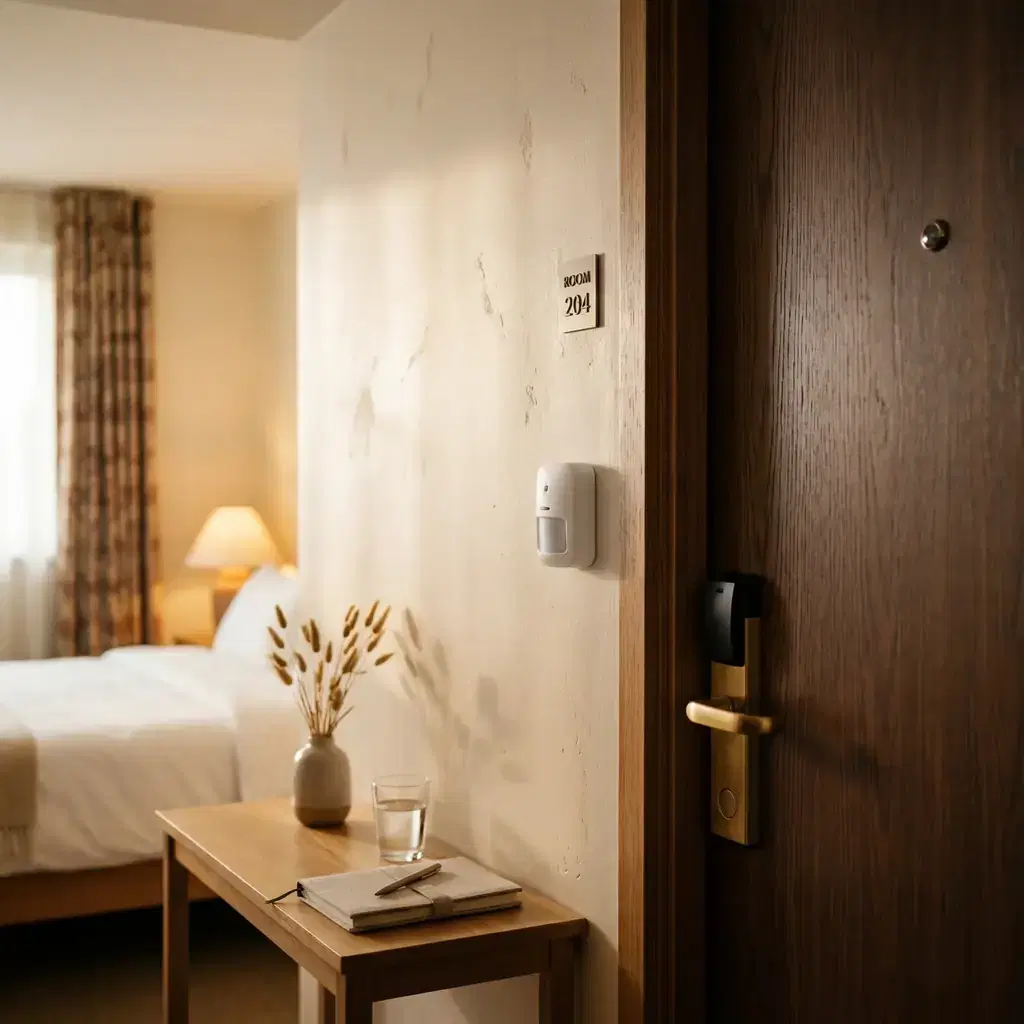
Also, determine whether there are carbon monoxide alarms. Requirements vary by destination, and fuel-burning equipment elsewhere in the building can matter, too.
According to the U.S. State Department, travelers might consider investing in their own CO alarm or asking hotel employees whether there are working CO alarms in each guest room.
If a CO alarm sounds or you suspect CO poisoning from symptoms such as headache, dizziness, weakness, nausea, vomiting, chest pain, or confusion, get outside into fresh air immediately and call the local emergency number. Seek urgent medical help for suspected exposure. Opening windows and doors isn’t enough.
5. There Are No Unexplained Electronics
If there’s anything out of place like an electronic device pointed toward the bed or bathroom, snap a pic and call management. An odd-looking device alone doesn’t prove there’s a hidden camera.
Do not dismantle a device. Leave the room while management checks the concern.
And if something doesn’t seem right, trust your gut, get up, and walk out before unpacking makes it difficult to seek alternative accommodations. Read more: unexpected international packing items.
4. Hidden Corners Are Empty
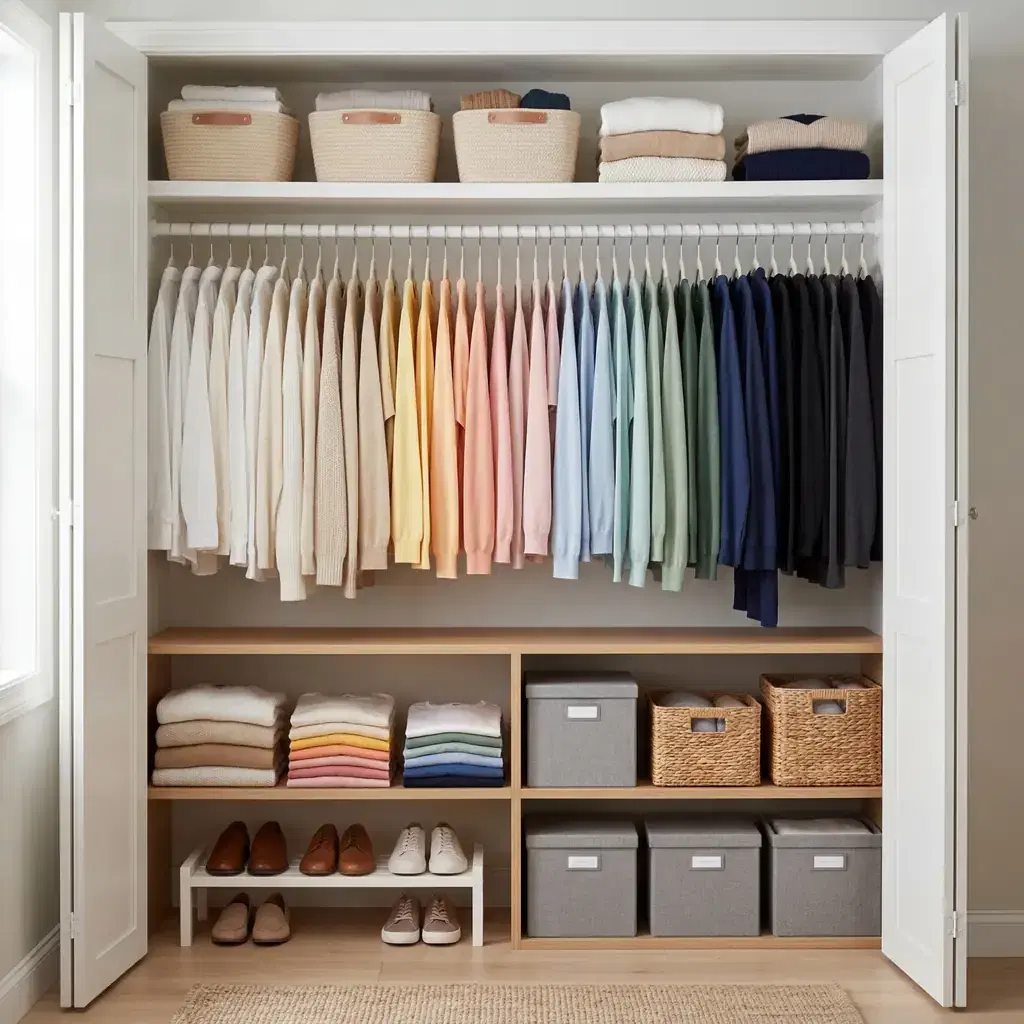
Do a quick once-over of the room, including peeks behind the shower curtain and closet door and a glance under the bed.
This isn’t meant to be a list that promotes paranoia. But it’s a list that promotes precaution.
Take a moment to run through this checklist upon entering the hotel room and before unpacking. Read more: snowbird travel realities after 70.
3. The Mattress Seams Show No Bed Bug Signs
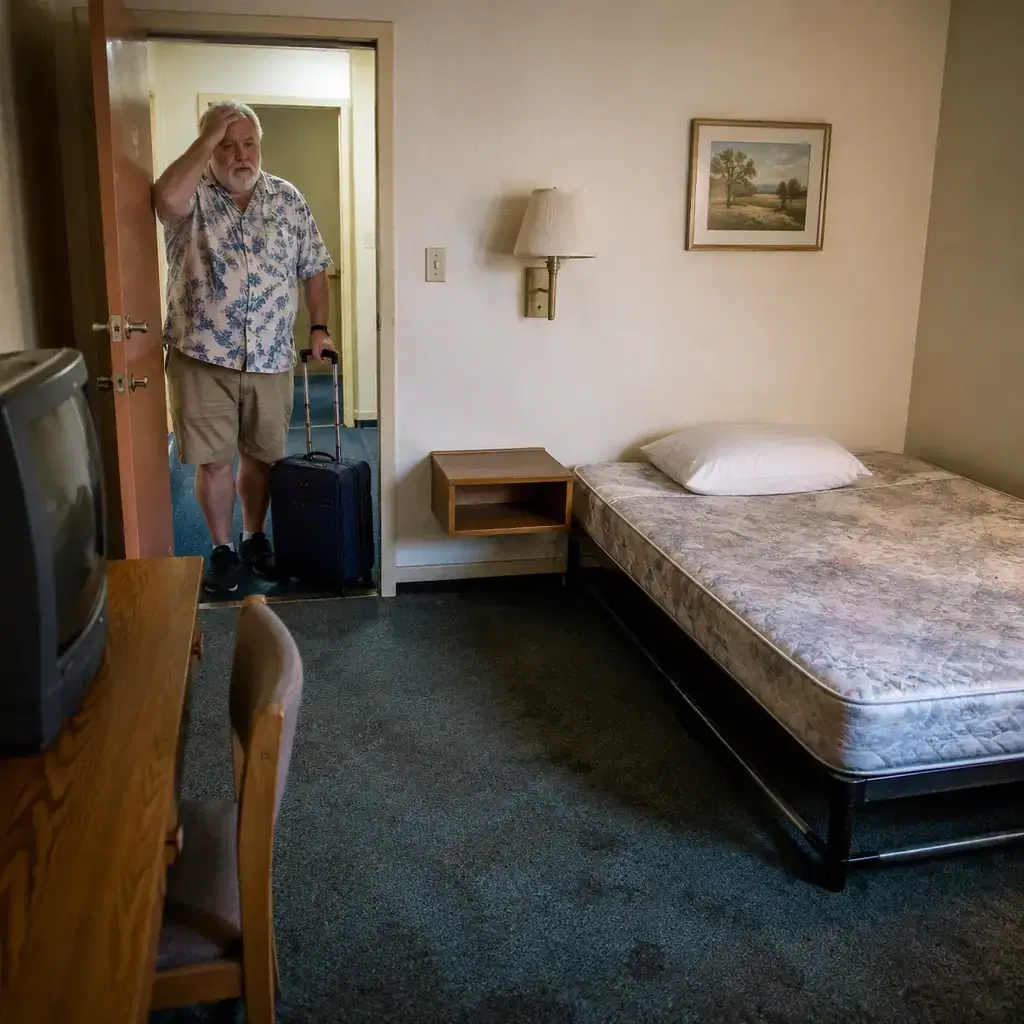
Before you unpack, check for signs of bed bugs by inspecting mattress seams, furniture, and headboards. Look for live and dead bugs, bug skins, and small rusty or blood-colored spots.
According to the CDC, travelers should seek different lodging if they find signs of bed bugs.
Bed bug bites alone do not necessarily indicate their presence. Read more: toiletry packing mistakes that slow airport screening.
2. The Luggage Rack Is Away From The Bed
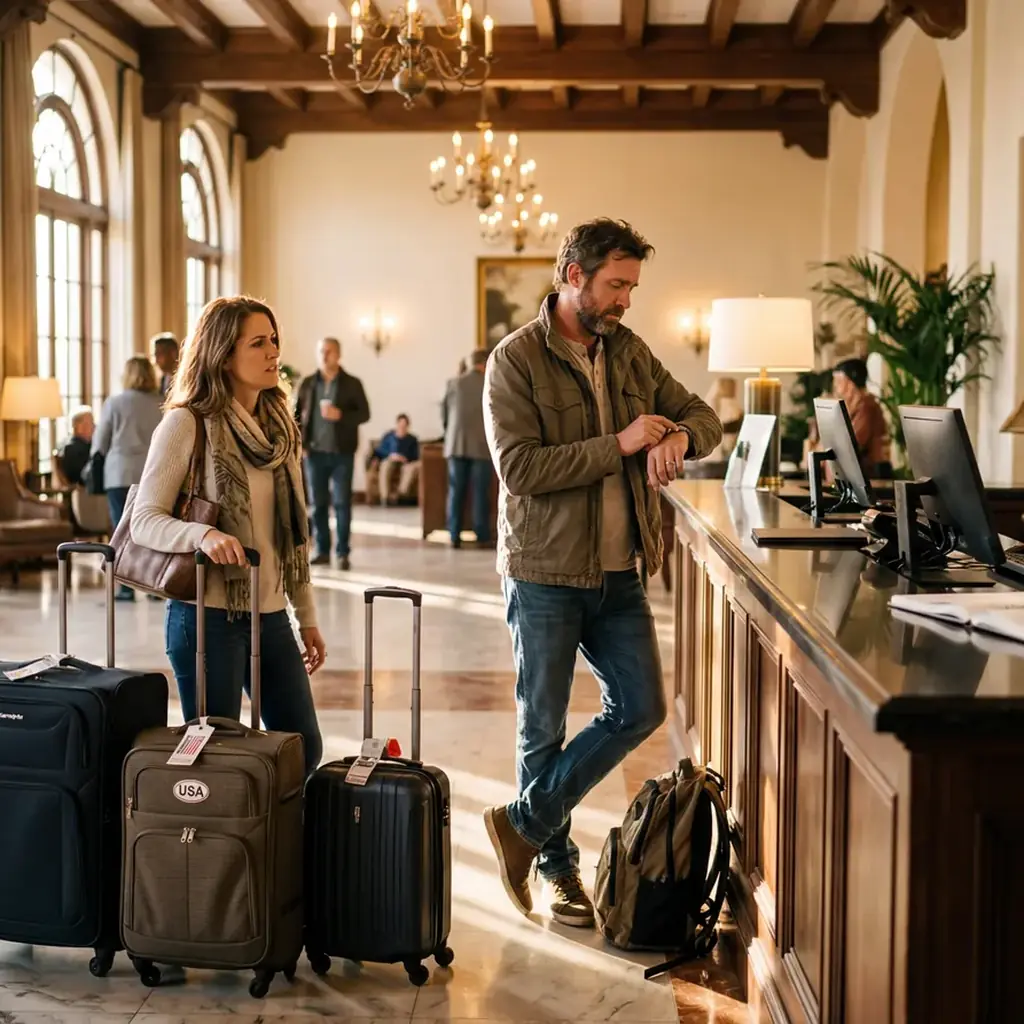
Before checking for bugs, leave suitcases zipped up and place them in the middle of the room on luggage racks, not on the bed and not against walls.
The CDC recommends keeping suitcases off the floor and closed when they’re not in use.
Before you unpack, make sure you’re okay with the room. A quick check can miss bed bugs, so keep those luggage precautions in mind. Read more: historic hotels considered worth the price.
1. A Personal Alarm Has A Clear Job
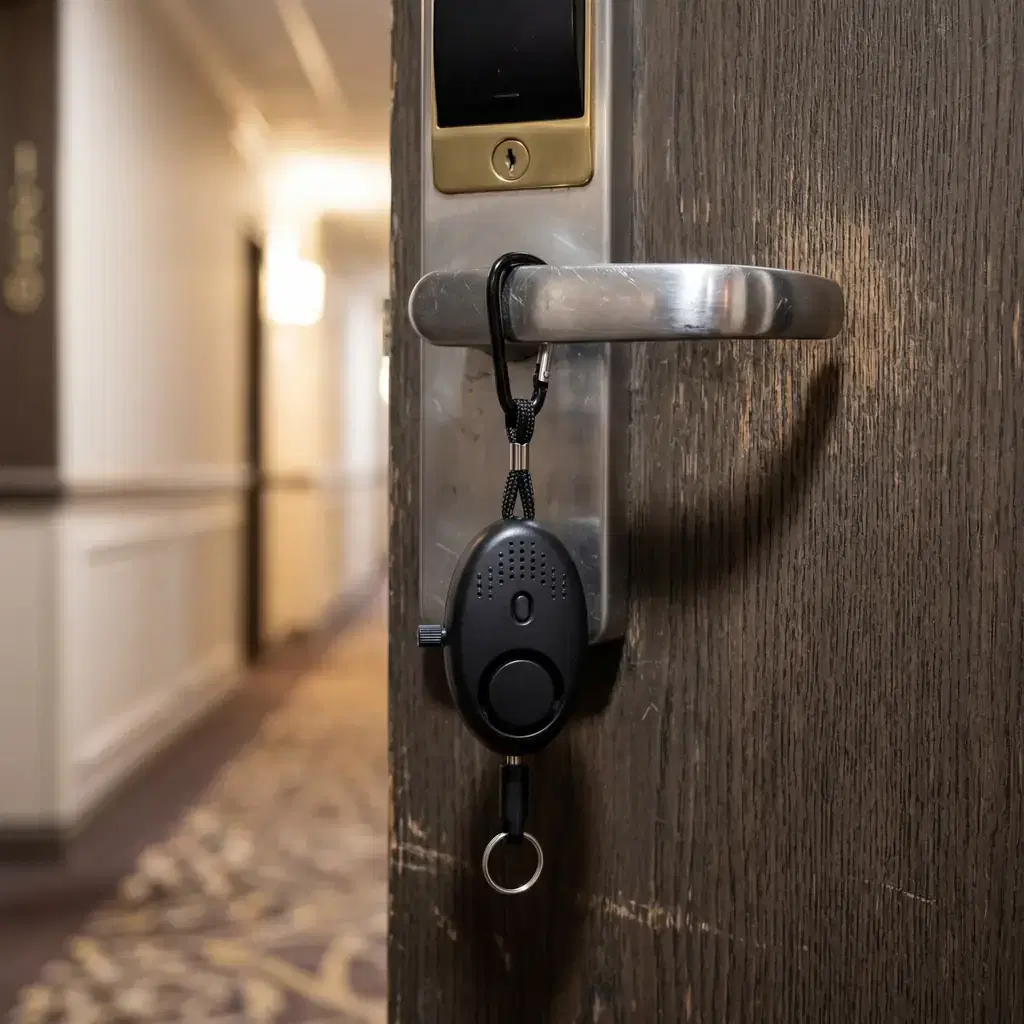
Consider investing in a travel-sized door alarm that sounds when the door opens. A personal alarm you activate yourself can also attract attention, but it won’t necessarily detect the door moving.
You shouldn’t rely on one instead of a working lock and should ask for another room if yours is broken. Just make sure to test your gadget at home before packing it, and keep in mind that blocking exits with personal safety devices isn’t smart.
The State Department suggests women consider personal safety whistles or alarms. Check local rules for any safety gear you plan to bring.
Sources
- U.S. Department of State: Lodging Safety
- U.S. Department of State: Women Travelers
- U.S. Fire Administration: Hotel and Vacation Rental Fire Safety
- U.S. Fire Administration: Hotel-Motel National Master List
- CDC Yellow Book: Bed Bug Prevention for Travelers
Comments
The opinions and views expressed in the comments section are solely those of the individual users and do not represent or reflect the opinions, views, or positions of HumbleTrail. HumbleTrail does not endorse, support, or verify the accuracy of any user-generated content.
By posting a comment you agree to receive related emails from HumbleTrail in accordance with our Terms and Privacy Policy. You can unsubscribe at any time.