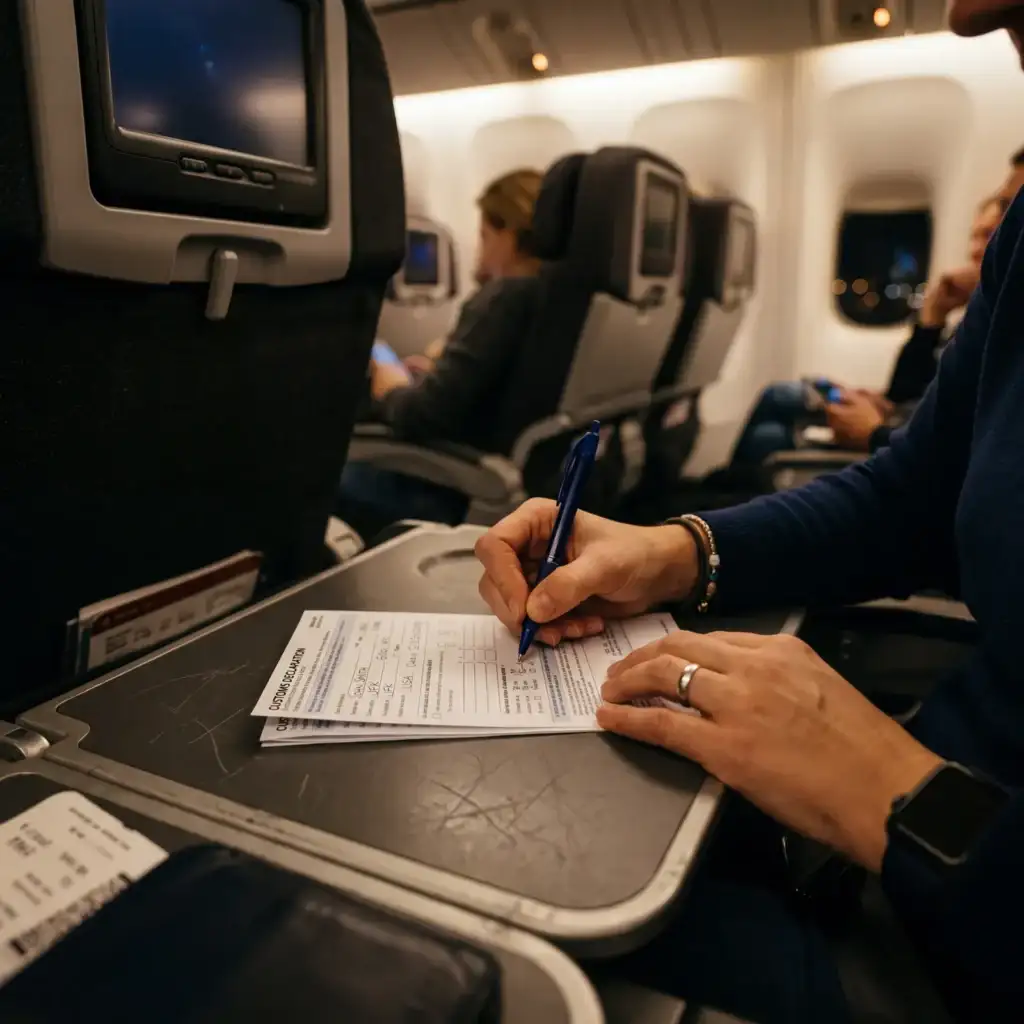


Editor’s note: This article is general information based on publicly available sources we found online.
It is not legal, financial or medical advice. Rules, prices and policies change, so check the source before you act. Images are AI-generated illustrations.Europe trip mistakes run from €10 at a ticket window to a bill the CDC says can pass $250,000. The list is not sorted by price, but the costliest sits at #1. That one starts with a card many readers over 65 already carry.
21. The Louvre Has Two Price Lists, and You Are on the Higher One

A visitor from France pays €22 to get into the Louvre. You pay €32. The museum's admission page says the higher price has applied to visitors from outside the European Economic Area (EEA) since January 14, 2026, a gap of about 45 percent.
For two people, that is €64 instead of €44. The page lists free entry for visitors under 18 and for EEA citizens or long-term residents under 26, and it lists no senior rate.
One evening is free for everyone. The page lists free admission after 6 p.m. on the first Friday of the month, except in July and August. For a couple, that saves €64.
Quick check: Book a timed slot on the museum's own site, which the page recommends even for free entry, and keep Tuesday free. The museum is closed that day, and a loose Paris plan tends to find it.
20. Your Carrier’s $12 Day Pass, Times 14 Days, Times Two Phones

Use two phones on 14 days of a trip and Verizon's TravelPass bills $336 before taxes and fees. It charges $12 per line per day, so $24 a day. AT&T's International Day Pass costs $12 a day on land plus $6 for each extra line used the same day, which makes $252 for two phones over the same 14 days. One phone runs $168 on either plan.
The catch is what counts as a day. AT&T says the first data use, text or call starts the pass. Verizon's FAQ says background activity, such as email syncing and app updates, can start a session once cellular data or roaming is on. Both carriers say they charge only for the days you use the phone abroad.
What to do: Ask your carrier for today's price, any cap and its definition of a day, because these pages change. On Wi-Fi-only days, switch cellular data and roaming off before breakfast. The card in your wallet adds a charge of its own at #14.
19. Only 29 Paris Métro Stations Are Fully Accessible

Plan on stairs in Paris. At the start of 2025, only 29 Métro stations were fully accessible, according to a Paralympic.org report from August 2025. In a page updated in January 2026, the region's transit authority still counts 29 and says the older lines are not entirely accessible to people with reduced mobility. Line 14 holds 21 of them, and the rest sit on newer line extensions.
Picture 6:30 p.m., a suitcase and a staircase down to the platform. The suitcase has no opinion about your knees. Locals will point out that the Métro is quick. The stairs are what it costs.
Better move: The Paralympic.org report says the Paris bus and tram network is 100 percent accessible, and so is every RER A and B station. Use buses for short hops, and ask your hotel which nearby station has an elevator.
18. A Rail Pass Does Not Include the Seat on the Fast Trains

The pass pays for the train. On most fast trains, it does not pay for the seat. Interrail's reservations page says seats are mandatory on night trains and most high-speed trains, and the pass does not include them. Americans may know the pass as Eurail, but Time Out reported that the name was retired on September 10, 2026, and U.S. buyers now get an Interrail pass.
The fees stack up on a loop through three countries. Interrail's fee table lists France's TGV at €10 to €20 a seat, Italy's Frecciarossa at €13, and Spain's AVE at €10 in second class and €13 in first. Seat61's guide says only a limited number of TGV seats go for €10, and the rest cost €20.
Three Frecciarossa hops add €39 per person, or €78 for two, on top of the pass. Pass fans like the freedom to change plans, and that has value. Seat61 also notes that low-cost Ouigo fares start at €10 without a pass, and it says to check the regular price first.
Do the math: Price each leg point to point, then add the reservation fees to the pass side. Reservations rule one sight in Milan too, at #16.
17. The Card Reader’s Friendly “Pay in Dollars?” Question

The friendliest question on a European card reader comes with a markup. Visa's own page says the option to pay in your home currency includes an exchange rate and additional fees, and that Visa requires merchants and ATMs to show the markup on the screen.
If the screen leaves out the required details, such as the markup, or the clerk leans on you, Visa recommends declining the conversion and reporting it to your card issuer. Declining does not stop the purchase. Pay in the local currency.
16. The Last Supper in Milan Admits No One Without a Reservation

A flight to Milan does not get you in to see Leonardo's Last Supper. The official site says a reservation is always required, and for now each visit lasts 15 minutes with no more than 40 people at a time. You must arrive 30 minutes before your slot, and late arrivals forfeit the right to entry.
Tickets release in batches every three months. The September to December 2026 batch went on sale on June 23, and the official pages listed no later batch when checked on October 28. An unbooked Milan afternoon can end at a closed door, with the painting on the other side.
Before you book flights: Check the official booking site for your dates. If they have not opened, set a reminder and build the rest of Milan around the slot you get. The museum's page names only its own booking channels.
15. Eurostar Has No Weight Limit, and You Still Lift the Bag

Eurostar sets no weight limit on luggage, which sounds generous until you are the porter. The page says you must be able to move your bags safely on and off the train.
Standard and Plus fares allow two pieces and one hand item. Each piece can be up to 85 cm (about 33 inches) long on London routes and 75 cm on other routes. A third piece costs €30 if you pay on the day.
The honest limit is what you can lift into the rack without help. Build the bag around 25 Things Frequent International Flyers Always Pack That Nobody Ever Mentions in 2026 and stop there.
14. The Card That Charges 3 Percent on Every Swipe

Spend $4,000 in Europe on a card with a 3 percent foreign fee and you pay $120 for the privilege. The Points Guy's June 2025 guide puts the standard fee near 3 percent. It lists Bank of America, Chase, Citi, U.S. Bank and Wells Fargo at 3 percent, American Express at 2.7 percent, and Capital One and Discover at none.
The guide says some popular cash-back cards tend to charge it, and it names the Chase Freedom Unlimited and the Blue Cash Preferred from American Express. It says most top travel rewards cards charge nothing. Cash-back fans accept the fee for the rewards, which is a fair trade if you know you are paying it.
Check your card: Find the fee line in your card's terms, and carry a no-fee card as your main one. Issuers change these fees, so confirm yours before you go.
13. Athens in a Heat Wave, When the Acropolis Closes for the Afternoon

The Acropolis can shut its gates in the middle of your day. In July 2025, Greece's Ministry of Culture closed it from 1 p.m. to 5 p.m. on two days in a row, with temperatures near 40°C (104°F). Art Dependence reported the closures on July 10, 2025, and said they were meant to protect workers and tourists.
Picture the gate at 1:15 p.m.: the Acropolis was the whole plan for the day, and it is shut. Summer travelers argue that the long daylight is worth the heat, and it can be, until a closure takes the one afternoon you could not move.
Plan around it: Go first thing, keep the afternoon for something indoors, and check the ministry's announcements the evening before.
12. The $20 Driving Permit You Skipped

The driving permit is among the cheapest paperwork on this list, and among the easiest to skip. AAA charges $20 plus tax for an International Driving Permit, plus a $10 passport photo fee and shipping if you order online. AAA warns that fines for driving without one can be quite costly.
The permit is only a translation of your license, so you carry both. Many countries require one, AAA says, and it names Spain as a country that accepts a U.S. license only with a local-language translation.
For Italy, The Local reported in March 2026 that U.S. drivers need a permit or a certified Italian translation. Some rental agencies do not ask for it, but trouble can follow a traffic stop or an insurance claim after a crash.
Order it early: AAA will not issue a permit more than six months before the date you want it to start. Order one a few weeks before you fly, and carry it with your license. A second rental-car trap, with cameras, waits at #9.
11. Knowing 911 but Not 112

Your fingers know 911 by heart. In the European Union, the emergency number is 112. The European Commission says it is free, works from fixed and mobile phones, and reaches an ambulance, the fire brigade or the police.
Operators in many countries can answer in English or French, and they can tell where the caller is. The Commission's page adds that 112 is available on GSM mobile networks worldwide. Save it in your phone's notes, and say it aloud once with your travel partner.
10. The Free Airport Help You Should Request 48 Hours Ahead

Help getting through an EU airport is free, and the request has a deadline. The EU's Your Europe site says travelers with a disability or reduced mobility have a right to free assistance, in the airport before and after the flight and during the flight. The page speaks of disability and reduced mobility, not of age.
Contact your airline, ticket seller or tour operator at least 48 hours before the trip. If you miss that window, the page says they must still make all reasonable efforts to help you travel as planned. That is a promise of effort. It guarantees nothing.
A gate change at the far end of a long terminal is where "I'll manage" wears out. A better seat does not shorten that walk; Premium Economy or Business Class on a Long-Haul Flight: What the Extra Money Actually Buys weighs what the extra money does buy.
Easy fix: Ask for assistance when you book, and confirm it again 48 hours before you fly.
9. Florence’s Traffic Cameras Do Not Care That You Were Only Looking for the Hotel

A wrong turn in Florence can follow you home. The city runs a limited traffic zone, called a ZTL, and cameras photograph the plates of every vehicle that crosses its line, Auto Europe's Florence guide says. Each entry can add another fine, and the notices can reach you by mail several months after you are home.
Guests who must drive through the zone to reach their hotel are exempt from citations, the guide says. It is up to you to give the hotel your plate number and rental details first, and the guide says you are unlikely to get an access pass of your own. That makes your hotel's phone number worth more than your GPS.
Before you drive in: Park outside the zone and walk, or give the hotel your plate number before the car crosses the line. Read the rental contract's paragraph on fines too.
Read more: 31 Scenic Train Rides Retirees Say Are Worth Booking for the View
8. The Timed Ticket on Your First Morning

It is 9:30 a.m. on day one, your body says 3:30 a.m., and the timed ticket on your phone says go. The CDC says travelers adjust at about one hour a day when flying east.
A six-hour jump, roughly New York to Western Europe, takes about six days. From the West Coast the gap is nine hours and the adjustment takes about nine days.
The CDC's advice is plain. Get outside in daylight at your destination, and keep daytime naps to about 20 minutes. Move your first timed ticket to day two or three, and read Long-Haul Flight Mistakes You'll Feel for Hours for the flight itself.
The next item is a piece of paper you may have to ask your doctor's office for.
Read more: 25 Things Experienced International Travelers Always Pack That Most People Never Think Of in 2026
7. The Measles Record You Need if You Were Born in 1957 or Later

If you were born in 1957 or later, the CDC does not presume you are protected against measles. That makes you 69 or younger this year, and it covers nearly everyone in their sixties.
Birth before 1957 counts as presumed protection. Everyone else needs a written vaccination record, a lab result showing immunity, or a lab-confirmed past case, according to the CDC page dated April 29, 2026.
Without one of those, the CDC says adults should get at least one MMR dose. It lists international travelers among the adults who should have two, at least 28 days apart.
Start now: Ask your doctor's office for your vaccination record this week, because two doses 28 days apart cannot be rushed. Medicare's fact sheet says Part D plans cover vaccines the CDC advisory committee recommends with no copay or deductible, so ask your plan before you pay for the shot.
6. London’s Separate £20 Permission

Your EU paperwork does not cover London. The UK government says Americans usually need an Electronic Travel Authorisation, or ETA, rather than a visa. It costs £20 per traveler, and you cannot get a refund once you apply. For a couple, that is £40 gone even if the trip falls through.
An ETA lasts two years or until your passport expires, whichever comes first, and it allows visits of up to six months. You need one even if you only pass through border control at a UK airport on the way somewhere else.
Most decisions arrive within a day and can take up to three working days. The government page also says no other website or app can get you a faster decision, so a lookalike site that promises speed is not offering what it claims.
Apply a week out: Use the official UK ETA app or gov.uk, and wait for the confirmation email before you travel. Two more entry rules wait at #4 and #3.
5. The Pills in Your Checked Bag

A lost suitcase is an inconvenience. A lost suitcase holding your blood-pressure pills is a problem.
The CDC says medications belong in hand luggage, in their original containers, with enough for the whole trip plus extra in case of delays. It also suggests a letter from your doctor, on office letterhead, listing your conditions and your medications by generic name and dose. Refilling abroad is on you as far as Medicare goes, because its fact sheet says Medicare drug plans cannot cover drugs you buy outside the U.S.
Some countries do not allow visitors to bring certain medications, especially narcotics and psychotropic drugs, the CDC warns. Check with your destination's embassy or consulate in the U.S. before you pack. 25 Carry-On Items International Flyers Regret Not Packing in 2026 has more for the bag itself.
Four to go, and the last one is the costliest on the list.
4. Passports No Longer Get Stamped, and a Computer Counts Your 90 Days

The stamp that used to prove your arrival is gone at Schengen borders. The European Commission says the Entry/Exit System became fully operational on April 10, 2026. It records fingerprints and a face image for non-EU short-stay visitors, and it replaces passport stamping to catch overstays automatically. The Points Guy warned in April that airport lines may run longer this year.
The rule it enforces is the old one: 90 days in any 180-day period. The count covers all 29 Schengen countries together, so Italy and Spain share one allowance. Arrive April 1 and stay straight through, and day 90 is June 29. 15 Things No One Tells You About Snowbird Travel After 70 covers more of the long-stay lessons.
ETIAS, the EU's pre-travel authorization, is running late. The Commission's page, dated October 6, 2025, sets the fee at €20, up from €7, and says the system is not yet operating. The Points Guy reported on July 8, 2026, citing the Financial Times, that launch is now expected in 2027. As of October 28, 2026, no start date had been announced. Pay no one for ETIAS until the EU's official travel site says it is live.
3. A Passport That Is Valid on Paper and Too Short for France, Italy or Spain

France, Italy, Spain and most other EU countries expect your passport to outlast your trip by three months. The EU's Your Europe site says it should be valid for at least three months after the day you plan to leave the EU. It must also have been issued within the last 10 years.
A passport that expires March 31 looks fine for a trip that ends January 20. It fails the rule. Three months after January 20 is April 20, so the passport is 20 days short.
Check now: Compare your passport's issue and expiry dates with your return date before you pay for anything non-refundable. If either rule fails, renew first and book second.
Two to go. The next is a deadline, and the last is a card.
2. Travel Insurance Bought After the Deadline

The clock on one of the most useful travel-insurance features starts when you pay your first deposit, not when you leave. For U.S. residents, Allianz's existing-condition waiver has three conditions:
- You buy within 14 days of the first non-refundable trip payment (or the period your plan sets).
- You insure the full non-refundable cost.
- You are medically able to travel that day.
Consumer Reports called 14 days typical in 2019. Miss it, and a condition you already have can be excluded.
The CDC says policies often exclude conditions that needed hospital care or direct medical treatment in the 90 days before departure. Allianz looks back 120 days for treatment, symptoms or a new or changed prescription.
The price is smaller than the risk. The NAIC says policies usually cost 5 to 10 percent of the trip price, which is $500 to $1,000 on a $10,000 trip. Cancel-for-any-reason coverage can run up to 15 percent ($1,500 on that trip), the CDC says, and Consumer Reports said in 2019 that it often pays back only 50 to 75 percent.
The fix: Buy the policy the week you pay the first deposit, and read the existing-condition definition before you sign.
1. Your Medicare Card Stops at the Border

At 2 a.m. the hospital clerk wants a card before the doctor does. Original Medicare generally pays nothing outside the U.S., and the three narrow exceptions in its April 2026 fact sheet do not fit a Europe vacation. The CDC says care abroad usually means paying up front.
Medigap helps, with limits. Plans such as G and N pay 80 percent of certain emergency costs after a $250 yearly deductible, and only if the emergency starts in the first 60 days of the trip. The lifetime cap is $50,000.
The CDC says medical evacuation runs from $25,000 within North America to more than $250,000 from more distant and remote places, with no figure for Europe. That top figure is the bill from the intro. Medicare does not cover medical evacuation, the CDC says. At sea, Medicare covers no care more than 6 hours from a U.S. port.
Do this first: Ask your Medigap or Advantage plan what it pays in Europe, then buy a policy with medical evacuation inside the window at #2. Read its conditions: the fact sheet warns that travel insurance may not include health coverage.
Read more: Things No One Tells You About Cruising Later in Life
Sources (37)
- European Commission: Entry/Exit System (EES), page dated April 10, 2026
- European Commission: ETIAS, page dated October 6, 2025
- European Commission: Visa policy and the 90 days in 180 rule
- Your Europe: Travel documents for non-EU nationals
- Your Europe: Rights of travelers with disabilities or reduced mobility
- European Commission: The 112 emergency number
- GOV.UK: Apply for a UK ETA
- GOV.UK: Electronic Travel Authorisation guidance
- Medicare: Medicare Coverage Outside the United States fact sheet, April 2026
- Medicare.gov: Travel outside the U.S.
- CDC Yellow Book 2026: Travel insurance, travel health insurance and medical evacuation insurance
- CDC Yellow Book 2026: Travelers with chronic illnesses
- CDC Yellow Book 2026: Jet lag disorder
- CDC: Measles vaccine recommendations
- NAIC: Should I get travel insurance?
- Allianz Travel Insurance: Existing medical conditions coverage
- Consumer Reports: Money-saving strategies for buying travel insurance, 2019
- Louvre Museum: Hours and admission
- The Last Supper (Cenacolo Vinciano): Official site
- The Last Supper (Cenacolo Vinciano): How to plan your visit, May 11, 2026
- Interrail: Domestic train reservation fees
- Interrail: Securing seats
- Seat61: How to make reservations with an Interrail pass
- Time Out: The Eurail name is retired and the Interrail pass replaces it, September 14, 2026
- Eurostar: Luggage
- AAA: International Driving Permit
- The Local Italy: How long can you drive on a US license in Italy, March 11, 2026
- Auto Europe: Driving in Florence
- AT&T: International Day Pass
- Verizon: TravelPass
- Visa: Decoding dynamic currency conversion
- The Points Guy: Guide to foreign transaction fees, June 3, 2025
- The Points Guy: EU Entry/Exit System fully operational, April 10, 2026
- The Points Guy: EU delays ETIAS system until 2027, July 8, 2026
- Paralympic.org: One year on, Paralympic Games revolutionising Paris's transport system, August 29, 2025
- Île-de-France Mobilités: Accessibility, the complex case of the Paris metro, updated January 21, 2026
- Art Dependence: Acropolis closed for two afternoons due to Athens heatwave, July 10, 2025